
WILDLIFE GARDENS
In a growing concrete jungle, our back gardens can be a sanctuary for wildlife. It is their world as much as ours and we must appreciate and understand that we are all connected in this world together. Imagine the effects on our food crops if we had no wildlife to pollinate the flowers for the fruits and vegetables to develope. The consequences could be dire. The massive patchwork of all our gardens can provide food and habitat for birds, mammals and insects.
SIMPLE TASKS
There are simple tasks that can be carried out to invite birds into the garden. Put a bird box up. Avoid facing the bird box in full sun as the young chicks can bake inside. Position the bird box where it is safe from predators such as cats. Put some food outside for the birds. Protein rich food such as fat balls are good for birds in spring when they are feeding their young and helpful to build up their fat reserves for winter. Seeds are great in winter when food is scarce. I have two bowls of water in the garden which the birds come drink from and splash around in. Grow nectar rich plants for insects and add bug hotels. Create a pond to attract frogs. This can be a small glazed pot without a drainage hole or even a small basin filled with water kept in a hidden place.
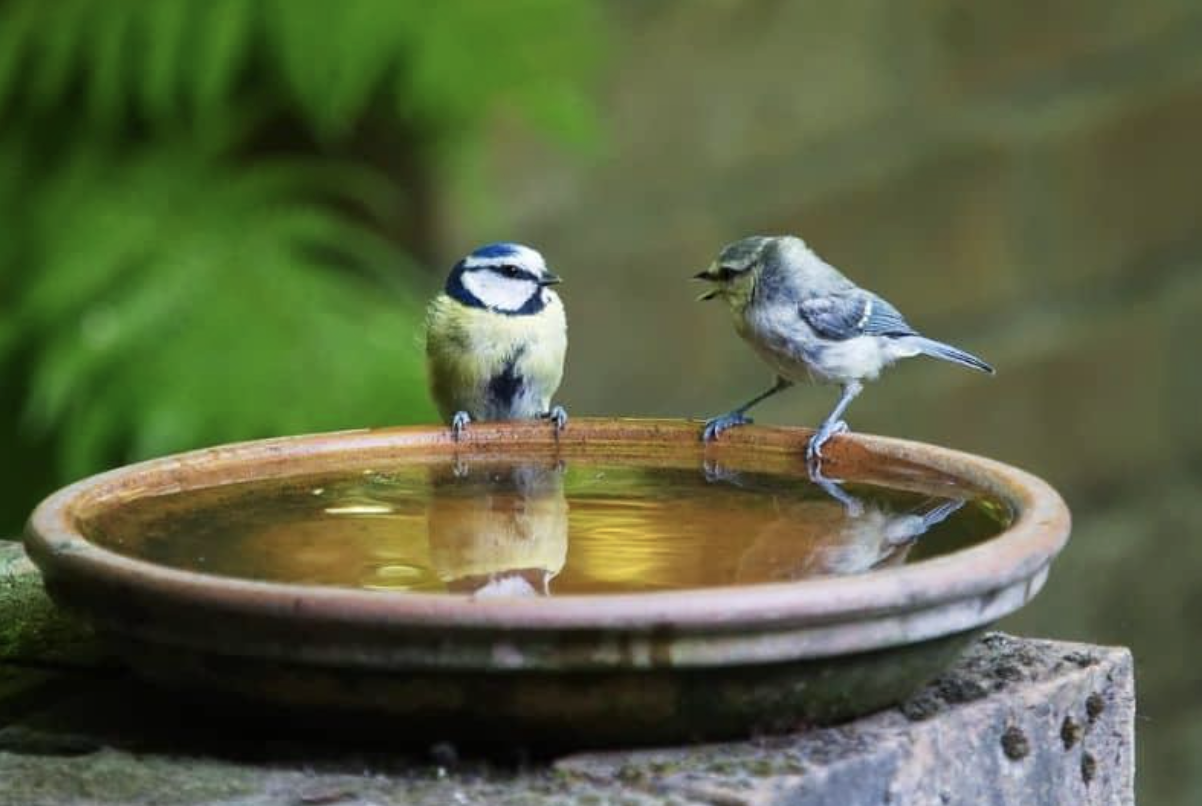
Credit: BillyOh.com
Just a simple task of leaving a bowl of water out in the garden will invite wildlife into the garden
HEDGES
Hedges are not only good for capturing pollution, they also provide habitat for birds to build their nests in. Native hedges are particularly good for wildlife. They are made up of a variety of plants and diversity in a garden will always attract wildlife. Hawthorn (Crataegus mongyna) produces flowers so good for pollinating insects whilst the red berries in autumn will provide food for the birds. Rosa rugosa will also provide pollen and the hips will not only give you colour in the garden but food for the birds. Other plants that are beneficial to wildlife within a native hedge are English Holly (Ilex aquifolium), Crab Apple (Malus sylvestris), Blackthorne (Prunus spinosa), Hazel (Corylus avellane), Guelder Rose (Viburnum opulus), Rowan (Sorbus acuparia), Dog Rose (Rosa canina) and Elder (Sambucus nigra)
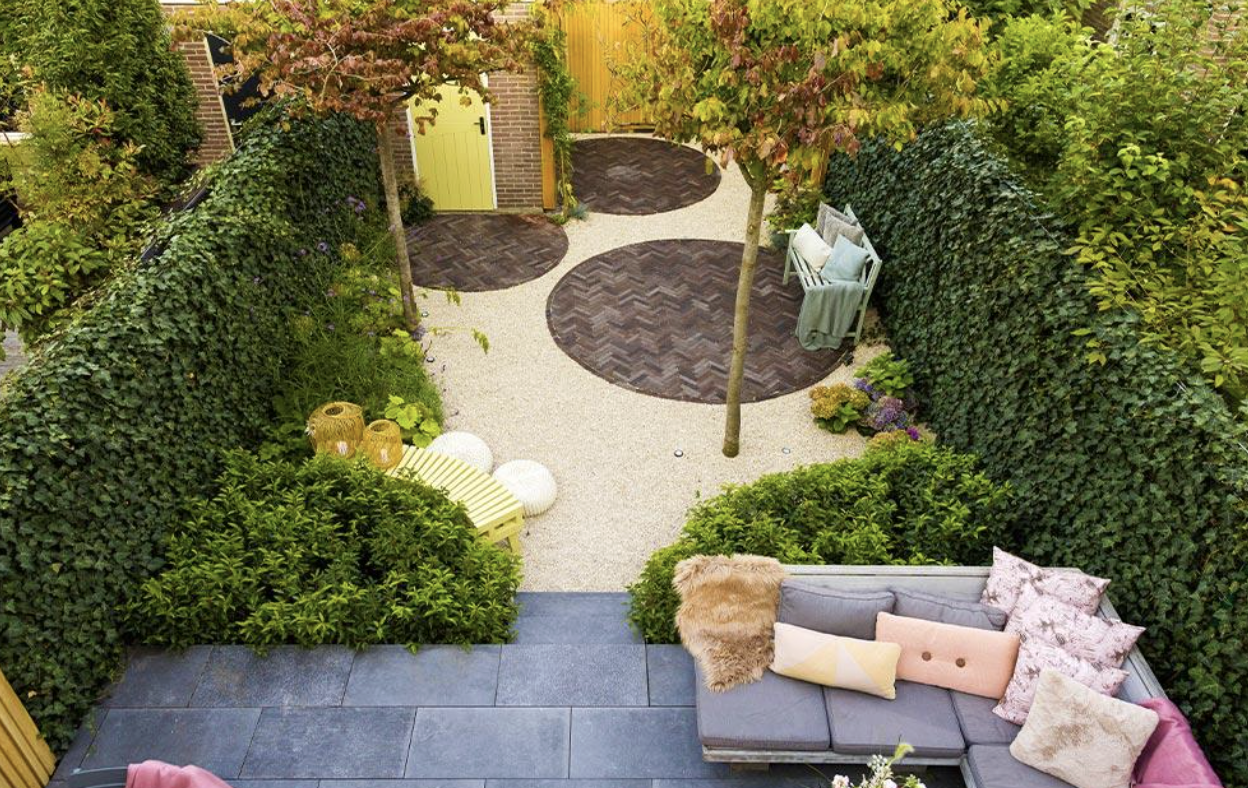
Credit: Mobilane
In this garden in the Netherlands, notice the boundary lines. Although this look like hedges they are Hedera screens by Mobilane. They do the same job as hedges. They provide instant greenery but also habitat and food for birds. Hedera (ivy) is also exceptional for bees, providing crucial, late-season source of nectar and pollen from September to November when few other food sources are available.
HEDGEHOGS
There are been a real decline in the hedgehog population. This is partly to blame on many homeowners constructing secure boundaries around their properties. Hedgehogs cannot penetrate through concrete gravel board. Hedges are therefore much better for them, providing shelter and allowing them to travel from one garden to the next seeking food. If fencing has to be installed, then create hedgehog holes of approximately 13cm x 13cm in the gravel board so that they have a corridor to travel through.
PLANTING FOR WILDLIFE
If you want to invite wildlife into your garden through planting, choose plants that are nectar rich and have blooms that the bees, butterflies and other insects can get to easily. Over hybridized plants with double and multiple blooms are not easy for insects as they cannot get to the nectar. Luckily there is a great palette of plants to choose from which are pleasing to both the human eye and attractive to bees, butterflies and other insects. Rudbeckia, Helenium, Helianthemum, Erigeron, Phlox, Cosmos, Calendula, Zinnia, Tithonia and Asters all have open daisy shaped flowers, so wildlife find these much more attractive for sourcing nectar. Verbena, buddleia and lobelia also attract wildlife. Some insects have long tongues and can access the nectar in tubular flowers of plants like Salvia Amistad. Sew wildflower seeds as these will also attract wildlife. If you have a large garden maybe of create a meadow area. The palette of plants to attract wildlife into the garden is vast.
If you are interested in attracting honeybees, the British Beekeepers Association provides a leaflet BBKA leaflet IL02 which provides good information on planting for honeybees.
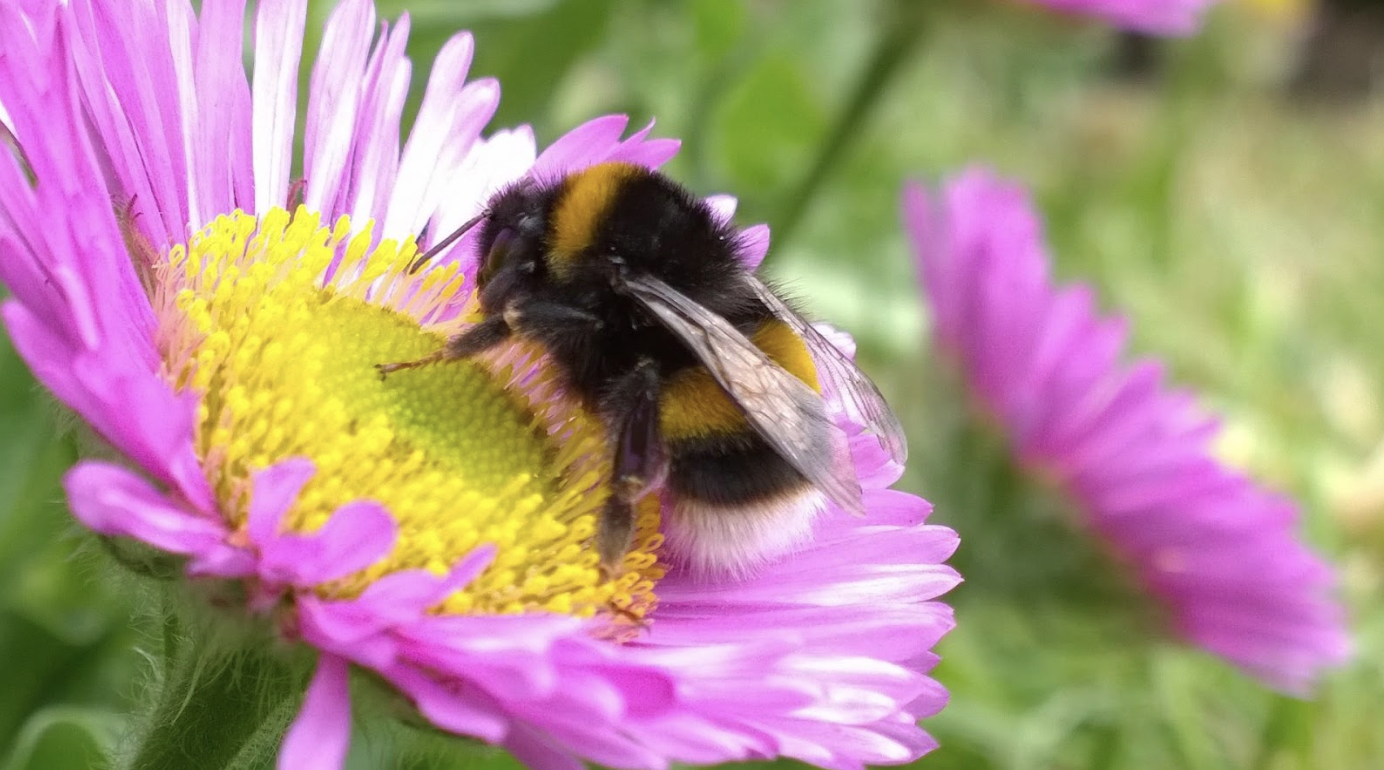
Credit: Public Domain Pictures
The population of bees has gone down drastically in recent years. Grow nectar rich plants in the garden to help our bee population.
LAWNS
As a garden designer I always advocate real over artificial lawns. Whilst the world is moving away from plastic, using artificial grass is just adding plastic into a garden. Artificial grass has negative effects on worms, birds, butterflies and other insects. Real lawns are much better and if you are after low maintenance then consider a clover lawn which is even better for wildlife. Wildflower turfs have become popular in recent years. Once established they look beautiful providing plenty of colour in the garden. They are also beneficial to wildlife providing food and shelter. Whilst the turfs are expensive, they do not need frequent mowing like normal lawns do and they look wonderful with a curvaceous path mown through them
DIGGING
Constantly digging the ground causes erosion. Do not dig unless you are weeding or planting. Letting the soil settle helps increase earthworm populations and beetle larvae. Lay compost on top of your soil. This will provide habitat for invertebrates, foraging for birds like blackbirds and robins. The activities of earthworms pulling the compost down into the helps improve soil conditions. Their movement through the soil opens air passages and improves drainage.
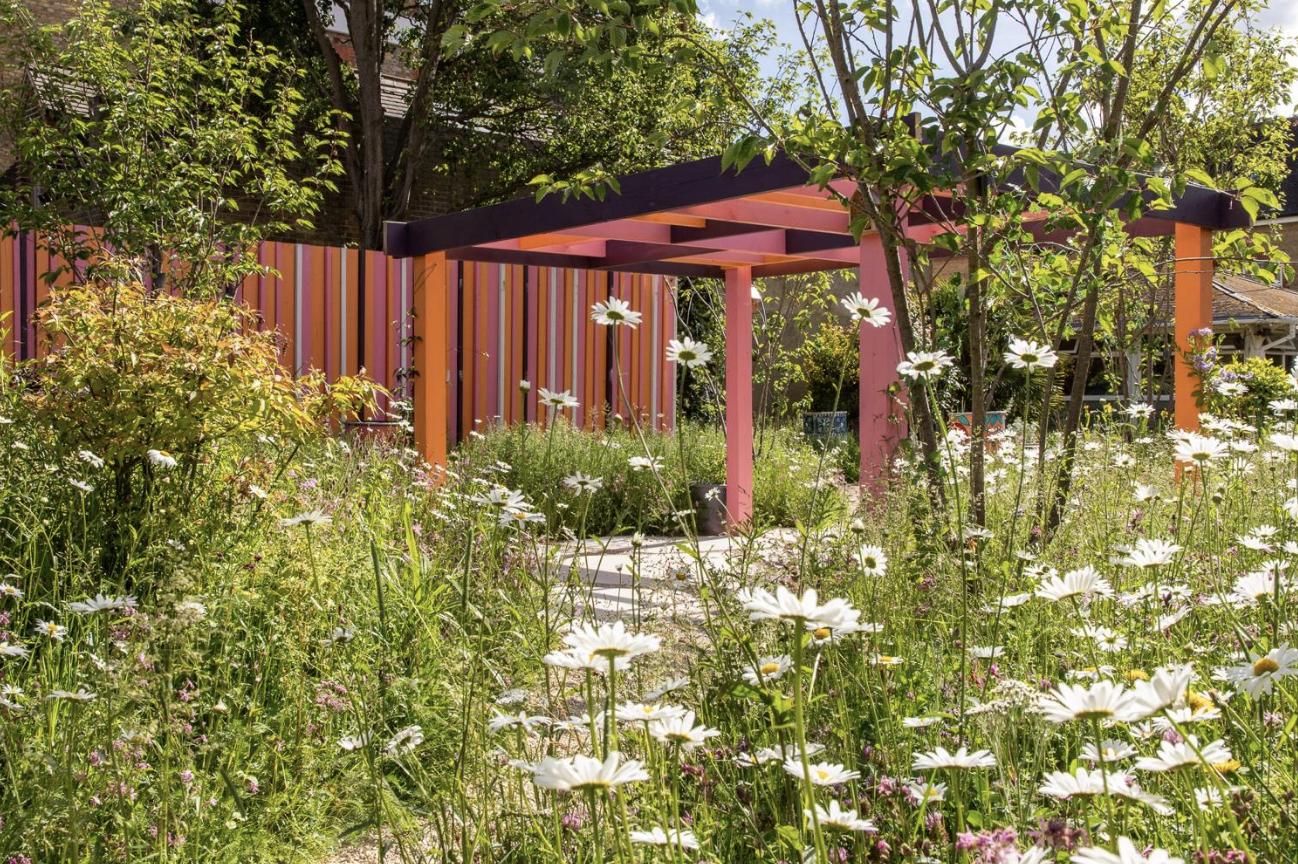
Photo Credit: Stephen Studd
In this children’s school, lawns have been replaced with meadow turf. A meadow creates a far more bio-diverse environment for wildlife. A simple gravel path meanders through the meadow. If you cannot do this in your own garden, how about creating a small meadow verge around your lawn.
BUG HOTELS
These have become very trendy in recent years and even the smallest of gardens can have one. They will attract hoverflies, ladybirds, lacewings, woodlice, beetles, centipedes, wasps and a variety of bees. However, do a bit of research into the type of insects you would like to attract and consider the sorts of environments these insects like. For instance, frogs and toads like moist shady places whilst bee hotels need to be dry and in full sun. Also make sure that the internal materials you use are suitable for the insects you want to attract.
Nigel Dunnett’s RHS garden at the Chelsea Flower Show in 2013 showed how even living in the city there are ways that you can incorporate ways to attract wildlife. Here Nigel has not only used wildlife friendly planting but has also introduced some uber chic circular bug hotels on the wall of the pavilion.
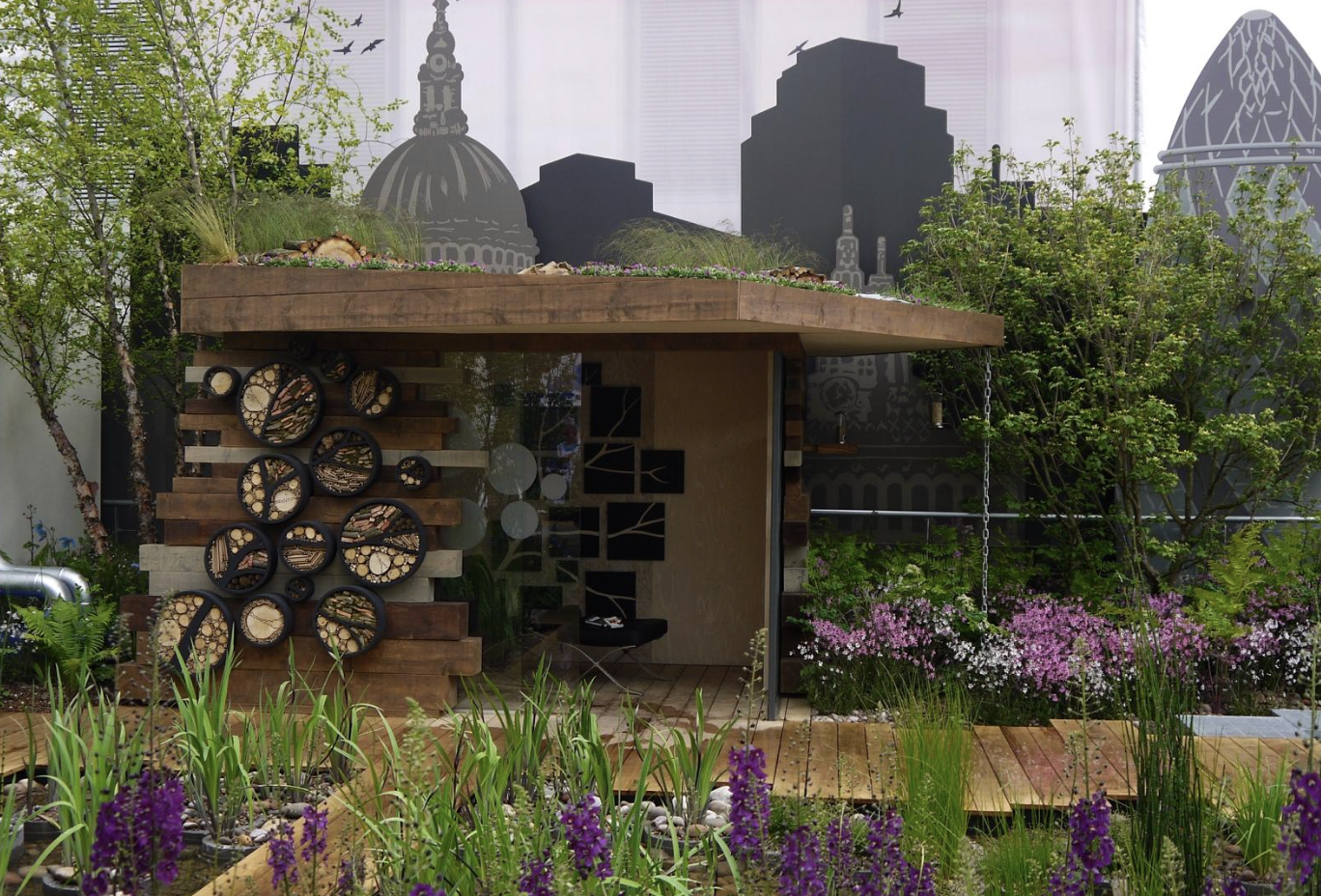
Credit: Nigel Dunnett
PONDS
The sound of water in a garden is very relaxing but a pond will also attract wildlife. Having a pond in the garden also gives you the opportunity to plant aquatic plants thereby extending the variety of plants in your garden. Frogs, toads, newts, dragon flies and damsel flies. Pond skaters, also known as water striders, can walk on water. If you do create a pond in your garden, make sure you provide a way for the wildlife to get out of the pond too. This can be some large rocks set at different levels so they can climb out and onto the surface. The trend now has moved towards more naturalistic gardens. Don’t be afraid to create wilder areas in the garden by leaving piles of logs and rocks where frogs and toads can shelter and hide from predators like the local cat. Frogs and Toads are very good for the garden as they will eat the slugs and snails. If you have a small garden, just having a half whisky barrel as a pond will attract dragon and damsel flies.
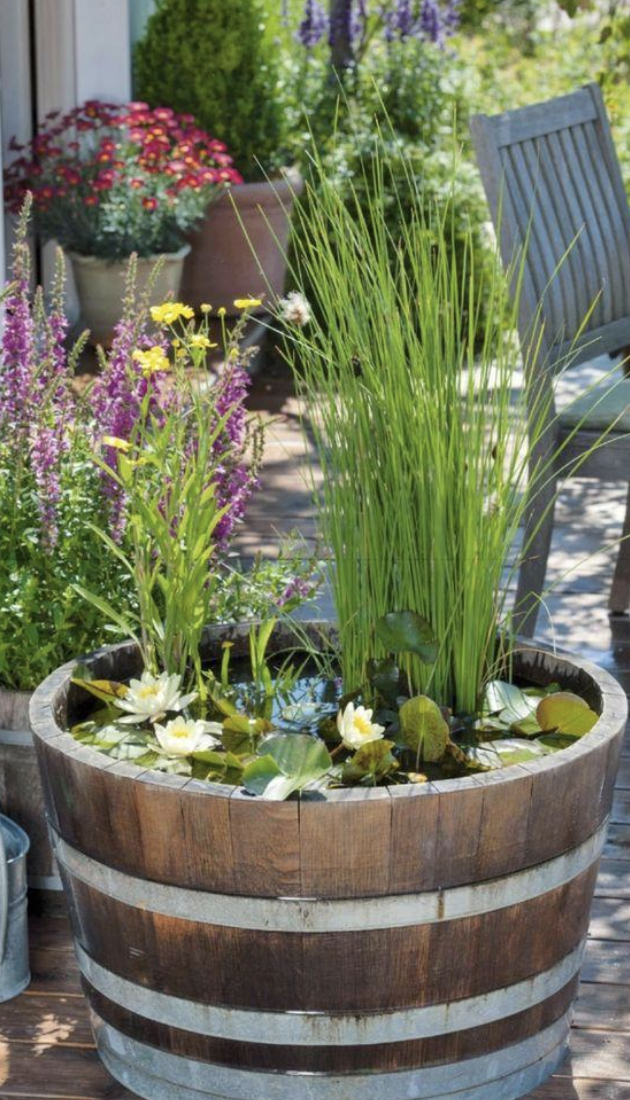
Credit: containerwatergardens.net
COMPOST BINS
If space allows, composting is a like turning the detritus in your garden into gold. When you reuse the compost in your garden you will see a real difference in the growth of your plants. However, compost heaps and bins are also good for wildlife like worms, woodlice and slow worms. Do not put cooked food into your compost bins as this will attract vermin.
Remember we all have our role to play in the circle of life. This world belongs to all of us. As David Attenborough recently said ‘To preserve our perfect planet we must become a force for good’.
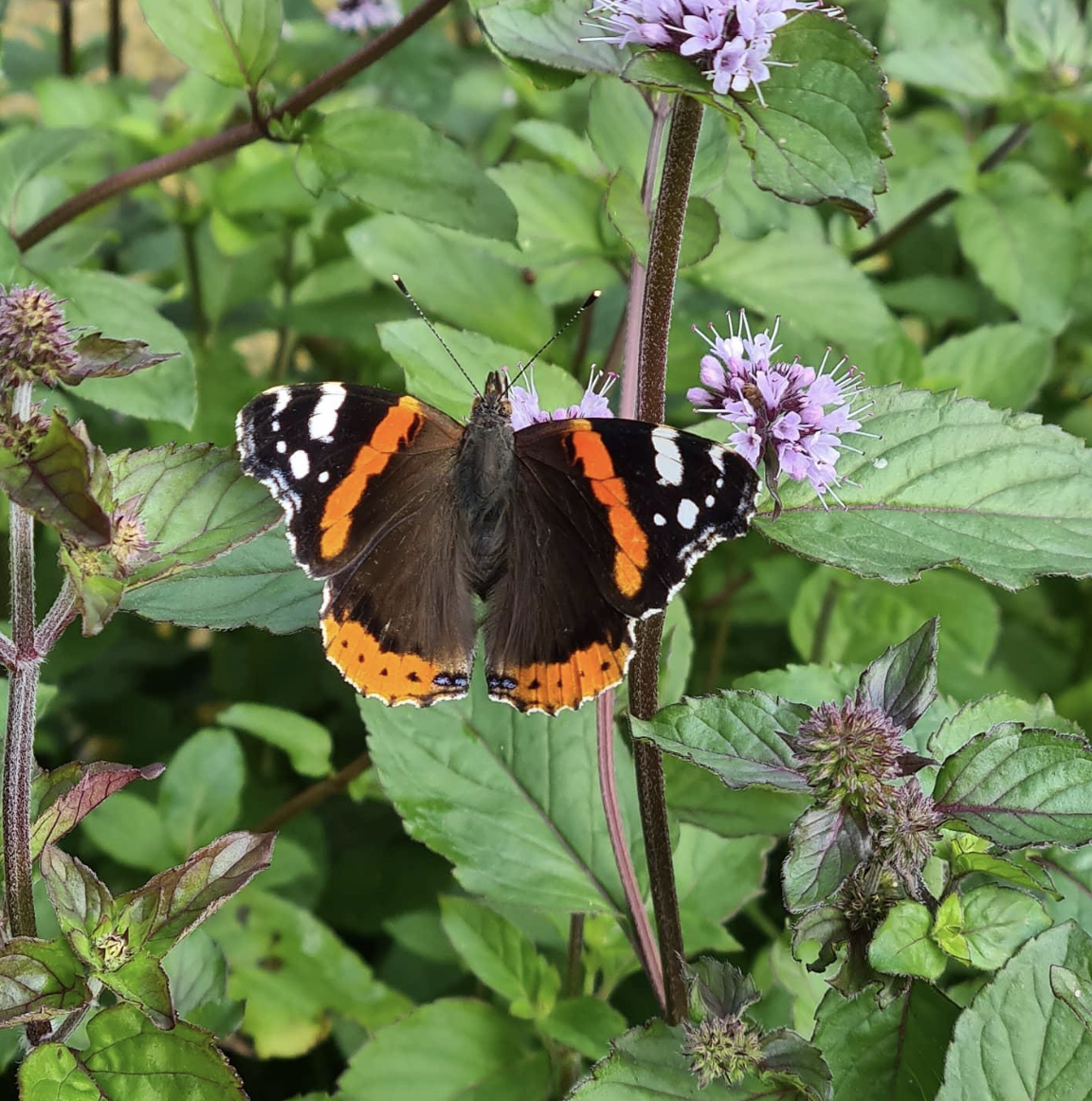
Photo Credit: Manoj Malde