
BALCONY GARDEN IDEAS
How to Create Your Own Mini Oasis in the City
If you live in a city apartment, your balcony may be the only patch of outdoor space you have — and that makes it more precious than ever. With urban populations rising and green spaces disappearing, the balcony garden has quietly become one of the most important design opportunities in modern city living. Whether yours is a sun-drenched south-facing terrace or a compact shady ledge, this guide will show you how to turn it into a beautiful, thriving mini oasis.
Balcony gardens are now taken so seriously that the Royal Horticultural Society introduced them as a judged category at the Chelsea Flower Show — proof that small spaces can deliver extraordinary results.
What Is a Balcony Garden?
A balcony garden is any cultivated outdoor space attached to an apartment or flat — from a narrow juliet balcony to a generous wraparound terrace. The principles of good balcony garden design combine planting, furniture, lighting, and theme to create an outdoor room that feels as considered and welcoming as any interior space.
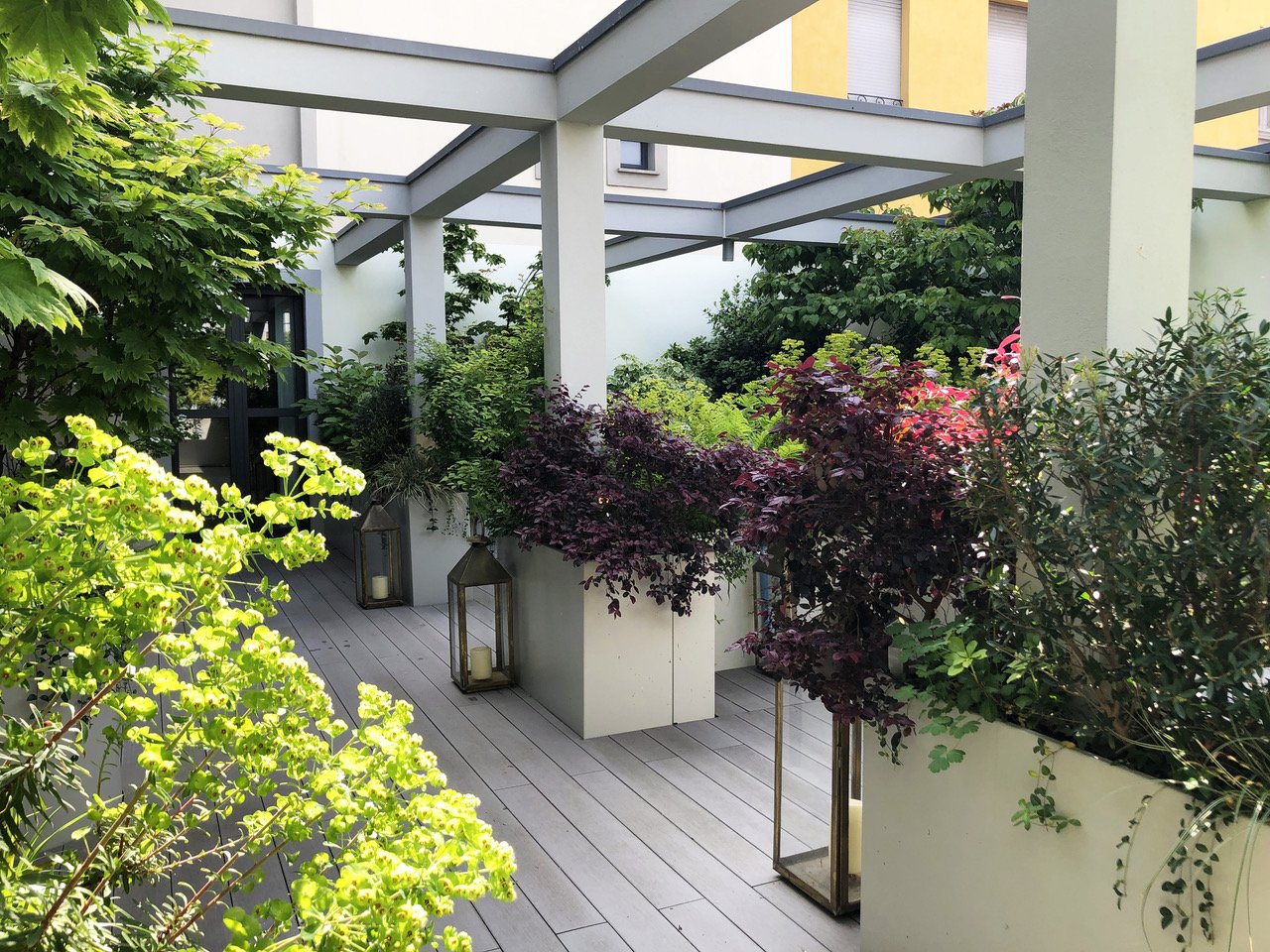
Designer : Cristina Mazzucchelli
This balcony garden has been really well considered. The containers have been designed around the structural pillar. A variety of evergreen shrubs have been used to provide year-round interest.
Balcony Garden Planning: What to Think About First
Before buying a single plant pot, spend time on the basics. Good balcony garden planning saves money, stress, and wasted effort.
Measure everything. Note the dimensions of your balcony and every access point you'll need to bring materials through — doors, corridors, and lifts. It's surprisingly easy to buy furniture or large planters that won't fit through the door.
Know your aspect. Which direction does your balcony face? A south-facing balcony gets full sun for most of the day; a north-facing one will be shady. This single factor shapes every planting decision you make.
Consider prevailing winds. High-rise balconies can be significantly windier than ground level. Some plants struggle in exposed, breezy conditions — and so can you when you're trying to sit out.
Plan your furniture. Measure carefully and leave room to move. Garden designer Cristina Mazzucchelli advises: "Furniture that can fold away or is dual purpose to serve as storage is always a good idea in a small space." Look for pieces with built-in storage for compost bags, hand tools, cushions, and throws.
Balcony Garden Design: Choosing a Theme
Great balcony garden design goes beyond just choosing plants — it's about dressing the entire space with intention. Think of your balcony as an outdoor room, and give it a character that reflects your personality and tastes.
An African safari theme, for example, brings warmth through a palette of red ochre, sandy beige, pink clay, yellow umber, and burnt orange. Ndebele-inspired geometric patterns painted on a plain wall, African clay cooking pots used as planters, cane furniture with animal-print cushions, and ornamental grasses to evoke the savannah all contribute to a cohesive, transportive scheme.
Extending your interior is another powerful approach. Cristina Mazzucchelli recommends creating a visual dialogue between the indoor and outdoor space — letting colours, materials, and textures flow seamlessly from room to balcony.
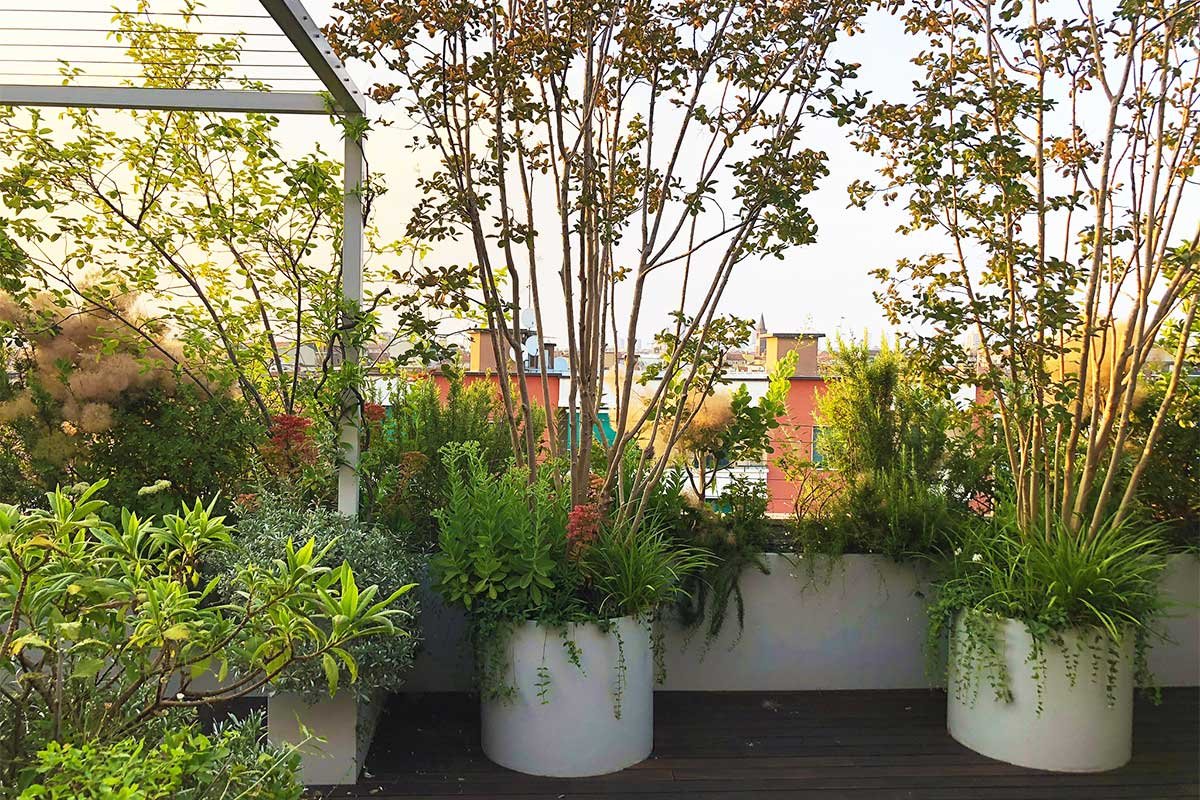
Designer: Cristina Mazzucchelli
On this balcony garden, tall multi-stem trees help to disguise the buildings on the opposite side, bringing the focus into the garden. The trees also help to create some privacy and shade.
Best Plants for a Balcony Garden
Choosing the right plants is the heart of any balcony garden. The key principles: select varieties suited to container life, think vertically to maximise space, and aim for a mix of evergreen structure, seasonal colour, and year-round interest.
Garden designer John Howlett's advice: "Think vertically — adding height creates atmosphere without taking up precious floor space." Living walls, wall-mounted planters, and trained climbers are your best friends in a small space.
Edimentals: Ornamental and Edible Plants for Balconies
One of the biggest trends in balcony gardening is growing plants that are both beautiful and edible — known as edimentals.
Nasturtiums and calendula — vivid orange flowers that can be eaten in salads or frozen into ice cubes for summer drinks
Chillies and aubergines — sculptural, colourful, and delicious
Vietnamese coriander (Persicaria odorata) — beautiful foliage, aromatic, and fully edible
Cherry tomatoes and strawberries — ideal for hanging baskets or wall-mounted pots
Best Perennials for Balcony Gardens
For longer-lasting planting schemes, these perennials give excellent value in containers:
Salvia, Verbena, Perovskia, Erigeron
Sanguisorba, Campanula, Achillea, Asters
Helianthemum 'Ben Mohr' or 'Wisley' (evergreen, pretty flowers)
Geraniums for drought tolerance and extended autumn flowering
Mix flowering perennials with ornamental grasses — Nassella tenuissima, Briza, or Calamagrostis varia — for a naturalistic look that moves beautifully in the breeze.
Annuals and Bedding Plants for Seasonal Colour
Give your balcony garden a seasonal punch with annual bedding plants:
Zinnia, Cosmos, Nigella, Californian Poppies, Cleome, Petunia, Trailing Verbena, and Nasturtiums all perform brilliantly in containers. Geraniums are a particular favourite — slightly drought-tolerant, long-flowering, and available in a wide range of colours. Dead-head regularly and they'll keep going well into late autumn.
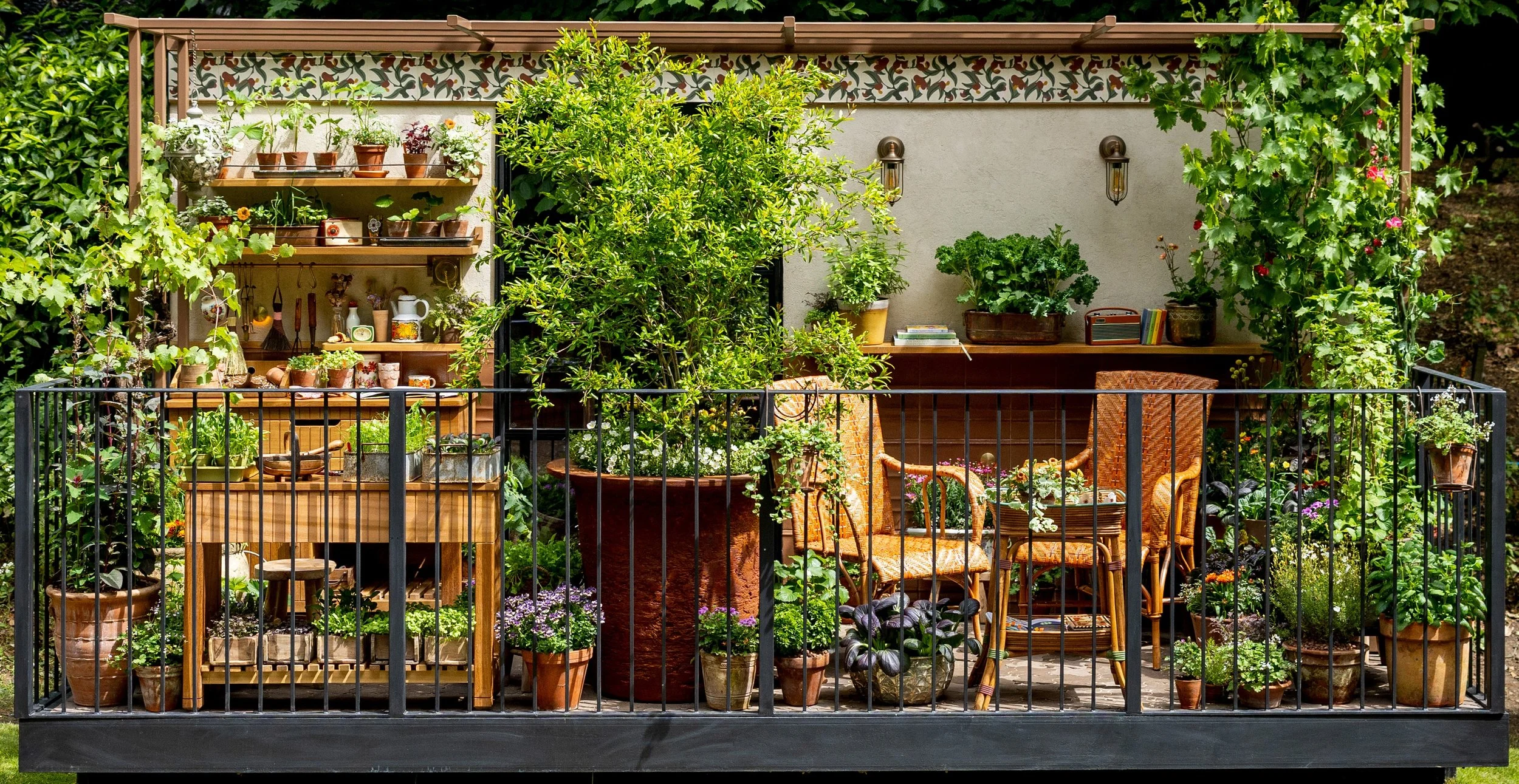
Designer: Katerina Kantalis Photo Credit: Kate Hollingsworth
This balcony garden has been beautifully designed with choice materials. There is real personality here. You can see the owner is interested in gardening and growing some produce. There is a space to relax, a space to garden and the pergola allows you to grow grape vines.
Small Trees for Balcony Gardens
Even on a balcony, it's worth thinking about the hierarchy of plants — and a small tree anchors the whole scheme. Trees provide privacy, wind shelter, shade for underplanting, and year-round structural interest.
Designer Katerina Kantalis recommends these excellent choices:
Feijoa sellowiana — an evergreen alternative to the olive tree, with edible flowers and low maintenance requirements
Olive tree (Olea europaea) — the perennial favourite, evergreen and drought-tolerant
Punica granatum 'Wonderful' — a pomegranate tree that may reward you with fruit
Cornus kousa 'China Girl' — beautiful blossom and autumn colour
Cycas revoluta (sago palm) — for a striking tropical look
For scent and culinary use, Katerina also recommends Rosemary and Sage — both evergreen, aromatic, and highly practical. Trachelospermum jasminoides (evergreen jasmine), trained up a wall, adds fragrance and year-round greenery.
For evergreen structure, explore the range of Pittosporums — reliable, varied in form, and well-suited to container life.
Balcony Garden Ideas for Shady Spaces
A shady balcony needn't be a disappointment. Lean into lush greenery and varied foliage textures to create a cool, verdant retreat.
Recommended plants for shady balcony gardens:
Hakonechloa macra — a beautiful, arching ornamental grass
Hart's Tongue Fern — evergreen, glossy, and lush
Hosta 'Mouse Ears' — a compact miniature hosta perfect for containers
Epimedium — gorgeous foliage in bronze, copper, and green tones
Gillenia trifoliata — airy and frothy, adds lightness to a shady scheme
Astrantia and hardy geraniums (Geranium phaeum 'Raven', Geranium 'Anne Thomson', 'Wargrave Pink') for colour
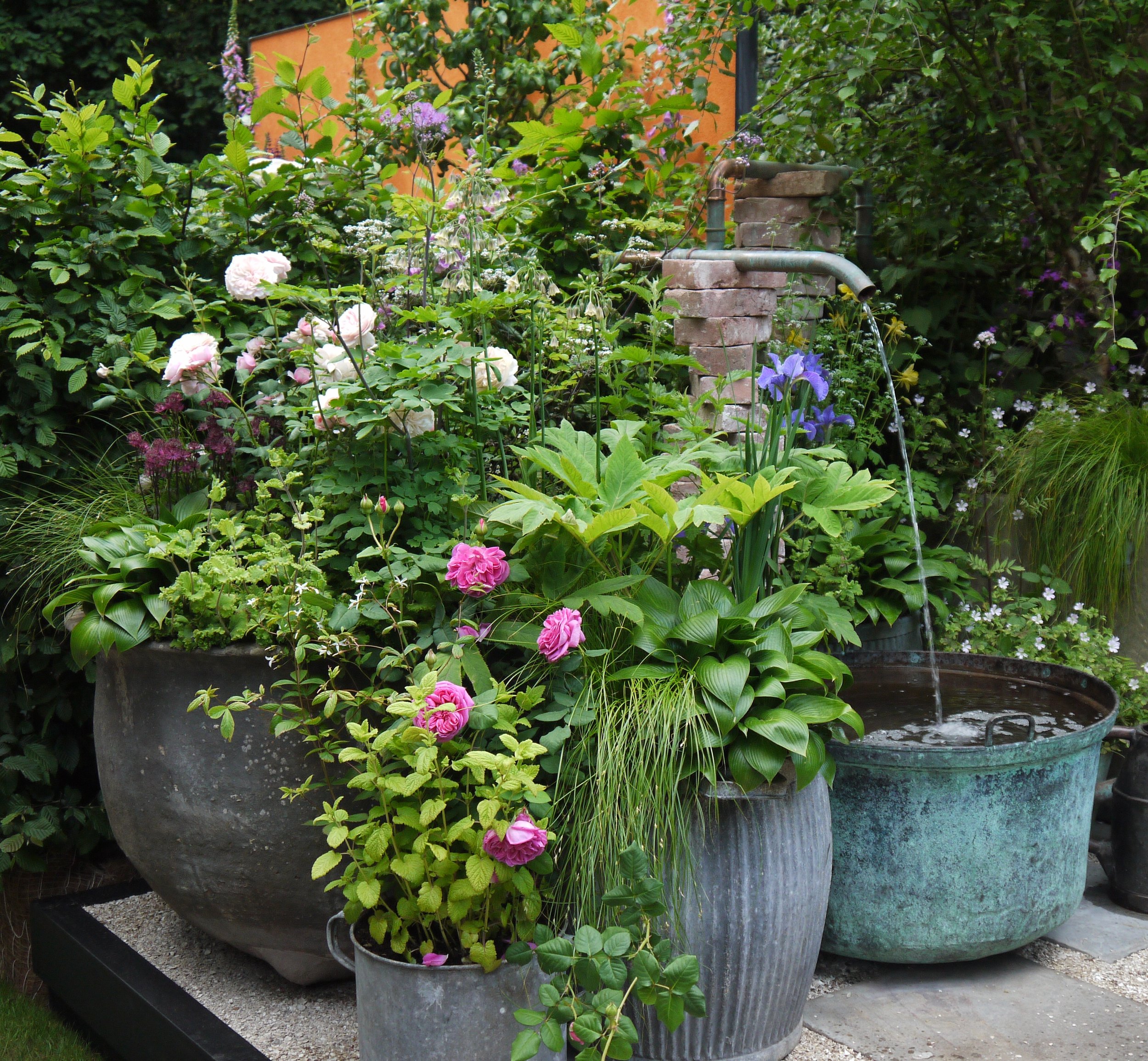
Designer: Ollie Pike Photo Credit: Manoj Malde
A beautiful choice of containers that have been salvaged and recycled. The designers has selected a lovely choice of plants that add colour and scent to the garden.
Spring Bulbs for Balcony Gardens
Don't overlook bulbs — they deliver one of the great joys of gardening: the spring surprise. Tuck them between existing plants in autumn for a burst of colour in February and March.
Best bulbs for balcony containers:
Narcissus 'Tête-à-tête' — compact, reliable, and cheerful
Tulipa turkestanica — multi-headed, creamy white with yellow
Tulipa bakeri 'Lilac Wonder' — lilac-pink petals with a yellow centre
Eucomis (pineapple lily) and Fritillaria imperialis — both make a bold statement; grow in groups of three in a single pot
How to Water a Balcony Garden
Watering is one of the practical challenges of balcony gardening — and getting it right makes an enormous difference to plant health.
If you have an outdoor tap, consider installing a drip irrigation system with a digital timer. This is simpler to set up than it sounds and takes the guesswork out of watering.
If you're hand-watering, add water-retaining gel granules to your compost. These absorb water and release it slowly as plants need it — reducing the frequency of watering and protecting plants during holidays.
Sub-irrigation tanks (such as those made by Mona Planta) are another excellent option. Buried in the pot, they hold a reservoir of water that plants draw from as needed. A clever indicator tells you when it's time to refill.
One practical note from Cristina Mazzucchelli: always check your drainage. You do not want water escaping onto the balcony below.
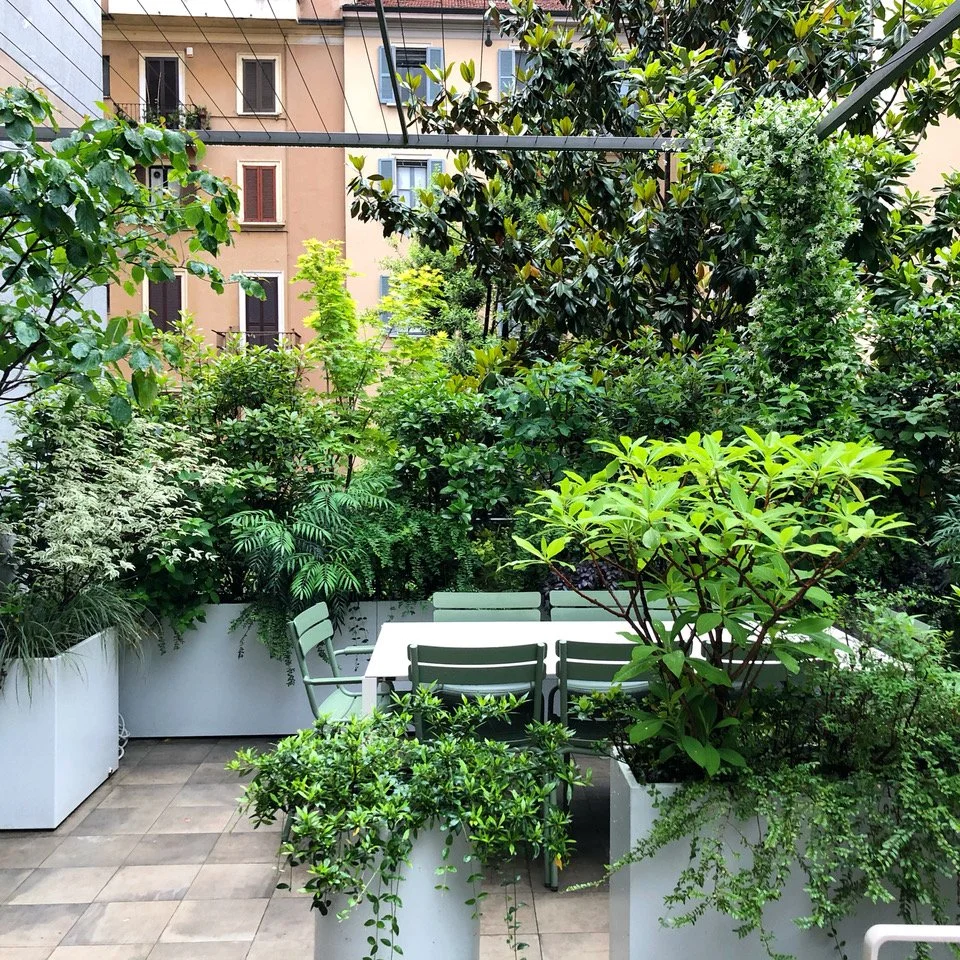
Designer: Cristina Mazzucchelli
On this balcony garden the outdoor dining area is perfectly positioned. It is screened by all the lush evergreen planting, giving the diners privacy whilst also making them feel as if they are being hugged by nature.
Balcony Garden Lighting Ideas
Good lighting transforms a balcony garden from a daytime space into an evening retreat. The key word is subtlety — you're creating atmosphere, not illuminating a car park.
Solar LED lights tucked among plants create interesting shadows that shift through the evening
Fairy lights strung along railings or through climbing plants add a warm, magical glow
Storm lanterns with candles or LED flames provide a moody, flickering ambience
Keep it low and layered. The goal is to make your mini oasis feel like the most relaxing place in the city — and gentle light goes a long way.
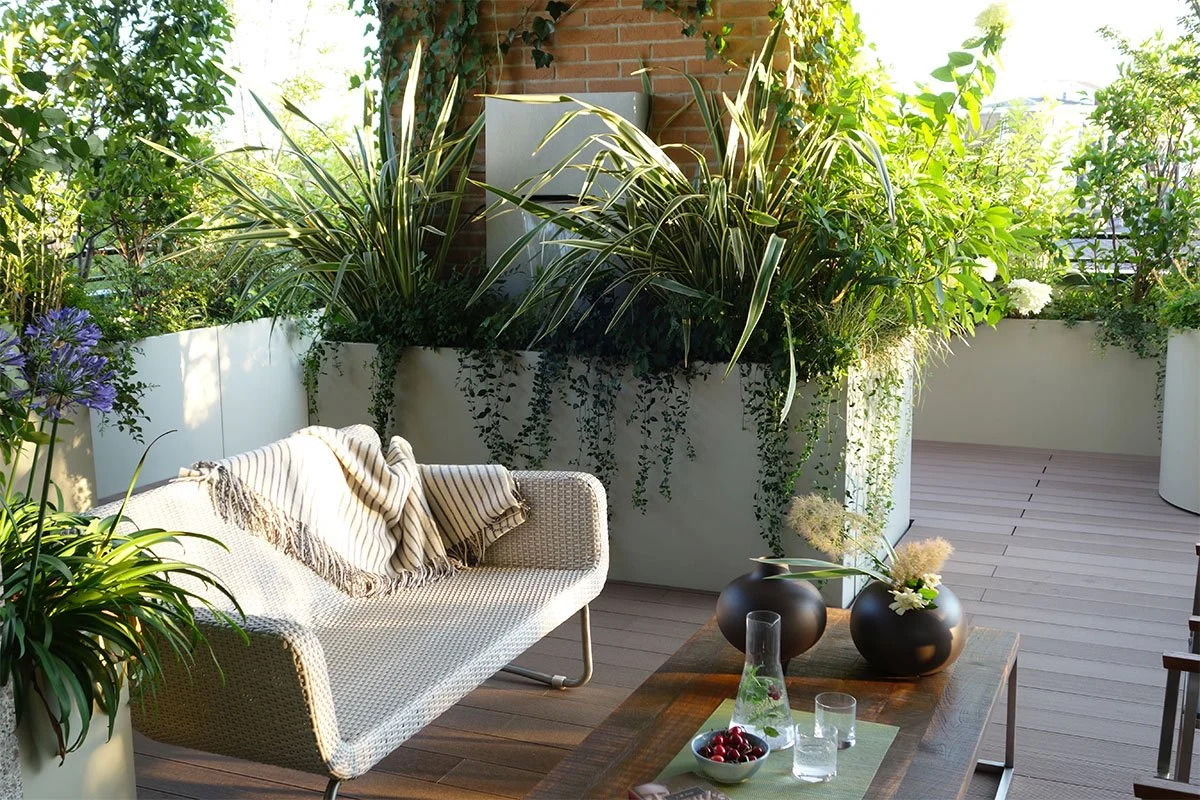
Designer: Cristina Mazzucchelli
The designer has cleverly included a water feature on this balcony garden. The brick pillar is a gem. Not only does it allow for privacy in the seating area but prevents the wind from blowing the water around.
Balcony Garden Tips: Expert Summary
To bring it all together, here are the key principles from the designers and horticulturalists featured in this guide:
Measure first, buy second — always check access points as well as the balcony itself
Know your aspect — sun, shade, and wind dictate everything
Think vertically — living walls, climbers, and tall plants create atmosphere without eating floor space
Balance evergreen and deciduous — structure year-round, with seasonal colour as a bonus
Grow edimentals — plants that earn their keep by looking beautiful and feeding you
Keep lighting subtle — atmosphere beats brightness every time
Create indoor-outdoor dialogue — let your balcony feel like a natural extension of your home
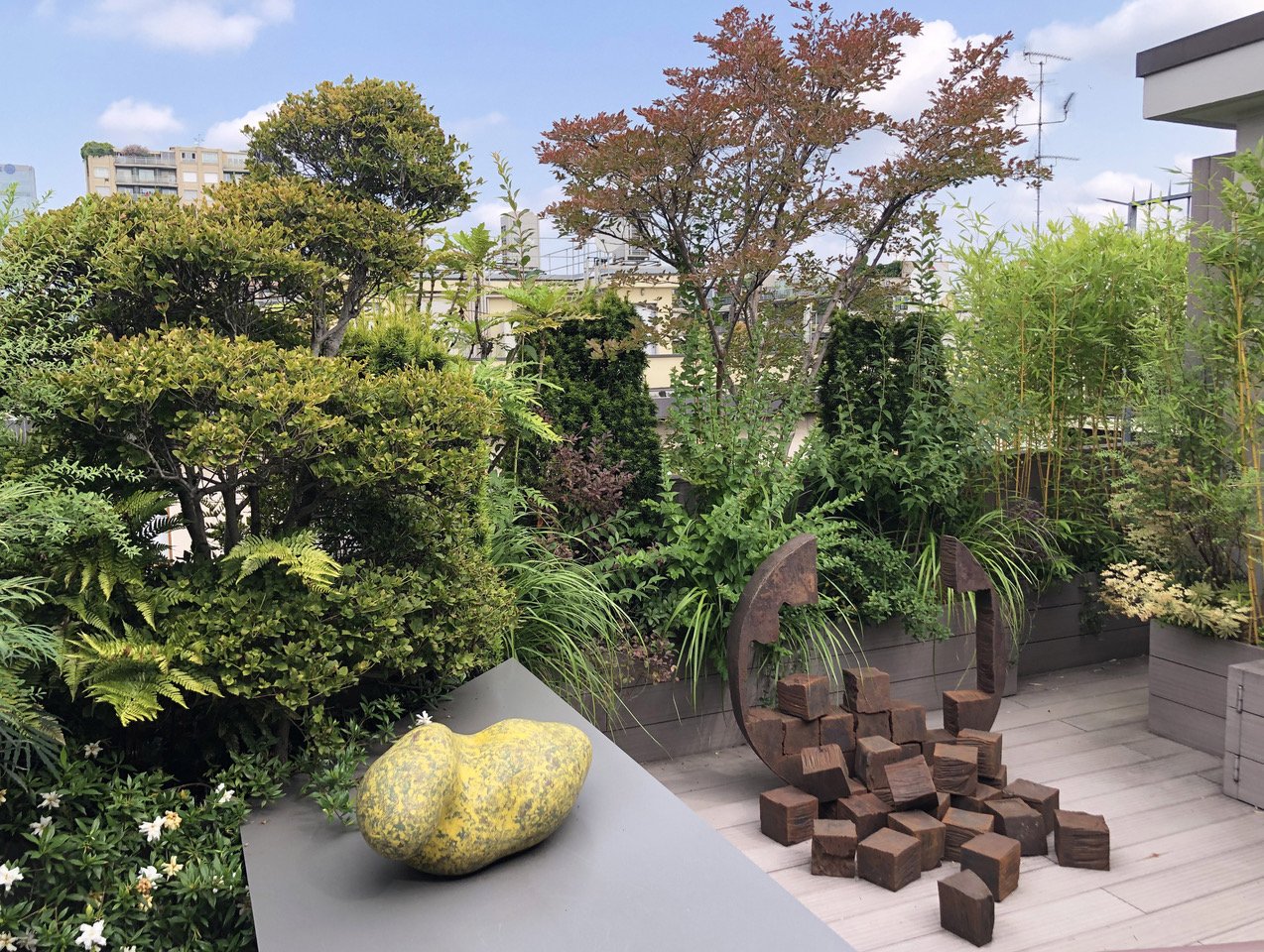
Designer : Cristina Mazzucchelli
There is no reason why you cannot incorporate some artwork in a balcony garden. This can be on a wall, on the floor, set on a pedestal or even positioned among plants. Here, the designer has used sculpture as focal points
Final Thought: Why Balcony Gardens Matter
The Covid-19 pandemic reminded us how profoundly we need access to green space — for our mental health, our sense of calm, and our connection to the natural world. As cities grow and housing density increases, balcony gardens are not a luxury. They are a necessity.
Whether you're working with six square metres or sixty, your balcony has the potential to become something truly special. A place to grow things, to sit quietly, to watch the seasons change — your own mini oasis in the city.