
Discover how to transform your front garden into a welcoming, wildlife-friendly and sustainable space, with clever parking solutions, permeable paving and planting ideas that benefit your home and the environment.
The Disappearing Front Garden: What Have We Lost?
Once upon a time, Britain was a nation of gardeners. Front gardens were a source of pride, and there was often a friendly rivalry between neighbours to see who could create the most beautiful display. Neatly clipped hedges defined boundaries, colourful flowers brightened the street, and trees and shrubs softened the built environment.
Today, that picture is changing. Increasingly, front gardens are being paved over to create off-road parking spaces. While the need for convenient parking is understandable, the cumulative effect is transforming our streets into expanses of hard surfaces, with fewer plants, less wildlife and a loss of character.
The scale of this change is concerning. Figures published in 2012 indicated that around seven million homes in England had paved over their front gardens, equivalent to an area roughly 100 times the size of Hyde Park. Earlier research also highlighted the growing proportion of front gardens being converted to hard-standing.
These figures may be historical, but the underlying issue remains relevant: how can we accommodate modern living without sacrificing the green spaces that make our neighbourhoods healthier, more attractive and more resilient to climate change?
Why Front Gardens Matter More Than We Think
A front garden is much more than the space between our front door and the pavement. Collectively, our gardens form a network of green spaces that can make a real difference to the environment.
1. Help prevent surface-water flooding
When we replace soil and planting with extensive areas of impermeable paving, rainwater can no longer soak naturally into the ground. Instead, it runs off hard surfaces and into drains, adding to the pressure on drainage systems during heavy rainfall.
As climate change brings more intense downpours in many parts of the UK, managing rainwater has become increasingly important.
A front garden with permeable paving, gravel, planted borders and healthy soil allows more rainfall to infiltrate the ground, helping to reduce surface-water runoff. It won't prevent all flooding, but every garden that manages water more effectively can contribute to a wider solution.
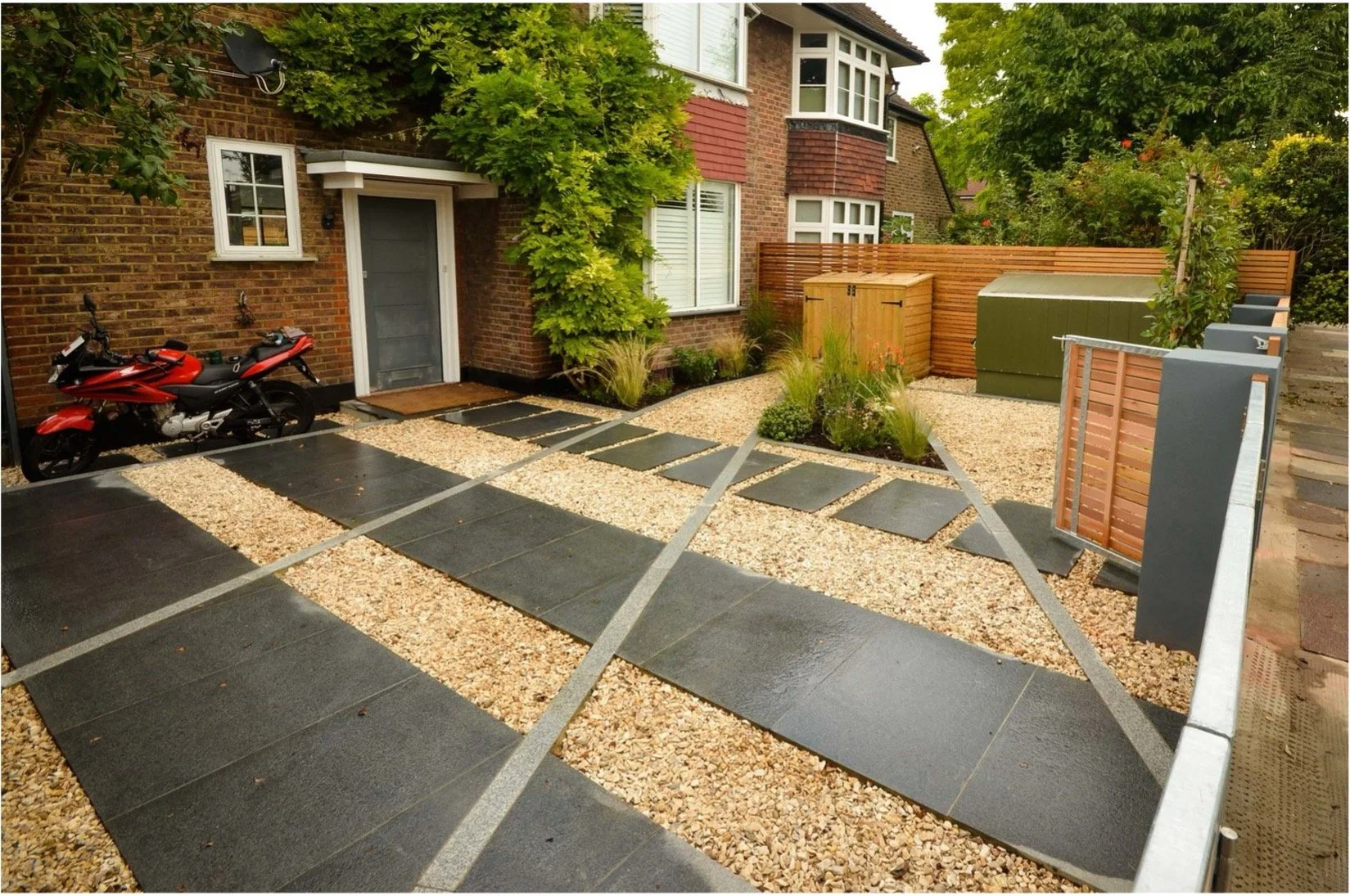
Credit: Azara Landscapes
This stunning transformation of a front garden provides parking space, bin & cycle storage and planting pockets that enhance the frontage of this property. The gravel keeps the drive permeable, allowing the surface water to penetrate the ground
2. Keep our streets cooler
Have you ever walked down a street lined with trees and gardens on a hot summer's day, then turned into a road dominated by concrete and paving?
The difference can be striking.
Hard surfaces absorb and store heat, releasing it slowly as temperatures fall. In built-up areas, this contributes to the urban heat island effect, where towns and cities become warmer than surrounding rural areas.
Plants help cool their surroundings through shade and evapotranspiration — the process by which water evaporates from the soil and is released by plants through their leaves.
Even a small front garden with a tree, shrubs and ground-cover planting can contribute to a cooler, more comfortable street.
3. Give wildlife a place to thrive
Front gardens can provide valuable habitats for birds, pollinators and other wildlife, particularly where gardens connect with street trees, parks and neighbouring green spaces.
Hedges provide shelter and nesting opportunities. Flowering plants offer nectar and pollen. Trees provide food, shade and places to perch, while ground-cover plants create shelter for smaller creatures.
Replacing every garden with paving removes these opportunities. Retaining even a modest planted area helps maintain a network of urban habitats.
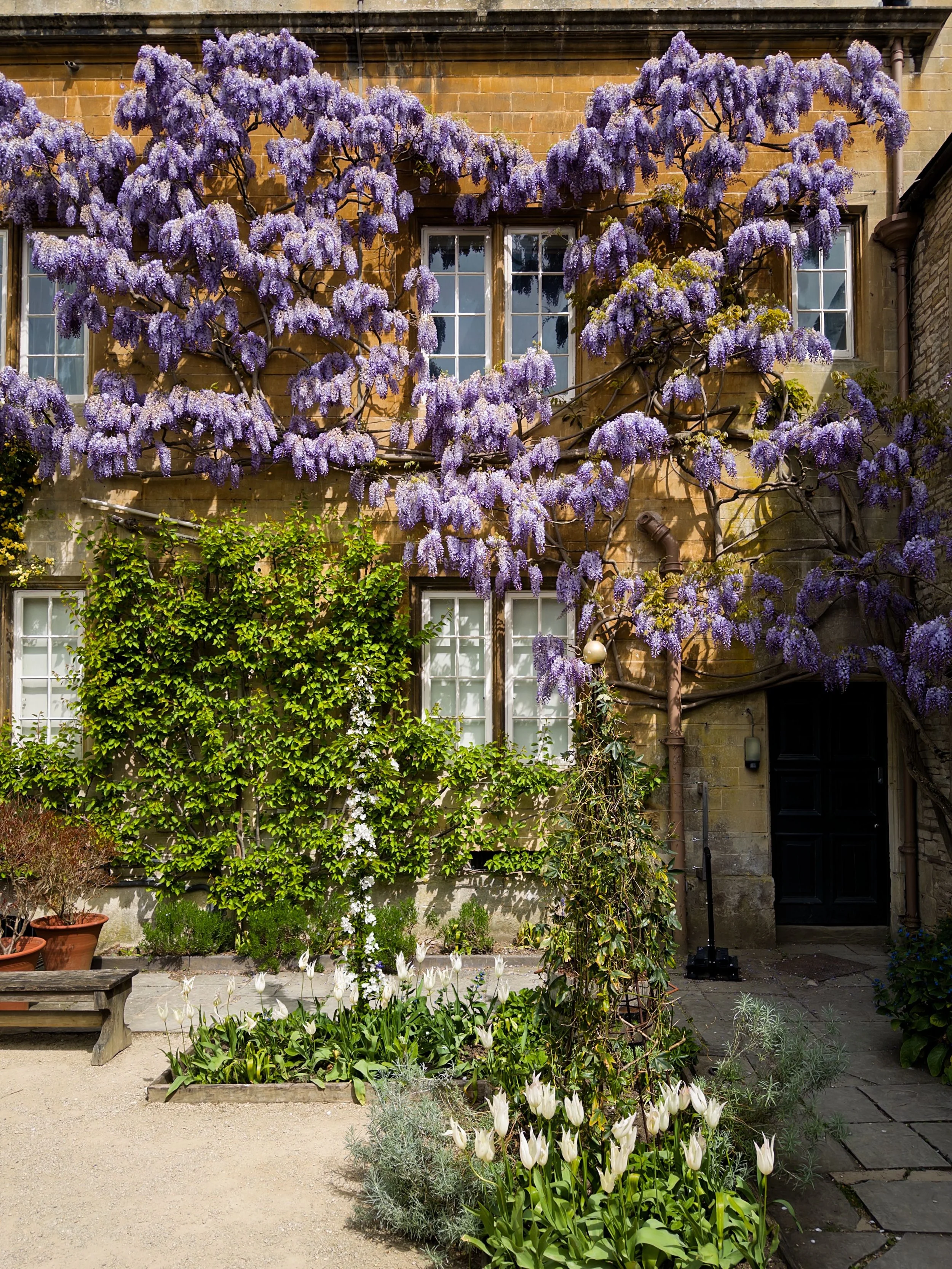
The wisteria trained up the wall of this property softens the hardness of the stone walls. The scent of the wisteria also provides a wonderful welcome to the property. Birds can also create nests among the branches of the wisteria. If none of the plants existed in the front, this property would look cold and sterile.
4. Improve the look and feel of our neighbourhoods
Which street would you rather walk down: one with mature trees, attractive hedges, seasonal flowers and welcoming entrances, or one where every front garden has been replaced by paving?
Greenery softens the hard lines of buildings, adds colour and texture, and gives a street its individual character. It can also help make a home feel more inviting.
Kerb appeal matters when selling a property, and a thoughtfully designed front garden can enhance its appearance. While no garden design can guarantee an increase in property value, a green and well-maintained frontage can make a positive first impression.
And let's not forget the value that cannot be measured in money: the pleasure of living in a greener, more attractive neighbourhood.
Can You Have a Parking Space and a Beautiful Front Garden?
Absolutely! The answer lies in designing the space as a garden first, with parking carefully incorporated into the overall layout.
Rather than paving over the entire frontage, consider how much space your car genuinely needs. Could you use two wheel tracks instead of a complete paved surface? Could a planted border run alongside the parking bay? Could a small tree, a hedge or a few well-chosen containers soften the entrance?
The aim is to make parking part of the garden design, rather than allowing it to dominate.
Here are some practical front garden ideas to help you achieve that balance.
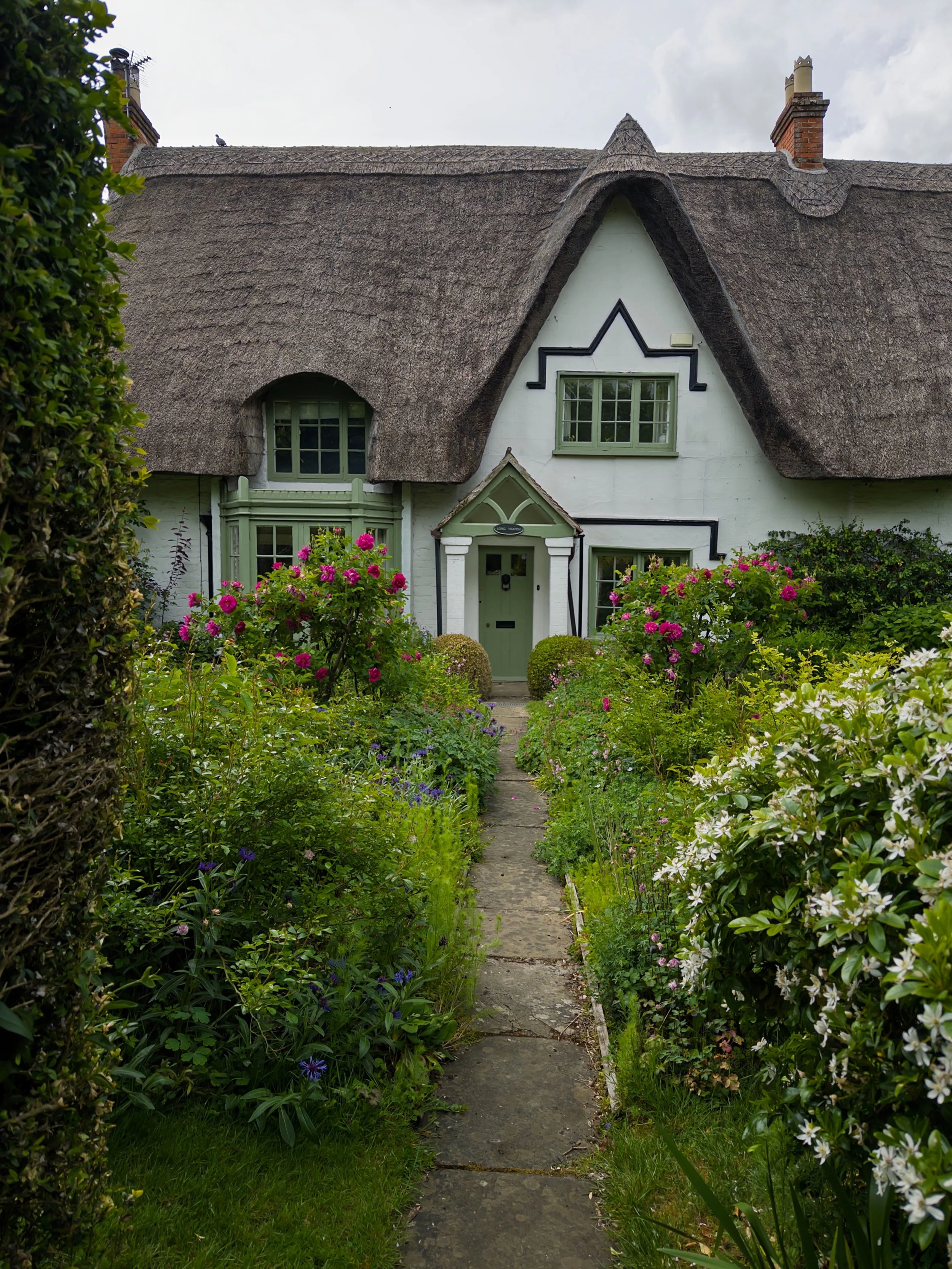
The look of this thatched cottage is enhanced by the deep, overflowing borders either side of the path. What a wonderful, inviting entrance. The huge variety of plants creates a greater bio-diversity.
9 Ways to Create a Greener, More Attractive Front Garden
1. Choose hedges instead of fencing
Hedges are one of the most effective ways to bring greenery back to our streets. They create a softer boundary than a fence, provide habitat for wildlife and can help filter some airborne particles from traffic. Hedges are also highly effective to tools to counteract flooding.
Evergreen hedges offer year-round structure, while deciduous hedges bring seasonal changes in colour and texture.
Consider:
Carpinus betulus (hornbeam): excellent for a structured hedge, with attractive autumn colour.
Fagus sylvatica (beech): retains many of its copper-coloured leaves through winter when clipped.
Prunus lusitanica (Portuguese laurel): evergreen, with glossy leaves and reddish stems.
Taxus baccata (yew): a superb, long-lived evergreen for formal hedging.
Griselinia littoralis: an attractive evergreen option for relatively mild, sheltered locations.
Choose a species suited to your soil, aspect and available space. Keep sightlines clear near driveways and pavements, and remember that hedges need room for maintenance.
If space is a problem, an alternative to hedges are green screens. These will provide instant greenery. They are also beneficial to wildlife and the environment.
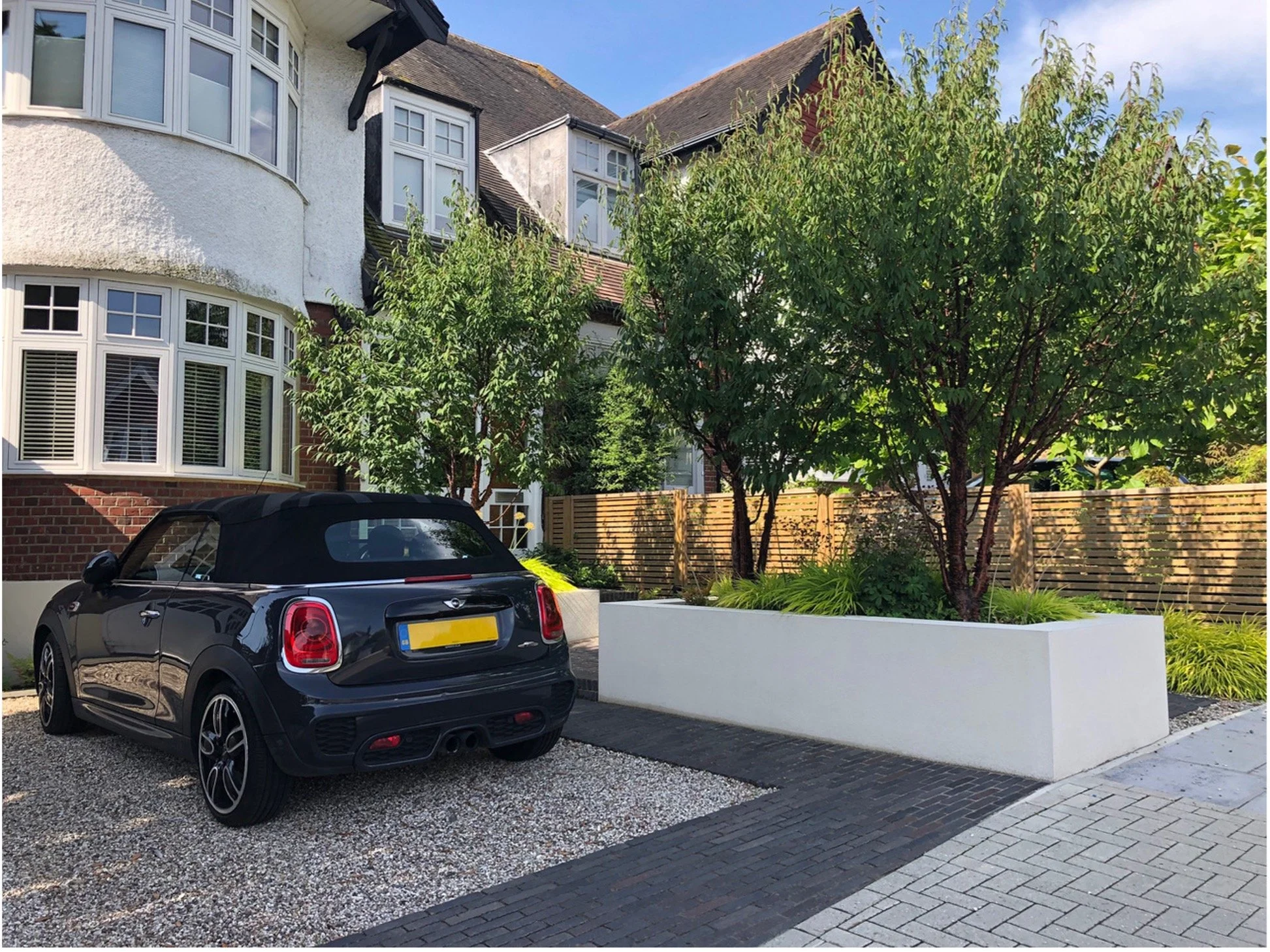
Design Credit: Amanda Broughton
This is a simple but very effective design. The dark clay pavers create a path that defines the car parking space, but they also help to keep the gravel in place. The gravel allows for surface water to drain back into the ground. The three Prunus serrula Tibetica add vertical interest whilst separating the entry to the home from the car parking area. The grasses used as underplanting help to add a lighter, softer touch to the hardscape.
2. Use permeable paving wherever possible
If you need a parking space, the surface you choose makes a significant difference.
Instead of covering the entire front garden with impermeable concrete or conventional paving, explore surfaces that allow water to drain through or between them.
Options include:
Gravel: relatively simple to install and available in a wide range of colours and sizes.
Permeable block paving: creates a firm, attractive surface with joints designed to allow water through.
Permeable resin-bound gravel: offers a smoother, more contemporary appearance when correctly specified and installed.
Clay pavers or setts: can be laid with suitable permeable joints and a properly designed sub-base.
Reinforced grass or gravel grids: provide support for vehicle loads while allowing grass or gravel to remain visible.
The important point is that the whole construction matters, not just the surface. The bedding, sub-base and underlying soil must be designed to manage water effectively. A resin surface is not automatically permeable, and ordinary paving with narrow gaps may allow very little water through.
Check local drainage requirements and site conditions before choosing a system.
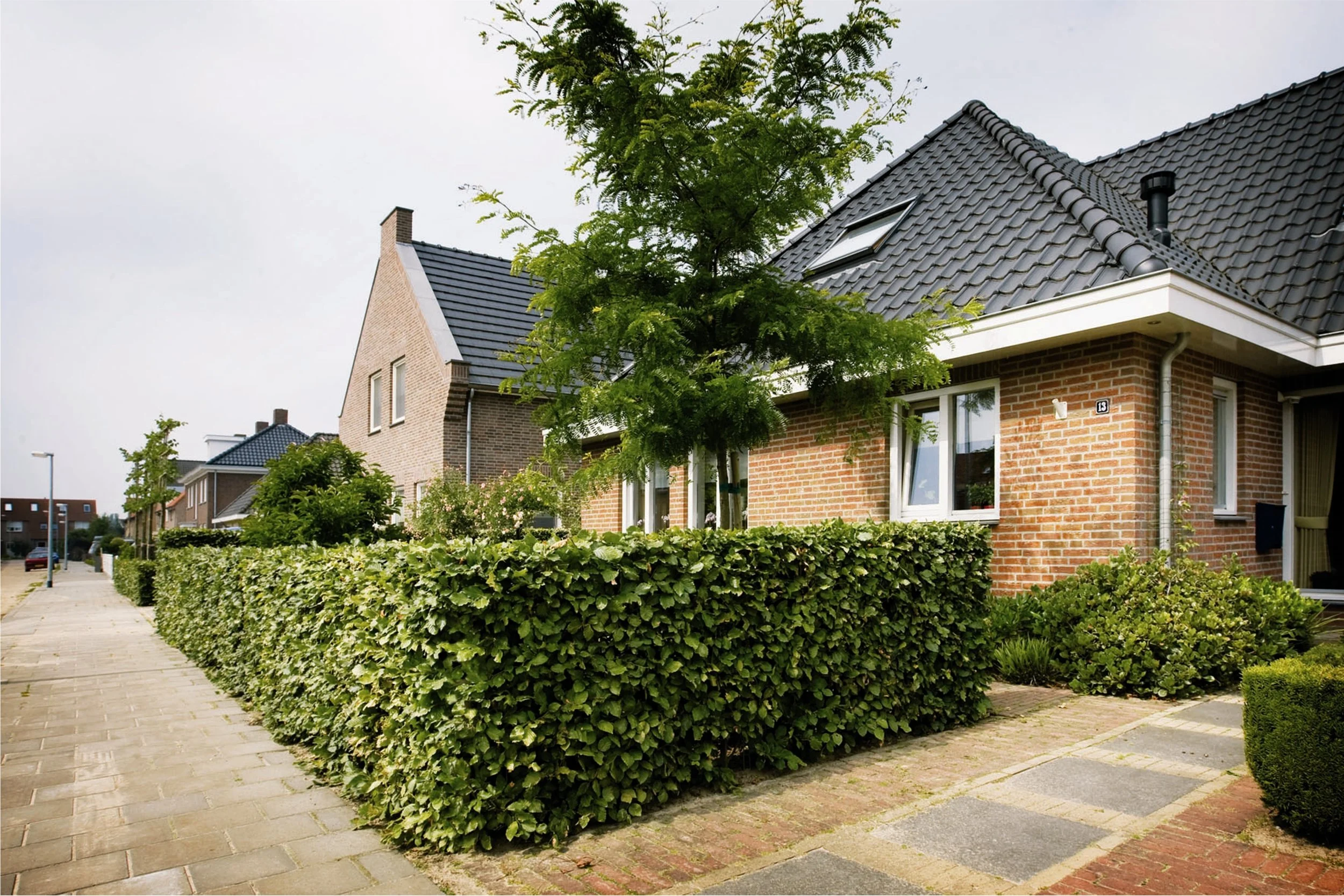
Credit: Mobilane
If you don’t have space for hedges, how about considering green screens. Like hedges, they provide instant impact and greenery. The help capture pollution. They also provide habitat for birds and shelter for other wildlife.
3. Create two wheel tracks instead of paving the whole driveway
Instead of laying a continuous hard surface, create two durable tracks for the car's wheels, leaving the space between and alongside them for planting or gravel.
The tracks must be wide enough and robust enough for safe access, turning and parking. However, the surrounding space can be planted with low-growing, spreading plants that soften the overall appearance.
Suitable plants might include:
Erigeron karvinskianus, with its delicate daisy-like flowers.
Thymus serpyllum, a creeping thyme for suitable sunny, well-drained locations.
Sagina subulata, a low-growing green ground cover for suitable conditions.
Ophiopogon japonicus, for a neat, grass-like effect in appropriate planting positions.
Avoid planting delicate species where car wheels will regularly run over them. The planting needs to be positioned where it can thrive without being crushed.
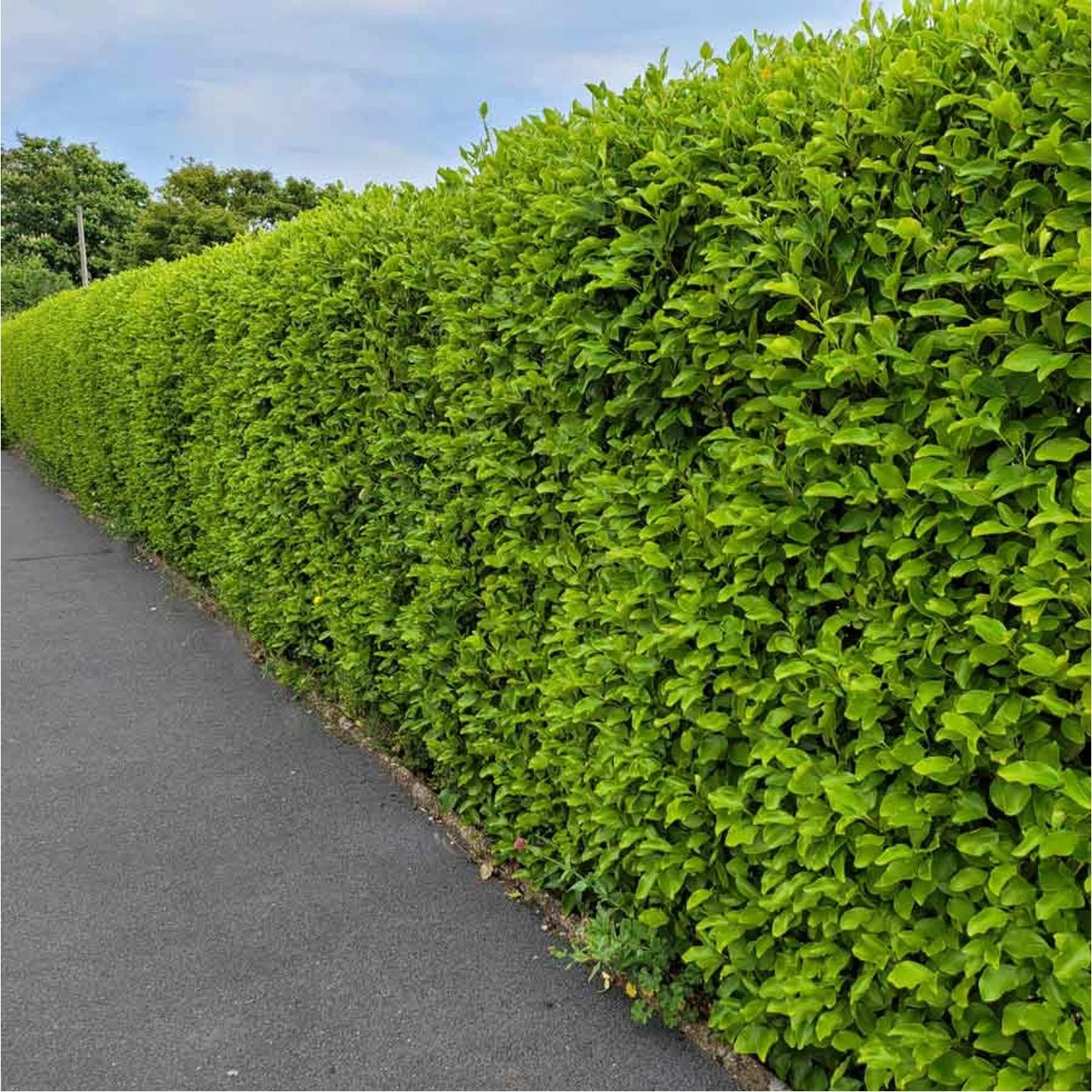
Hedges provide instant impact and greenery in the garden. They also help to capture pollution. This helps clean up the air. Particularly helpful to those who suffer from respiratory problems such as asthma. Hedges also help mitigate flooding. They provide habitat and shelter for wildlife.
4. Make the most of vertical planting
When floor space is limited, look upwards!
Climbers can transform a bare wall or fence into a living green backdrop without taking up much ground space. They add height, seasonal interest and valuable habitat.
Try:
Trachelospermum jasminoides (star jasmine), an evergreen climber with beautifully scented summer flowers in a sheltered, suitable position.
Clematis armandii 'Apple Blossom', an evergreen clematis with attractive spring flowers.
Hydrangea anomala subsp. petiolaris, a self-clinging climber suited to shadier walls.
Rosa 'Gertrude Jekyll', a fragrant rose for a suitable sunny position with adequate support.
If you cannot plant directly into the ground, use a generous container with suitable drainage. Check whether your chosen climber needs wires, a trellis or another form of support.
Before planting against walls, consider the condition of the masonry and the mature size of the plant.

If you are thinking about hardscaping in your front or back garden, choose materials and construction methods that will provide porosity. It is so important that rainwater is allowed to permeate into the ground. This helps to keep our environment cooler, this in turn helps with breathing, especially those who suffer with asthma.
5. Plant a small tree
If space allows, a tree can become the defining feature of a front garden.
Trees provide shade, absorb and store carbon, intercept rainfall, support wildlife and help cool their surroundings. Even a small tree can introduce height and structure into an otherwise flat design.
Good candidates for consideration include:
Amelanchier lamarckii, with spring blossom, attractive autumn colour and a graceful form.
Arbutus unedo (strawberry tree), an evergreen tree or large shrub with ornamental bark and flowers and fruits at different times of year.
Prunus serrula 'Tibetica', valued for its polished, copper-red bark.
Sorbus hupehensis 'Pink Pagoda', an ornamental rowan with seasonal berries and autumn interest.
Euonymus europaeus 'Red Cascade', a colourful choice for autumn foliage and fruit, provided its eventual size suits the space.
Think carefully about mature height and spread, root space, overhead cables, windows and access. A tree that is right for a small garden can be a wonderful long-term investment.
6. Use pleached trees for privacy without sacrificing ground space
Pleached trees are trained to grow with a raised, relatively flat canopy on a clear stem. They are ideal when you want screening or a leafy architectural feature without filling the garden with bulky shrubs.
You can use them to screen neighbouring windows, soften a boundary or create a striking green frame around a parking space.
Some suppliers also offer trained forms with geometric or parasol-like canopies.
Choose species carefully and check the eventual canopy size, maintenance requirements and clearance above vehicles and paths.
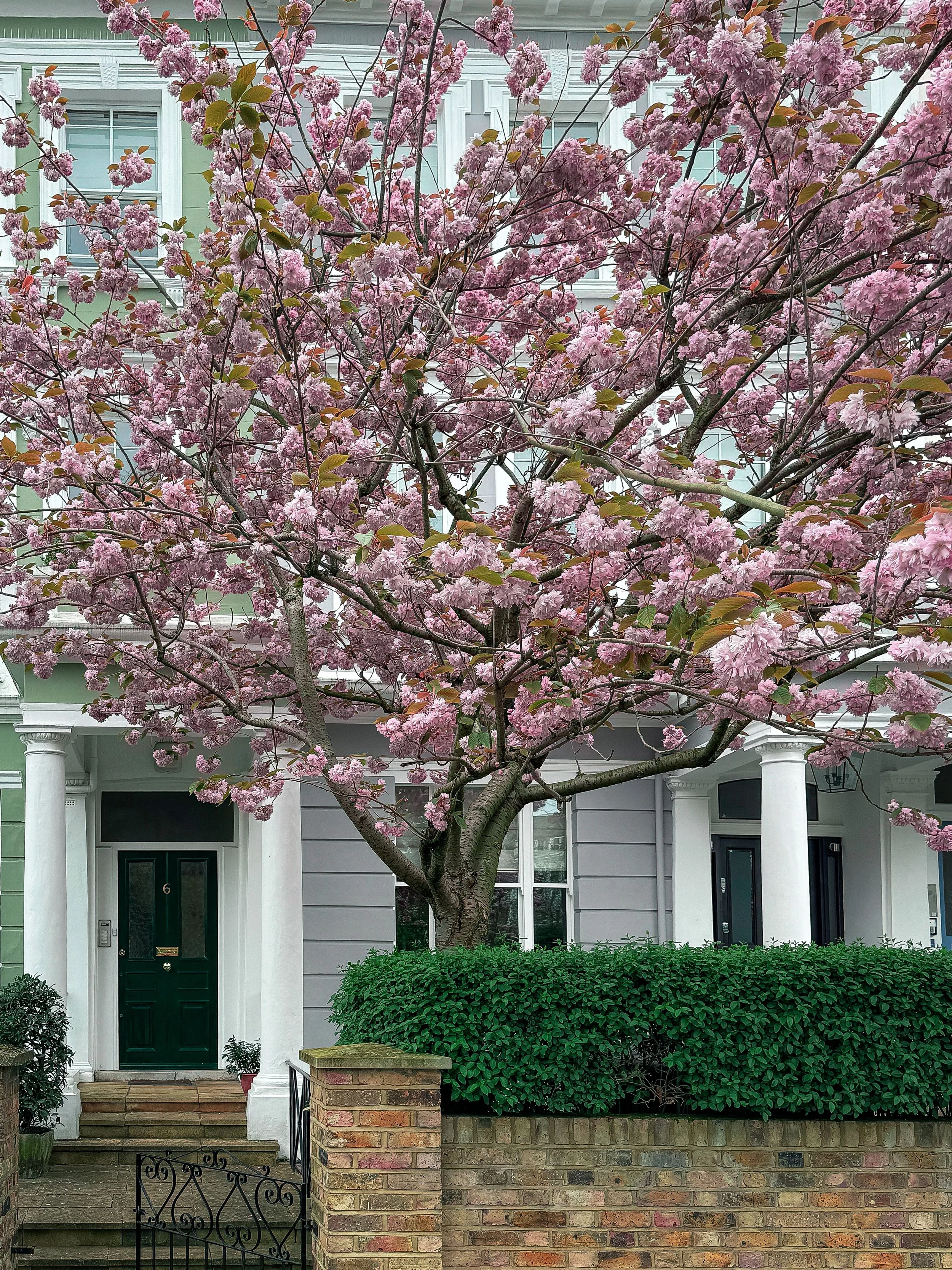
Trees make a garden. Dependent on which species of trees you use, they can provide structure, height and seasonal interest. Tree can also help create privacy. Where space is limited in towns and cities, pleached trees are often used to provide screening for privacy.
7. Green up the entrance with containers
Pots are an easy way to introduce colour, fragrance and seasonal interest, especially if you have a small front garden or are renting.
A pair of containers either side of the front door creates a welcoming entrance. Alternatively, use one large statement pot to add height and draw the eye towards the house.
For a contemporary look, choose simple containers and repeat a small palette of plants. For a more relaxed cottage-garden feel, combine grasses, flowering perennials and seasonal bulbs.
Remember that containers dry out faster than garden soil. Choose pots with drainage holes, use a suitable growing medium and select plants that match the available light and your willingness to water.
8. Hide wheelie bins and bikes behind green roofs
Wheelie bins are a practical necessity, but they don't have to dominate the front of a property.
A well-designed bin store can screen bins while creating a tidy, attractive feature. Where appropriate, a properly designed green roof planted with suitable sedums or other low-growing species can soften the structure and provide additional habitat.
The same idea can work for a bicycle store.
Make sure the roof is designed to support the planting and saturated growing medium, with suitable waterproofing, drainage and safe access for maintenance. Keep bins easy to move and ensure the structure does not obstruct access or visibility.
9. Design planting that looks good throughout the year
A beautiful front garden shouldn't be spectacular for just three weeks in summer. With careful plant selection, it can provide interest in every season.
Combine evergreen structure with flowering shrubs, ornamental grasses, bulbs and herbaceous perennials.
For example:
Spring: bulbs, blossom and fresh foliage.
Summer: lavender, roses, flowering perennials and grasses.
Autumn: colourful foliage, ornamental berries and seed heads.
Winter: evergreen shrubs, attractive bark and the structure of clipped hedges.
Repeating a few plants throughout the garden creates cohesion and makes even a small space feel thoughtfully designed.
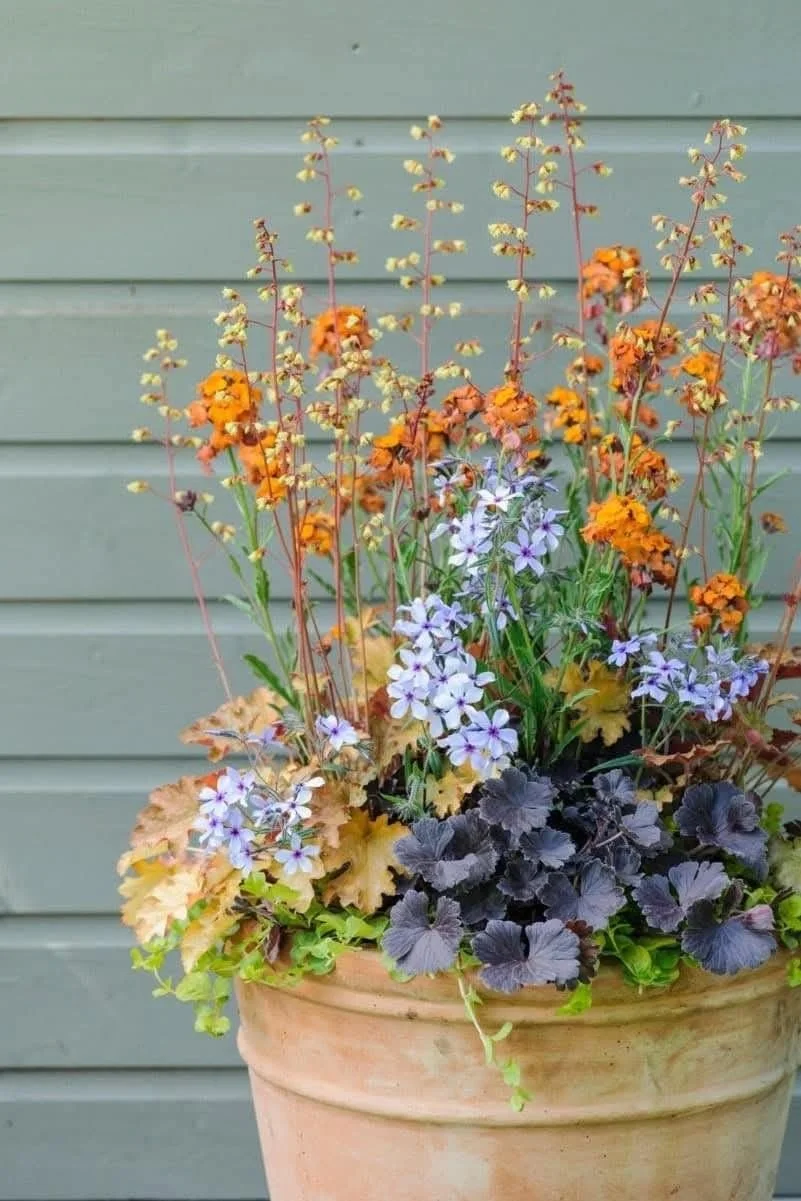
There is nothing more welcoming than beautifully planted containers either side of the front door. It shows that the homeowner takes pride in the look of their property. The wonderful thing about containers is that they can be renewed inexpensively through the seasons.
More Simple Ways Homeowners Can Make a Difference
You don't need a large garden or a substantial budget to make your frontage greener. Small changes can have a surprisingly positive effect when repeated across a neighbourhood.
Keep some soil uncovered
Avoid paving every available inch. Even a modest planted border allows rainwater to reach the soil and creates space for roots and wildlife.
Collect rainwater
Where practical, install a water butt to collect roof runoff for watering containers and newly planted areas. Use a secure, covered system and ensure overflow is directed appropriately.
Make room for pollinators
Choose flowers that provide nectar and pollen over a long season. Lavender, hardy geraniums, salvias and other suitable flowering perennials can help support pollinators.
Avoid relying entirely on double-flowered cultivars, which may offer less accessible pollen or nectar.
Choose plants for the conditions
A plant that thrives in the right place will generally need less intervention. Match your choices to the amount of sunlight, soil type, drainage and exposure your garden receives.
For dry, sunny areas, consider suitable drought-tolerant plants such as lavender and creeping thyme. For shade, look at plants such as Sarcococca hookeriana var. humilis and appropriate hardy geraniums.
Drought-tolerant does not mean that newly planted plants never need watering. Establishment is important, particularly during dry spells.
Reuse and recycle materials
Consider reclaimed bricks, reused stone or recycled materials where they are suitable for the job. Existing soil and healthy plants may also be retained rather than removed unnecessarily.
This can reduce waste, preserve established greenery and help keep costs under control.
Reduce chemical use
Avoid routine pesticide use where possible. Encourage natural pest control by providing diverse planting and habitat, and use targeted, lower-impact approaches when intervention is necessary.
Work with your neighbours
A single green front garden is lovely. A whole street of them can be transformative.
Talk to neighbours about planting ideas, shared boundaries and opportunities to introduce more trees and greenery. Consistent planting along a street can create a stronger sense of identity and help connect wildlife habitats.
Check permissions before changing your driveway
Before creating or enlarging a parking space, check whether planning permission, a dropped kerb approval or other local requirements apply. In England, new or replacement impermeable front-garden paving over five square metres may require planning permission unless the relevant conditions for permitted development are met.
Requirements vary according to the property and location, so check with your local planning authority before starting work.
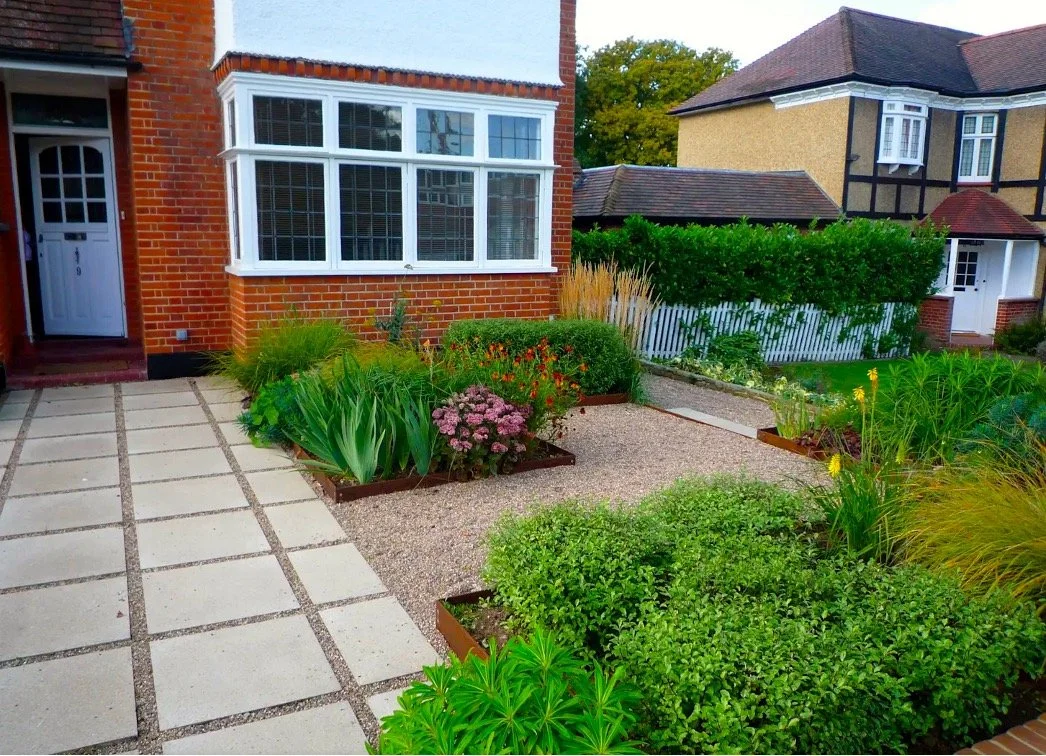
Design Credit: Fenton Roberts Garden Design
The corten steel edges define the planting borders. Gravel has been used to good effect to tie all the areas together as the designers have even used it between the slabs. Beautiful planting provides kerb appeal, making the house look attractive. What is attractive about this design is that it is a garden first and then a car park space.
Bringing It All Together: A Front Garden That Works
Imagine a front garden where two neat tracks provide practical parking, permeable gravel helps manage rainwater, and a small tree creates shade and seasonal interest. A clipped hedge defines the boundary, climbers soften the house wall, and a mixture of evergreen shrubs and flowering perennials creates colour throughout the year.
Bins are tucked away in an attractive store, and containers frame the front door.
The result is not simply a parking space with a few plants added as an afterthought. It is a garden that works for the homeowner while contributing to a greener, more attractive street.
This is where thoughtful garden design can make a real difference: balancing the practical needs of modern life with the environmental benefits and beauty of planting.
Let's Bring the Front Garden Back to Life
Our front gardens are part of our shared environment. Every tree planted, hedge retained, permeable surface installed and square metre of soil protected can contribute to a healthier and more welcoming neighbourhood.
We cannot control every aspect of climate change or prevent flooding through garden design alone. But we can make better choices about the spaces immediately around our homes.
The answer isn't to abandon cars or pretend that parking isn't a real concern. It is to rethink how we design our front gardens so that parking and planting can coexist.
A front garden should be more than a place to park a car. It should be a green welcome to our homes, a refuge for wildlife and a small but meaningful contribution to the future of our environment.
Let's reclaim our front gardens, one home and one street at a time.