
WINTER GARDEN IDEAS: 10 Ways to Create a Beautiful Winter Garden
After the bursts of colour of spring and summer, many of us feel a little dejected when the grey, cold days of winter arrive. When we talk about garden design, how often do we think about the winter garden? Most people assume the garden is dead from November to March.
It isn’t. It’s resting and moving at a slower pace. Once you learn to look, a winter garden has plenty to enjoy, and with the right planning, it can be one of the most atmospheric and peaceful times of the year.
Start with Structure: The Backbone of Winter Garden Design
If you want a beautiful garden in winter, think about structure first. Structure is what holds the garden together when the flowers have gone. It includes:
The branches of trees and the stems of shrubs
The shape of clipped shrubs and hedges
A generous proportion of evergreen plants
Winter isn’t a season of bold colour. It’s a season of atmosphere. A hedge makes a lovely backdrop to summer planting, but it really comes into its own as a ghostly silhouette on a foggy winter morning. The same goes for carved shrub shapes and trees with dramatic branches.
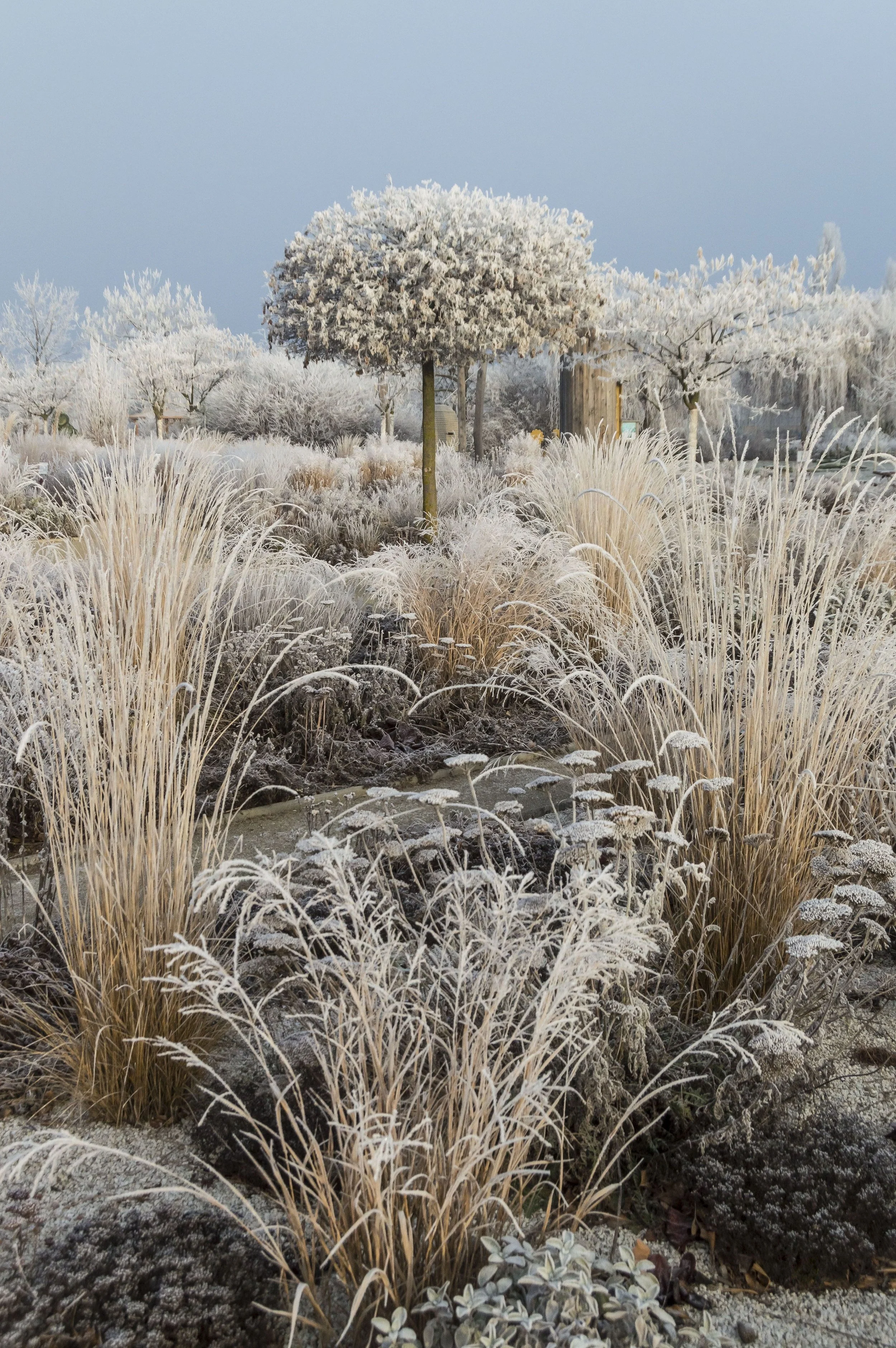
There is something quite otherworldly when a garden slips into a slower pace and into its winter slumber. The atmosphere of the garden changes. It looks very ghostly when the garden is covered in hard frost or when you see the faint silhouettes of trees and shrubs through the dense fog.
Bark and Stem Colour: Plants for Winter Interest
Winter gardens are less about flowers and more about texture, bark and stem colour. Here are some of my favourites.
Cornus ‘Midwinter Fire’ is a shrub that really does look as though it’s on fire. Plant it in groups of five or more. Position them where the low evening sun catches the stems, making them glow, creating drama.
Prunus serrula ‘Tibetica’ is one of my favourite trees. It has year-round interest, but in winter the glossy burgundy bark looks as if it has been bound with copper wire.
Other winter interest trees to consider:
Tilia cordata ‘Winter Orange’ for fiery orange stems
Arbutus x andrachnoides mature trees have orange streaked bark
Acer griseum (paperbark maple) has beautiful peeling bark
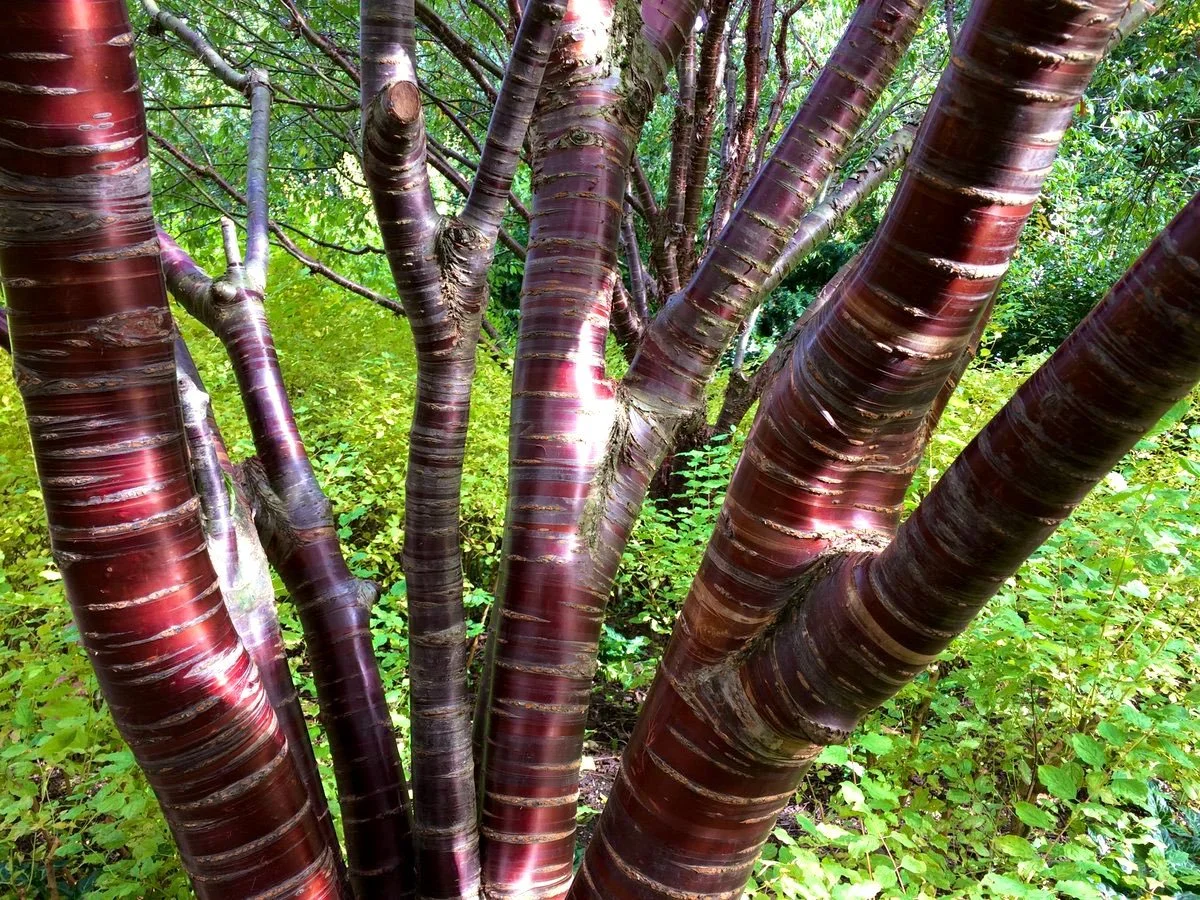
Interest in a winter garden can come through colourful stems or interesting bark. Some trees have interesting patterning or texture on the bark, others can be glossy, and some have bark where the outer layers peel, exposing the colours of the underlayers.
Winter Scented Plants: Perfume for the Coldest Days
In winter, scent becomes much more precious. Plant winter-flowering shrubs close to an entrance or along a path, where you can make the most of them.
Viburnum × bodnantense ‘Charles Lamont’ has a scent that will stop you in your tracks.
Hamamelis (witch hazel) has spicy, spider-like flowers in yellows, oranges, pinks and reds.
Edgeworthia carries highly scented flowers on bare stems.
Sarcococca confusa (Christmas box) has the most delicious honey scent.

In winter scent become more precious and powerful. Plant scented shrubs near the house so when you open the door, you enjoy the perfume. If you have a shady area, try sarcococca. Other plants that are worth growing for their winter scent are edgeworthia or hamamelis.
Berries, Hips and Seed Heads for Winter Colour
If you want vibrant winter colour, look to berries and hips. They also feed the wildlife.
Callicarpa bodinieri (beautyberry) produces a profusion of purple berries. I always plant two or three together for real impact.
Don’t rush to deadhead your roses. Leave some to develop into hips, which add sparks of red and orange through the colder months. Good choices include Rosa glauca, Rosa rugosa, ‘Bobbie James’, ‘Bonica’, ‘Paul’s Himalayan Musk’ and ‘Westerland’.
For striking seed heads, consider:
Phlomis russeliana and Phlomis fruticosa
Nigella damascena (love-in-a-mist)
Alliums
Rudbeckia maxima
Eryngium ‘Physic Purple’
Cephalaria litvinovii
Telekia speciosa
Lilium martagon
Lunaria annua (honesty)

Do not be in too much of a rush to deadhead all your roses. The hips of roses can provide colour and interest in the winter garden. Rose hips also provide food for wildlife
Evergreen Shrubs: The Stars of the Winter Garden
Through spring and summer, evergreen shrubs recede into the background to set off colourful perennials. In the cold months they become the stars of the garden. Good options include:
Pittosporum tobira ‘Nanum’
Osmanthus × burkwoodii
Lonicera nitida ‘Scoop’
Some evergreens, such as Ilex crenata and Taxus baccata (yew), can be clipped into sculptural topiary. Look at Japanese gardens and their stunning cloud trees, shaped to perfection over many years. Levens Hall in Cumbria is another wonderful example, with evergreens sculpted into magical shapes. Imagine them dusted with frost on a cold morning. It reminds me of Alice in Wonderland.
Don’t forget the pines and conifers. I love Pinus mugo ‘Mops’, a small, compact pine. Pinus sylvestris ‘Watereri’ has beautiful branch structure and works as a tree, or it can be shaped into standards with mushroom heads.
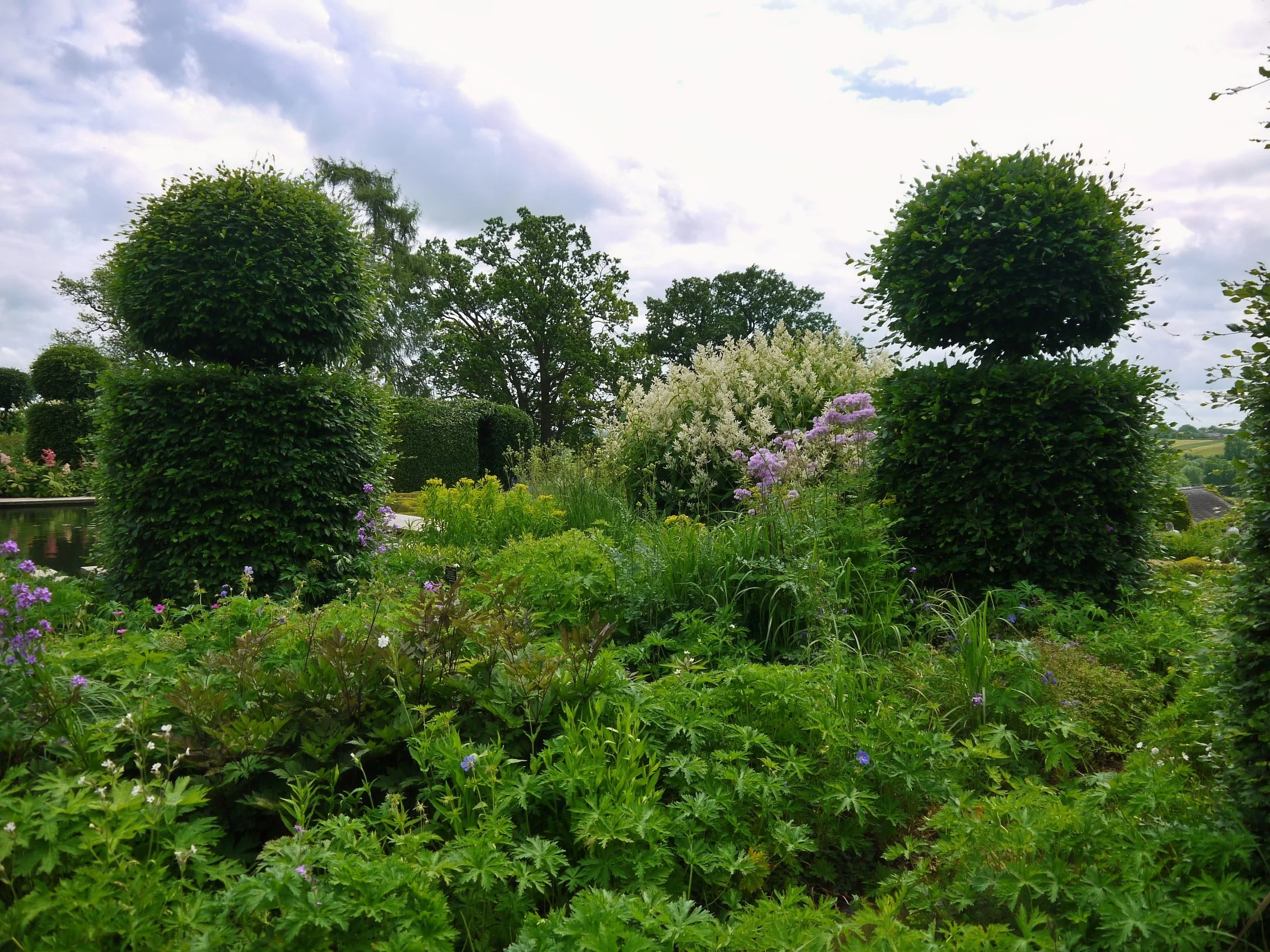
Design Credit: Tom Stuart Smith Photo Credit: Manoj Malde
Imagine if the topiarised structural shapes in this garden at Broughton Grange did not exist. What interest would be left once all the perennials became winter dormant? Structure, shapes, pines, evergreen shrubs, trees and hedges become the stars of a winter garden because they provide something of interest to look at through those gloomy, grey days.
Ornamental Grasses: Movement and Light
I tend not to rush into cutting everything down in autumn. Many plants look wonderful even as they die back. Ornamental grasses range from pale parchment to golden honey tones, and they bring movement when the wind blows. Their feathery plumes are especially spectacular when backlit by the low winter sun, so think carefully about where to place them.
Winter Containers: A Warm Welcome at the Front Door
Winter containers greet you whenever you come home. You can keep it simple with a pair of oversized box balls either side of the door, but I prefer to plant up a mix that offers colour and texture. Try:
The lime-coloured stems of Cornus flaviramea
Movement and froth from Stipa tenuissima
Evergreen ferns, hellebores and violas
Trailing ivy or Muhlenbeckia complexa to drape over the edge
For a little surprise, bury bulbs of Narcissus ‘Tête-à-Tête’ or Tulipa bakeri. They’ll pop up just as the weather begins to warm.

Do not rush to tidy, prune and chop back all your plants as winter sets in. There is still beauty in death. Look at the interest that these Phlomis russeliana seedheads provide. There are a variety of plants with seedheads, such as poppies and nigella, which will continue to provide interest, as will ornamental grasses.
Enjoy the Little Gems of a Winter Garden
Last but not least, take time to enjoy the small details: cobwebs strung with morning dew like tiny diamonds, or frost sparkling on the lawn and along the tops of your hedges and shrubs. These moments are a big part of the joy of a winter garden.
Final Thoughts
A garden doesn’t have to go to sleep in winter. With strong structure, bark and stem colour, scent, berries, evergreens and a few clever containers, you can enjoy your outdoor space every month of the year.
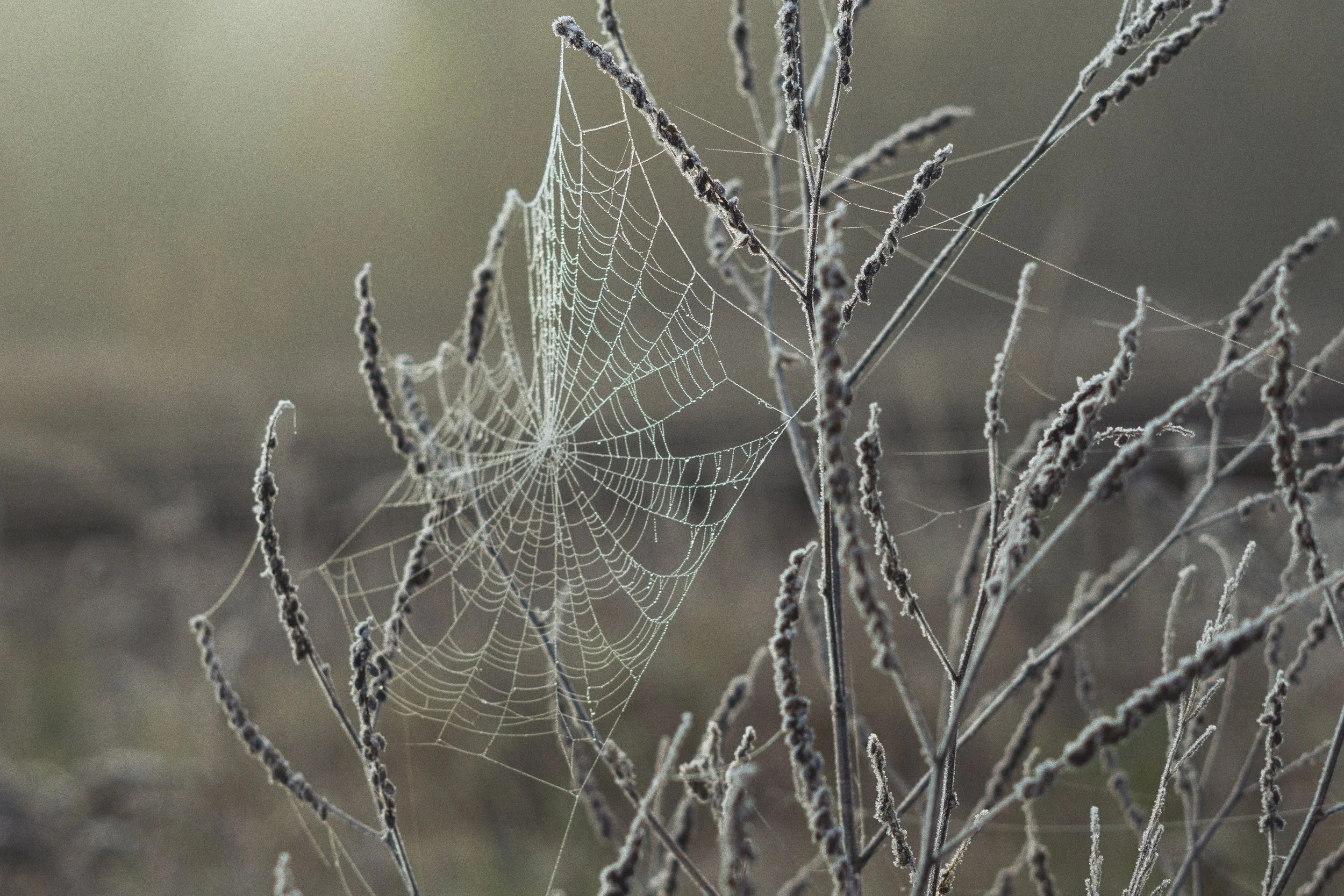
A winter garden needs a different mindset to be enjoyed. The garden has slowed its pace. It’s about the finer details. Like enjoying the frosted or bejewelled cobwebs where the morning dew twinkles like precious diamonds.