
GARDEN PATH IDEAS
How to Design the Perfect Pathway for Your Garden Style
Whether you're planning a cottage garden makeover or a sleek modern outdoor space, the right garden path can transform how you experience your garden. Discover the best garden path ideas, materials, and design tips for every style.
Why Your Garden Path Matters More Than You Think
A garden should be a place of joy, solace and relaxation — somewhere to slow down, breathe deeply and reconnect with nature. While planting schemes and furniture often take centre stage, one of the most powerful design elements is frequently overlooked: the pathway.
Garden paths do far more than connect point A to point B. They shape how you move through a space, create a sense of journey and discovery, and set the entire rhythm and mood of your garden. Think of the famous yellow brick road in The Wizard of Oz — a garden path is equally symbolic, leading you towards a destination, whether that's a quiet bench, a shaded seating area, a pond or simply a moment of calm.
When designed with purpose, a garden pathway enhances both beauty and function, encouraging you to wander, pause and truly enjoy your outdoor space.
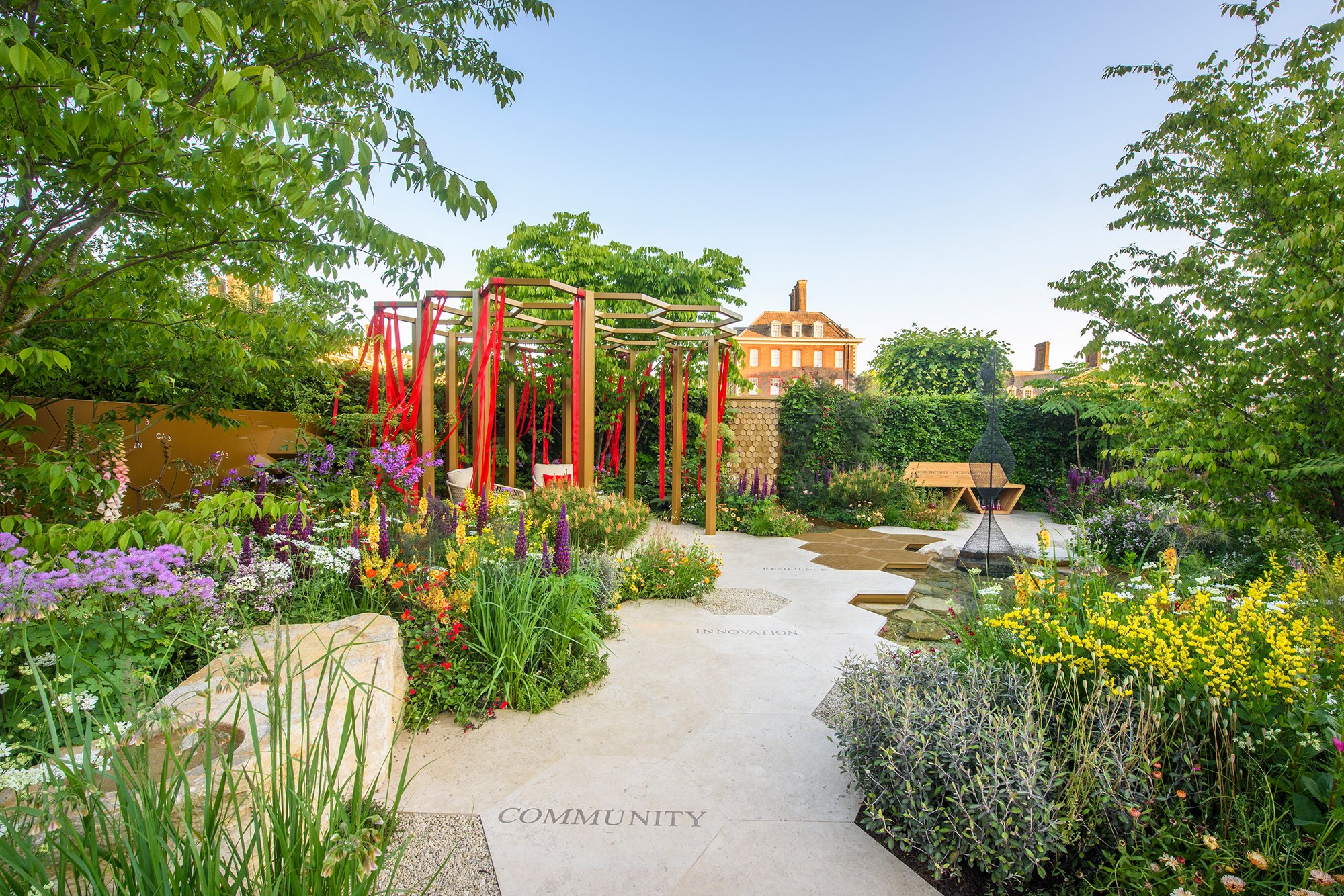
Designer : Manoj Malde Photo Credit: Joanna Kossak
Natural limestone has been cut into hexagonal shapes to create dynamic shaped paths and planting borders. Limestone has fossilization, which makes it interesting and really elevates the look of a garden
How to Design a Garden Path: The Fundamentals
Before choosing materials or styles, it's worth understanding a few core design principles that apply to any garden path.
Every Path Should Lead Somewhere
One of the golden rules of garden path design is simple: it should lead somewhere. A path without a destination feels confusing or unfinished. This doesn't mean every route needs a dramatic focal point — but it should guide visitors towards something of interest or importance.
Width Sets the Mood
The width of a garden path plays a crucial role in how it feels to walk along it:
Narrow paths naturally encourage quicker movement — ideal for practical routes or secondary walkways
Wider paths feel calmer and more generous, slowing the pace and creating a relaxed atmosphere
Widening into a node or clearing gives you the perfect spot for a bench, a sculpture or a beautiful planter
Choose Materials That Suit Your Style
The look and texture of a garden path should complement both the style of your garden and the character of your home. Always consult your supplier or installer to understand the best laying methods and foundations required — this is essential for longevity and safety.
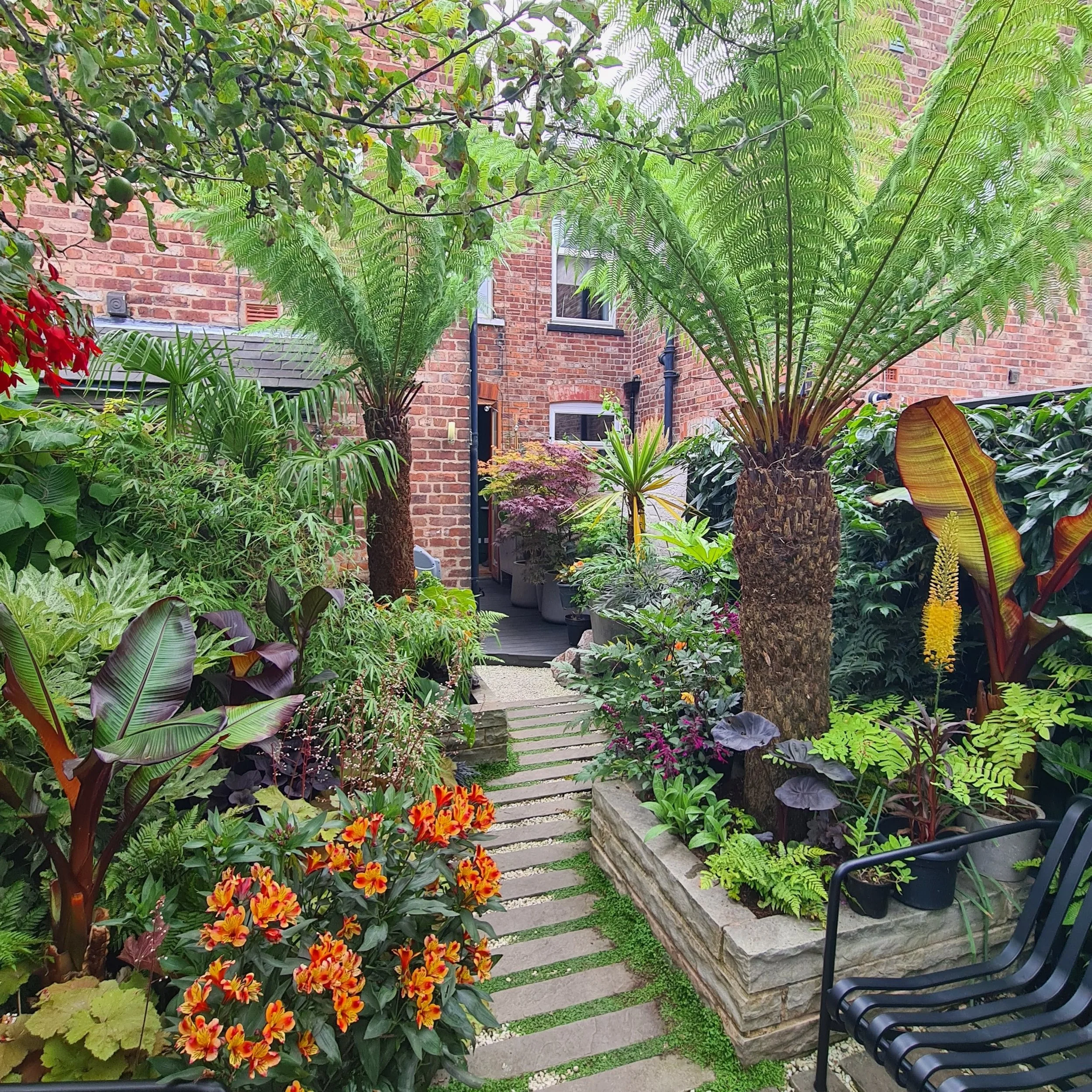
Photo Credit: Manoj Malde
Sandstone planks and gravel are used to create the path in this courtyard garden. Staggering the planks adds movement and flow, making more of the experience and journey
Garden Path Materials: A Complete Overview
There is a wide range of garden path materials to choose from, each offering a different look, feel and level of practicality:
Gravel — versatile, permeable and low cost
Stone slabs or planks — timeless and durable
Brick and setts — traditional and characterful
Timber or composite deck planks — warm and natural
Mulch or bark — ideal for woodland-style gardens
Terracotta or encaustic tiles — decorative and distinctive
Porcelain tiles — sleek, low-maintenance and weather-resistant
Concrete — clean lines for contemporary spaces
Reclaimed & recycled materials — sustainable and full of character
The best choice depends on your garden's style, conditions and how the path will be used. Always consider slip resistance, drainage and durability alongside aesthetics.
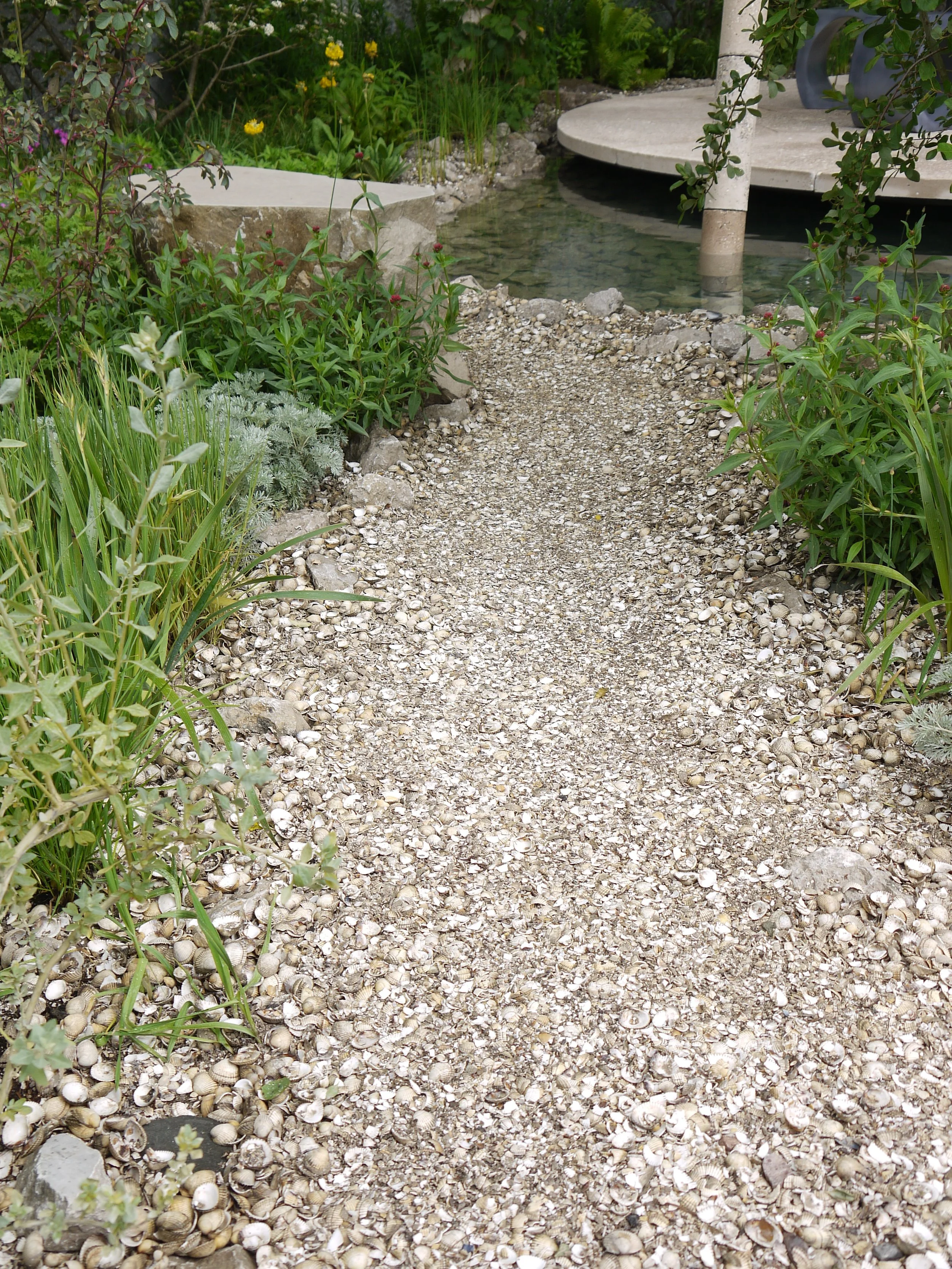
Designer: Harry Holding Photo Credit: Manoj Malde
This path is created from crushed seashells, which is possibly a by byproduct of the fishing industry. A waste product that is being recycled makes it more sustainable. This would really suit a coastal garden.
Garden Path Ideas by Style
Victorian Garden Path Ideas
If you're lucky enough to live in a Victorian property, your garden path is a wonderful opportunity to echo that heritage. Traditional Victorian tiles can be used to create striking mosaic patterns that feel both authentic and timeless. While printed alternatives exist, their longevity can be questionable.
Best materials: Victorian mosaic tiles, rope-edged border tiles
Key tip: For a truly period-appropriate finish, use rope-edged tiles to define path edges beautifully.
Modern Formal Garden Path Ideas
Contemporary gardens thrive on clean lines, structure and simplicity. For a modern garden path, look to large-format slabs in concrete, porcelain or sawn stone. Straight lines, sharp angles and symmetry reinforce the formal aesthetic.
Best materials: Porcelain, concrete, sawn stone, gravel
Key tip: Incorporate gravel alongside hard materials to soften the look while improving drainage and allowing rainwater to permeate naturally into the ground.
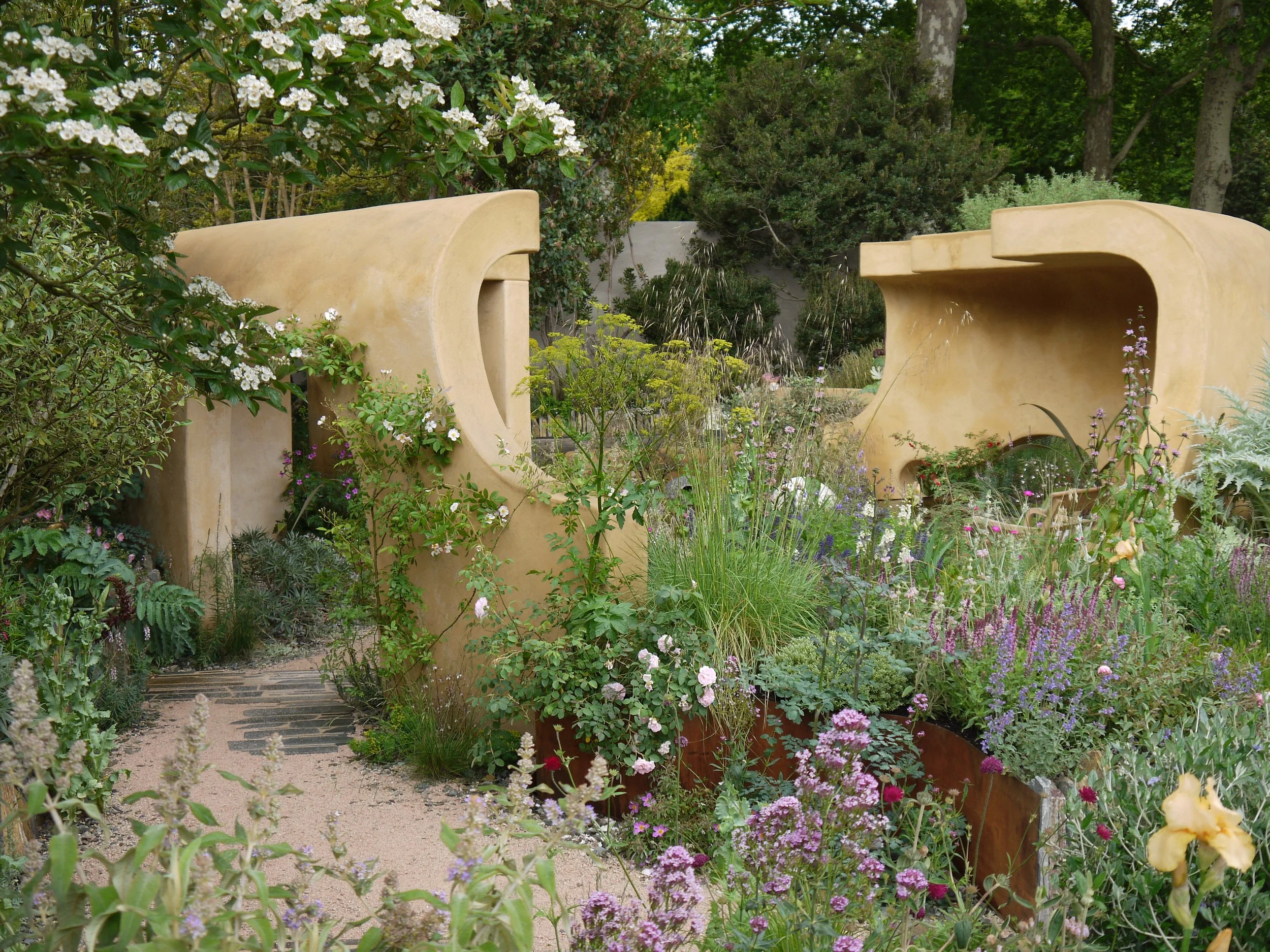
Designer: Darren Hawkes Photo Credit: Manoj Malde
This Mediterranean style garden is designed with gravel paths. Added interest comes through salvaged stone pieces. The materials blend well with the colours and planting scheme
Natural Garden Path Ideas
Not all garden paths need hard landscaping materials. In woodland gardens and parks, natural trodden paths form over time as the ground compacts underfoot — and you can recreate this relaxed look at home.
One beautiful idea: transform part of your lawn into a wildflower meadow and mow a winding path through it. Walking through tall grasses and wildflowers is a magical, immersive experience. Bark mulch paths work equally well, blending seamlessly into woodland-style surroundings.
Best materials: Bark mulch, mown grass paths, compacted earth
Key tip: Let the path meander naturally — avoid straight lines for a more organic, authentic feel.
Mediterranean Garden Path Ideas
South-facing gardens with plenty of sun are perfect for a Mediterranean-inspired scheme. Gravel garden paths are a defining feature, often merging seamlessly into planting borders so that it's hard to tell where the path ends and the planting begins.
If planting directly into gravel, prepare the ground properly: a layer of sand topped with gravel prevents roots sitting in winter wet, which is one of the main causes of plant failure. Crazy-paved paths suit the Mediterranean style equally well — especially when plants like thyme are allowed to grow in the gaps.
Best materials: Gravel, crazy paving, sand base
Key tip: Aim for at least 5cm of gravel laid over a permeable membrane for a durable, low-maintenance path. suited to traditional cottage-style gardens where its ornate styling feels at home. Powder-coated aluminium garden furniture is the modern alternative – light, low-maintenance, and available in a range of colours that work equally well in contemporary and rural garden settings. It is also considerably easier to move.
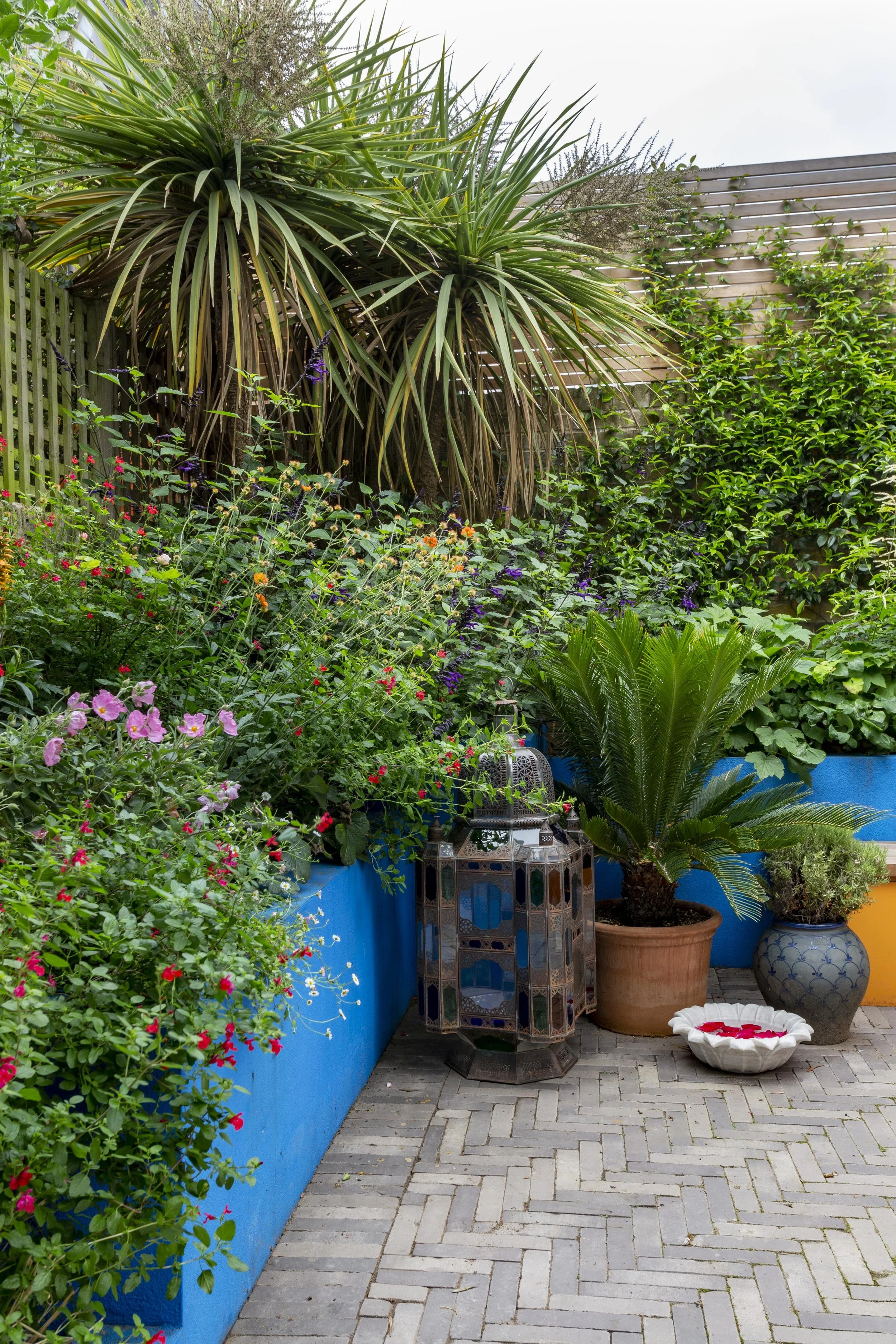
Designer: Manoj Malde Photo Credit: Paul de Bois for Gardener’s World Magazine
This Moorish garden in North London uses clay pavers for paths and patio that are set in a classic herringbone pattern.
Moorish Garden Path Ideas
Moorish garden design draws inspiration from Islamic and Mughal traditions, typically arranged around a central water feature. Traditionally, four paths lead to this focal point, symbolising the four rivers of paradise: water, milk, honey and wine.
Decorative tiles such as zellige were historically used, often laid in herringbone patterns. However, these tiles are slippery in the UK climate. Clay pavers or encaustic tiles offer a safer and equally beautiful alternative.
Best materials: Clay pavers, encaustic tiles, herringbone-laid paths
Key tip: Frame the four paths with traditional chaar-bagh planting for an authentic and cohesive look.
Cottage Garden Path Ideas
Cottage garden paths are informal, charming and full of character. Meandering routes work best here, using rustic materials such as gravel, reclaimed brick, stone setts or old flagstones. Mixing materials can add texture and interest while supporting sustainable design through the reuse of reclaimed stone and brick.
Allow plants to spill softly over path edges — this softening effect creates the romantic, nostalgic feel that cottage gardens are so loved for.
Best materials: Reclaimed brick, stone setts, flagstones, gravel
Key tip: Mix materials for added texture and a more organic, layered look.
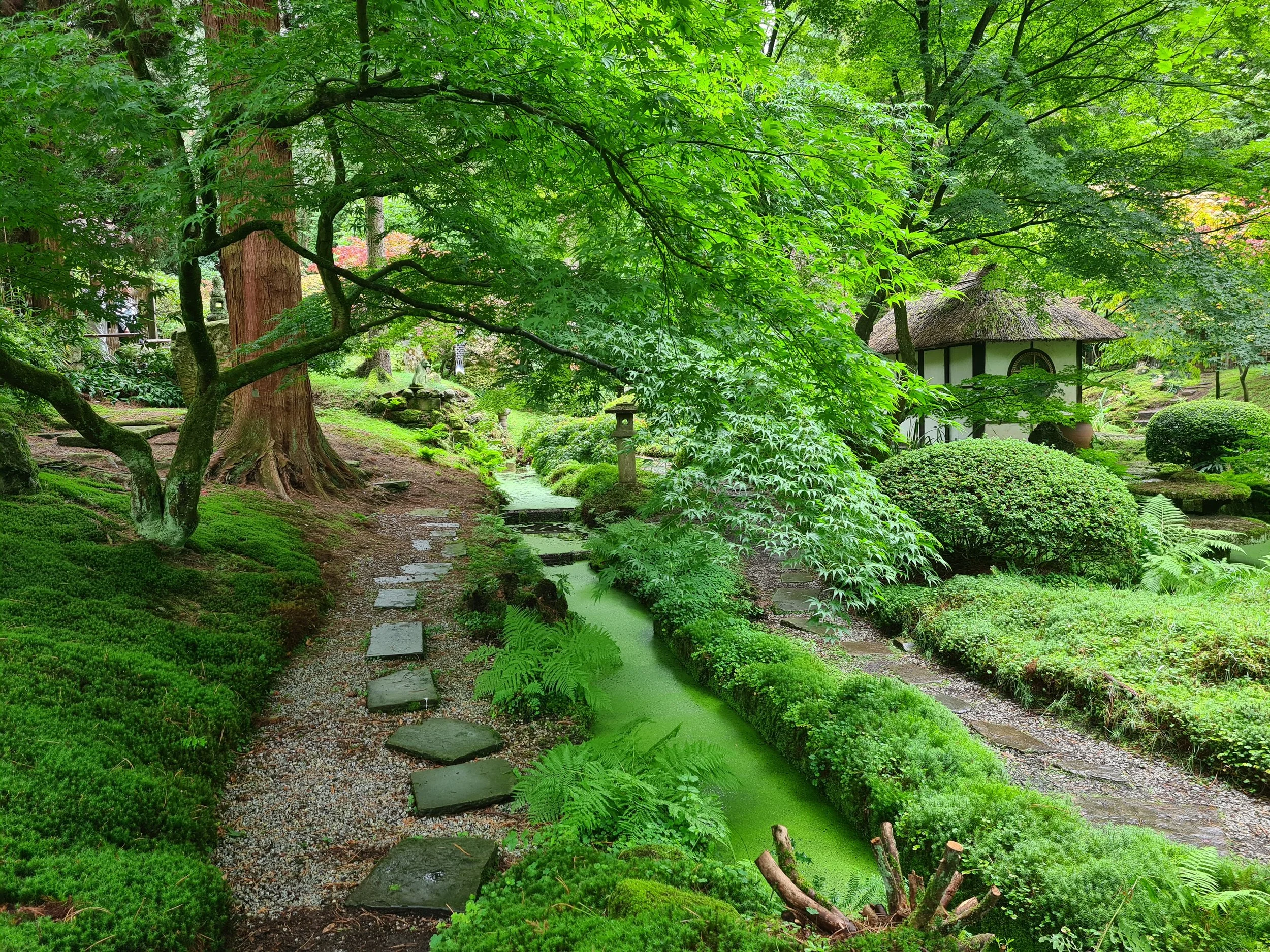
Photo Credit: Manoj Malde
Paddle stone (tobi-ishi) pathways are often seen in Japanese gardens. This style of path slows you down and encourages you to be mindful of your environment
Japanese Garden Path Ideas
Japanese gardens are designed with great care and restraint, placing enormous value on balance, nature and mindfulness. Every detail is intentional — including the pathway.
The traditional tobi-ishi path, made from irregular stepping stones, encourages slow and deliberate movement, making you more aware of your surroundings with every step. Timber plank paths, often laid in a zig-zag pattern over water, create changing viewpoints and a sense of mystery.
According to Japanese tradition, evil spirits travel in straight lines — which is why zig-zag paths are believed to offer protection as well as beauty.
Best materials: Irregular stepping stones, timber planks
Key tip: Keep planting restrained and intentional — every element should earn its place in a Japanese garden.
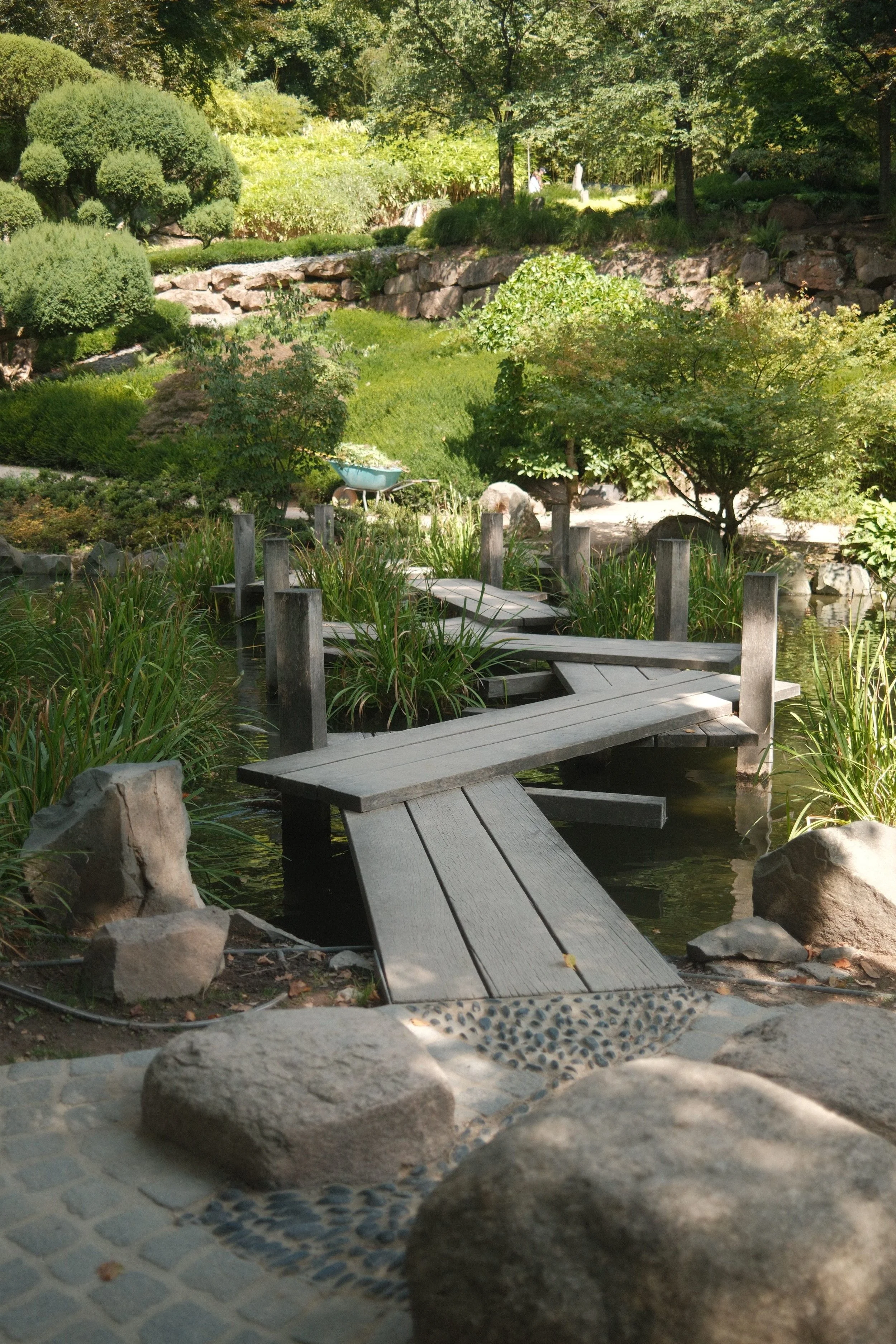
Timber planks are used to create a raised boardwalk to cross the water in this garden. Deck planks can be used similarly.
Practical Considerations for Garden Paths in the UK
Before finalising your garden path design, consider the specific conditions of your space — particularly in the UK's variable climate.
Damp and shady areas: Timber decking can become slippery and prone to rot. Composite decking is a more durable alternative.
Porous stone (e.g. sandstone): Can develop moss and algae in wet conditions, increasing slip risk.
Slip rating: Aim for materials with an R10 or R11 slip rating for safety.
Slab thickness: Stone or porcelain slabs should be at least 20mm thick to prevent cracking under load.
Permeable materials: An excellent choice for sustainable gardens — but remember that the foundations beneath must also be permeable to function correctly.
Final Thoughts: Walk the Path
A well-designed garden path does far more than get you from A to B. It sets the pace, creates anticipation and transforms movement into an experience. Whether formal or informal, dramatic or subtle, a thoughtfully designed path invites you to slow down, explore and truly enjoy your garden — one step at a time.