
THE ART OF OUTDOOR LIVING: How to Choose Garden Furniture That Transforms Your Space
How would you like to use your garden? It is one of the first questions any good garden designer asks a new client – and the answers tend to follow a familiar pattern. Relaxing. Unwinding. Barbecues. Entertaining friends and family on warm summer evenings.
Think of it this way: we have a sofa in the lounge for relaxing, a kitchen for cooking, a dining room for eating. Our gardens deserve the same careful consideration – designated zones for each activity, furnished with pieces that are as purposeful as they are beautiful. When we get this right, we do not just improve our gardens; we enhance our quality of life and deepen our connection with nature. The good news is that we are living through a golden age of outdoor furniture, with remarkable and growing range of styles, materials, and price points to suit every outdoor space and budget.
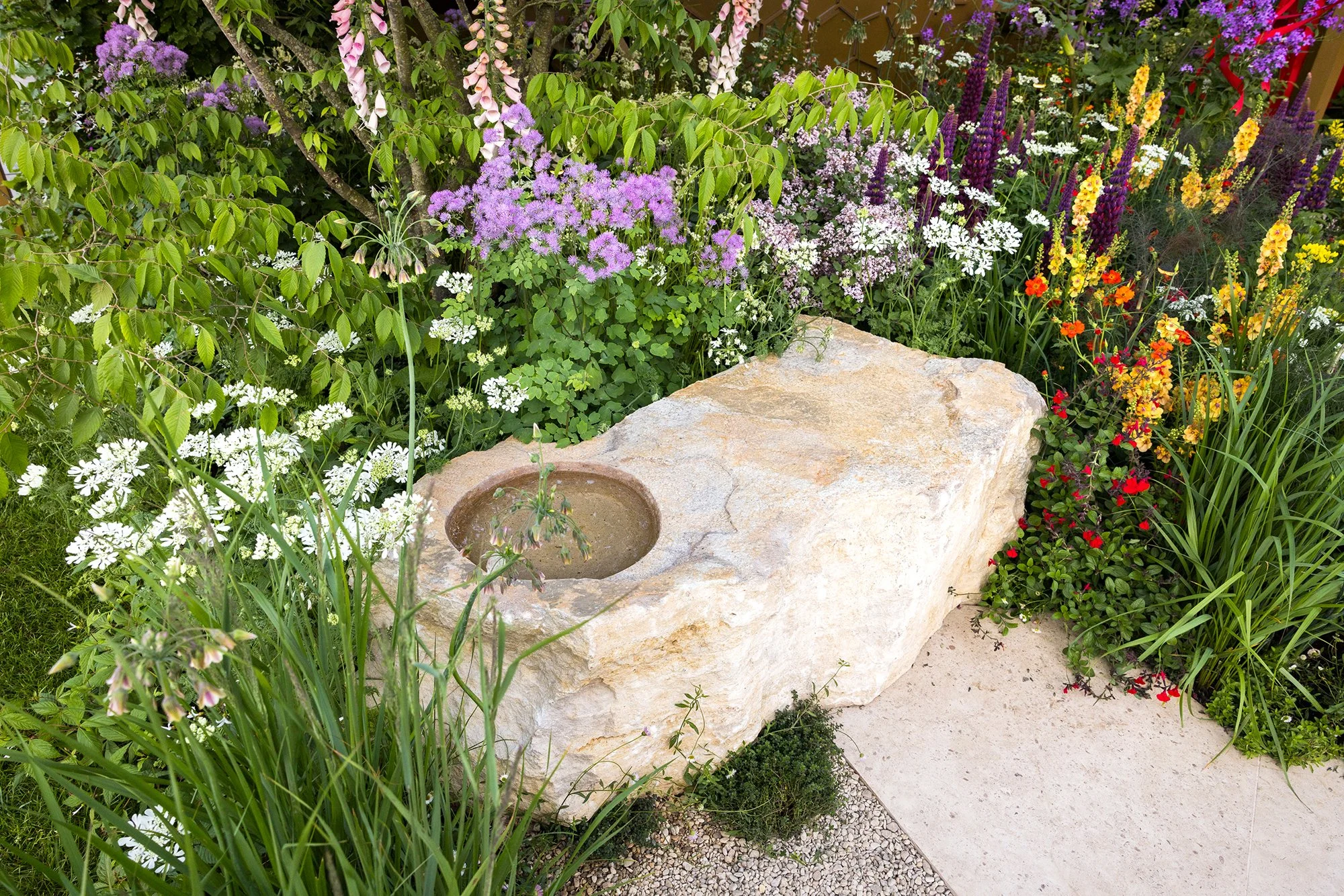
Designer : Manoj Malde Photo Credit: Joanna Kossak
A natural stone boulder serves as a seat in this garden. A bowl has been skillfully carved out to create a pool of water to attract wildlife into the garden.
How to Choose the Right Garden Furniture
Your choice of garden furniture depends on the activity it will support, the location it will occupy, and the overall theme and spirit of your garden. Select pieces that suit the look and the feel of the space. If you have worked hard to create a contemporary garden, vintage wrought iron chairs will tell a confusing story. Remaining true to your garden’s inspiration makes the whole space more coherent, more compelling, and far more enjoyable to spend time in.
“Think of your garden like the rooms of your house – each zone deserves furniture that is right for the purpose.”
Resist the urge to fill every space – garden design is not about quantity, and clutter quickly kills a sense of calm. The smaller the space, you face important decisions: a garden dining set or a comfortable outdoor sofa? Always choose the piece you will make the most use of. If the storage is also a concern, a bench that doubles as a storage unit is an elegant solution – practical, unobtrusive, and genuinely useful.
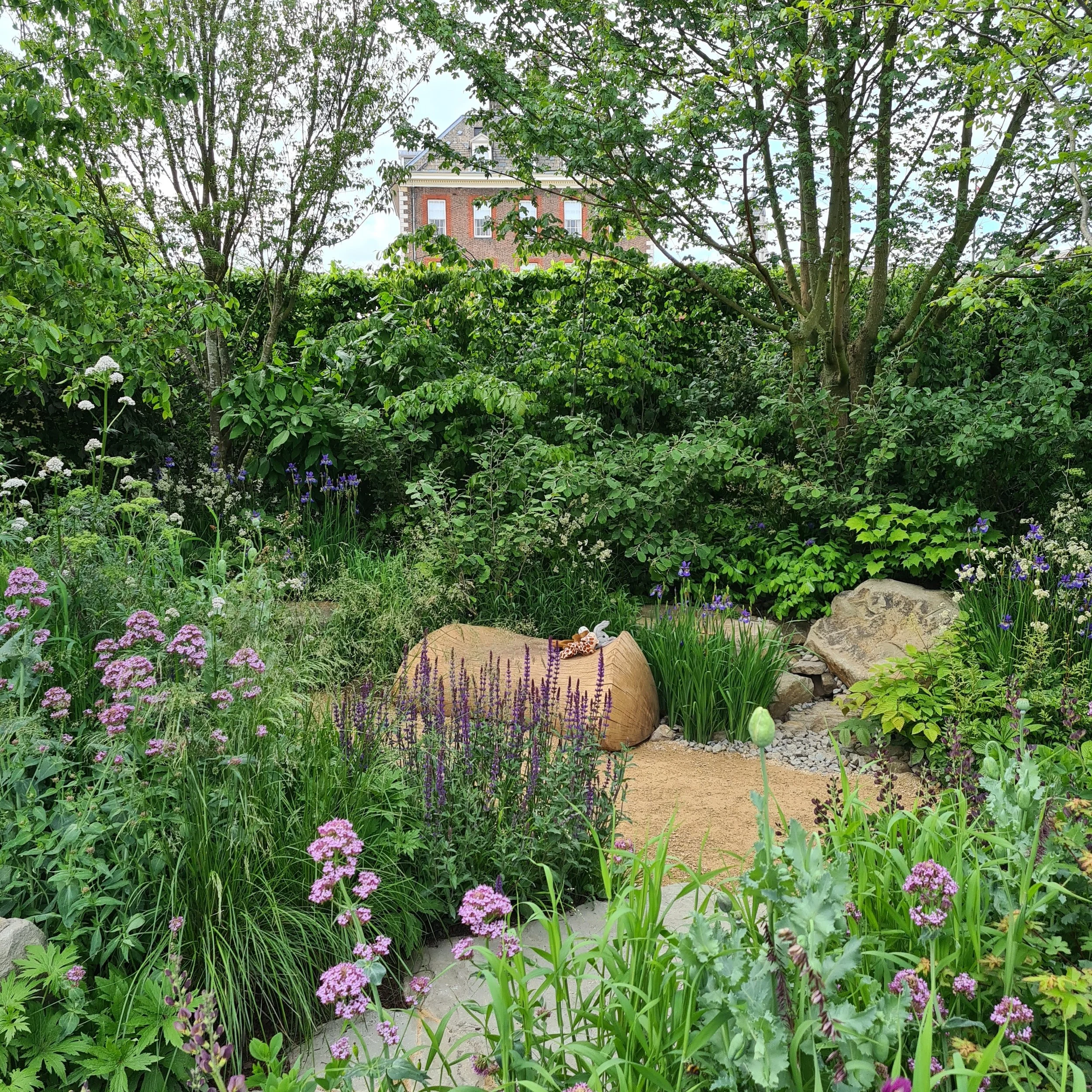
Designer: Jamie Butterworth Photo Credit: Manoj Malde
The natural form of a tree trunk has been used to create a beautiful, sculptural seat. This really suits the naturalistic planting scheme that has been designed for the garden
Garden Furniture Sizing: Why Proportions Matter
Proportions are everything in garden design, and garden furniture sizing is no exception. Before committing to a piece, check it will fit through your access points – gates, side passages, narrow pathways. It sounds obvious, yet it is a problem that catches people out time and again. Once in place, ask whether the piece suits the scale of the space. Furniture that is too large looks awkward and makes a patio feel oppressive rather than inviting. Always allow enough room around tables and chairs for people to move past with ease – the best outdoor living spaces feel generous and relaxed, not cramped.
DESIGNER TIP
If the patio feels too small for the furniture you want, consider extending the paved area first. A little groundwork can transform what is possible.
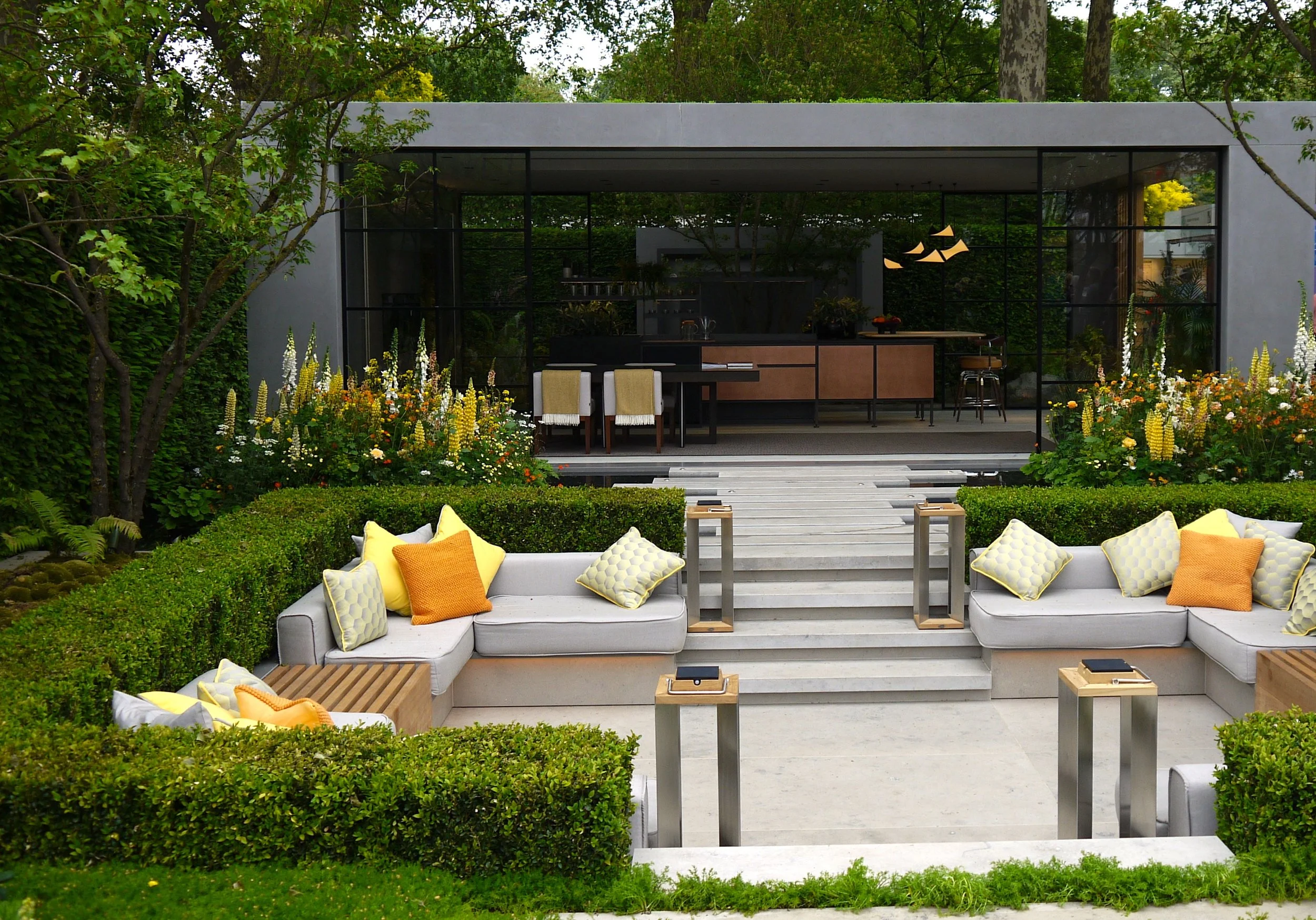
Photo Credit: Manoj Malde
The clean, modern lines and materials of this roof garden calls for contemporary furniture. This has been cleverly inbuilt into the design of the garden. The colours of the soft furnishings are inspired by the colours of the planting.
Garden Furniture Materials: A Complete Guide
Garden furniture comes in a wide variety of materials, each with its own character, strength, and maintenance requirements. Before making any purchase, ask yourself these key questions:
BEFORE YOU BUY – CHECK LIST
• Will it be in full sun or a damp, shaded spot?
• Will it stay outside through winter, or need storing inside?
• How easy is it to clean and maintain?
• Is it actually comfortable to sit on?
• Are cushions waterproof and UV-resistant?
TIMBER
Versatile, beautiful, works in modern and classic settings. FSC-certified only. Oil regularly, cover in winter.
METAL
Wrought iron for traditional gardens; powder-coated aluminium for modern, low-maintenance style
RATTAN
Tough, weatherproof, lightweight. The go-to for relaxed outdoor entertaining. Available in sofas, dining sets and loungers
PLASTIC
Affordable, stackable, easy to clean. Choose polypropylene for an eco-friendly option that be recycled.
CONCRETE
Bold and modern. Heavy – position carefully. Limited to shades of grey but striking in the right garden.
ROPE
Aluminium frame with woven rope. Beautiful colours and a crafted warmth unique to this material.
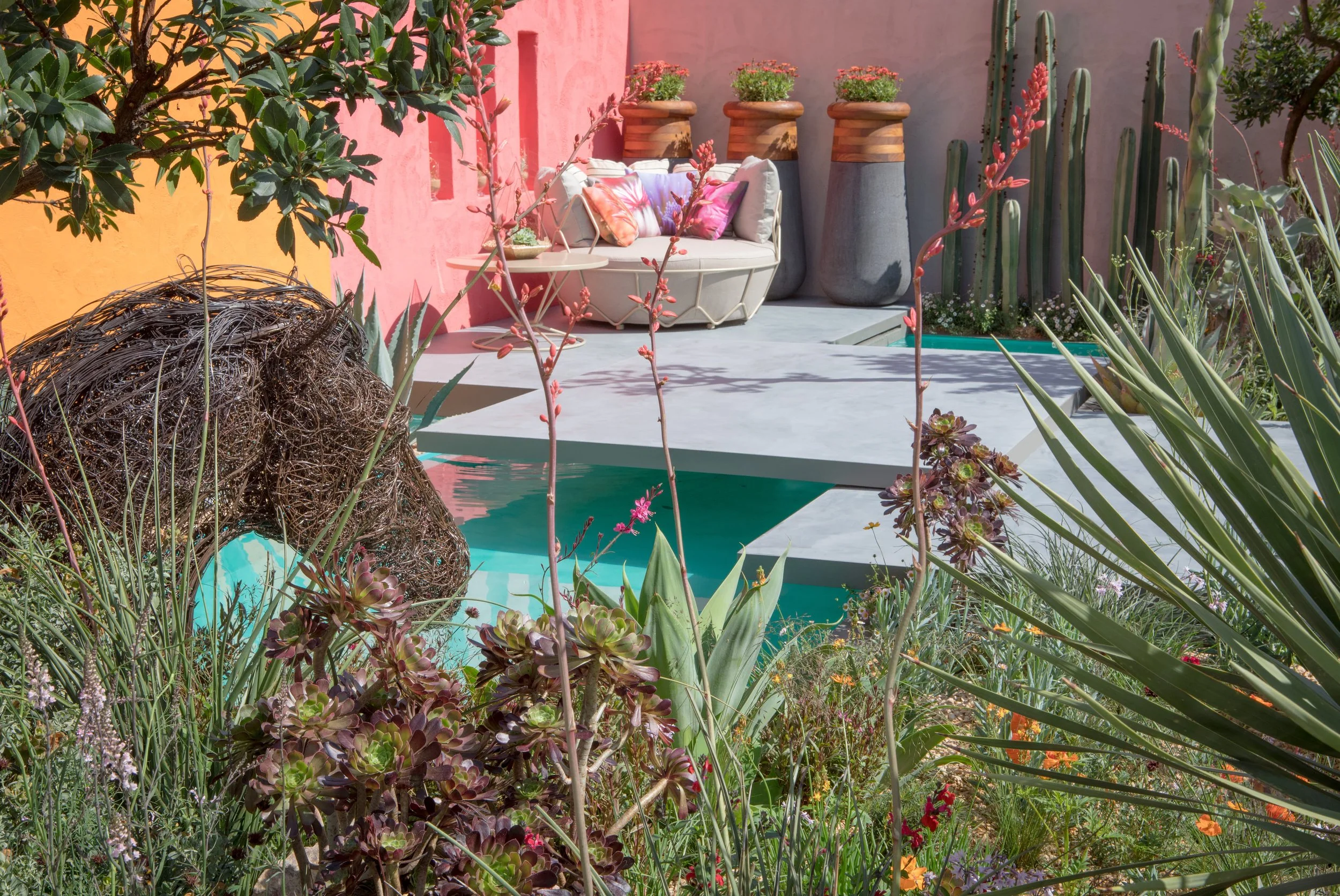
Designer: Manoj Malde Photo Credit: Jonathan Buckley
This contemporary style Mediterranean garden is furnished with a love seat and side table . The furniture is created from powder-coated aluminium.
Timber Garden Furniture
Timber garden furniture is one of the most versatile options available, equally suited to modern and classical designs. It can be worked into clean contemporary lines or left in its natural, sculptural form – few materials bring the same warmth and character to an outdoor space. All timber will eventually fade to a gentle silver tone if left untreated, so oil it regularly and cover it in winter to extend its life. Always look for the FSC logo, which confirms the wood has been sourced from responsibly managed forests delivering real environmental and social benefits.
Metal Garden Furniture
Wrought iron garden furniture is tough and durable but heavy, prone to rust if left outdoors and best suited to traditional cottage-style gardens where its ornate styling feels at home. Powder-coated aluminium garden furniture is the modern alternative – light, low-maintenance, and available in a range of colours that work equally well in contemporary and rural garden settings. It is also considerably easier to move.
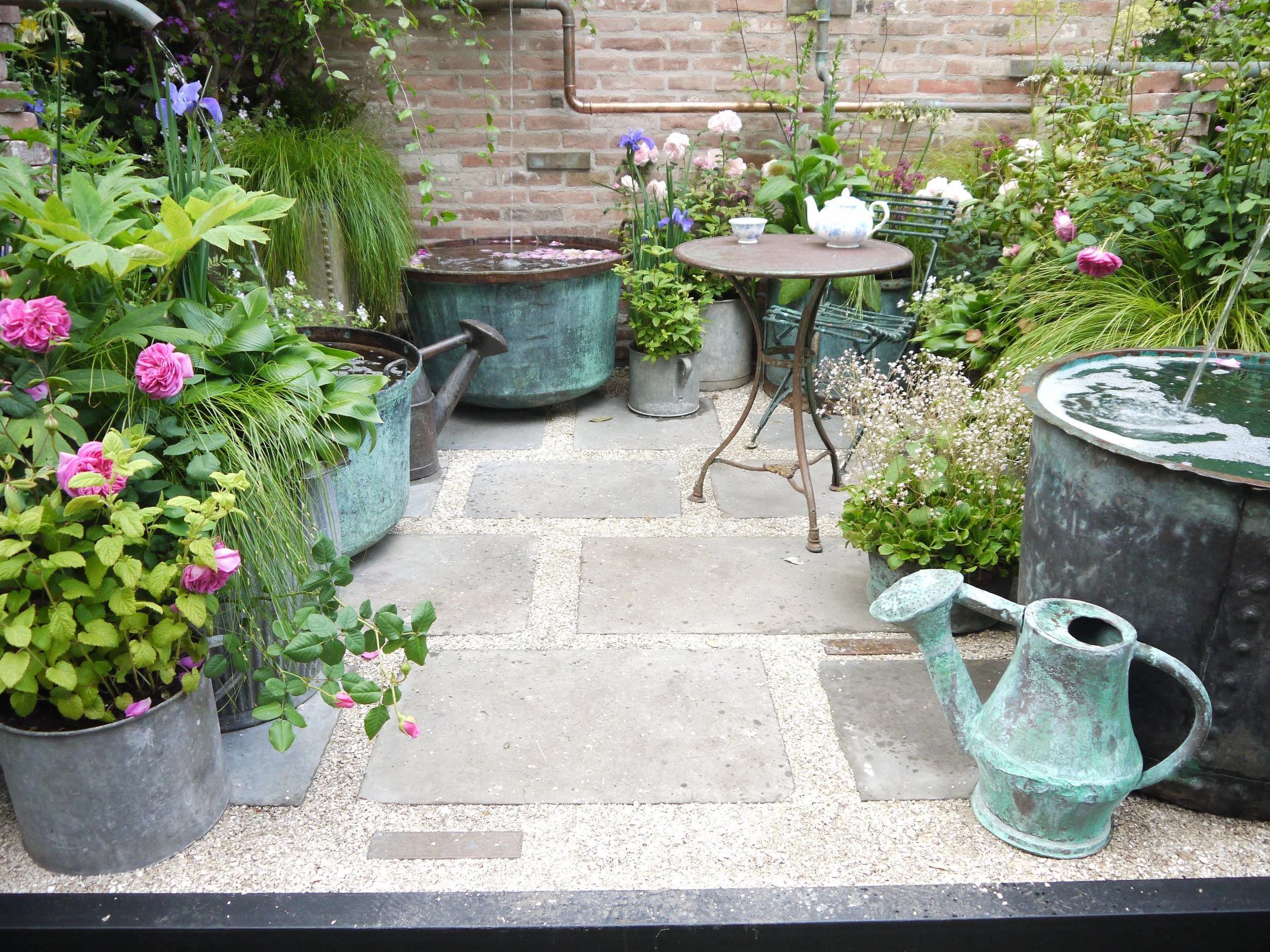
Designer: Ollie Pike Photo Credit: Manoj Malde
This vintage style courtyard garden just shows how salvaged items can enhance the narrative and feeling of a outdoor space.
Rattan Garden Furniture
Rattan garden furniture is made from plastic strips – tough, weatherproof, and light enough to rearrange easily on a warm afternoon. Traditional wicker rattan is still available for those who prefer its more natural look. Available as sofas, loungers, and rattan dining sets, rattan suits most garden styles and has become the default choice for relaxed outdoor entertaining – versatile, low maintenance, and genuinely comfortable.
Plastic Garden Furniture
Plastic garden furniture has an unfair reputation. Strong, durable, lightweight, and stackable, it is highly practical – especially for families or anyone who needs flexible seating for larger gatherings. It is easy to clean, cost-effective, and available in a wide range of colours and contemporary designs. For a more sustainable garden furniture choice, opt for polypropylene, which can be melted down and remoulded into new products at the end of its life.
Concrete, Stone and Rope Garden Furniture
Concrete garden furniture suits minimal, modern gardens – bold and effective, but heavy, with a limited colour palette of greys or fawns. Natural stone is dramatic and sculptural, excellent as a garden focal point, but expensive; position it with absolute care because moving it afterwards is a serious undertaking. Rope garden furniture, woven through aluminium frame, is one of the more recent arrivals in outdoor design – available in beautiful colours, with a crafted warmth that purely synthetic materials often lack.
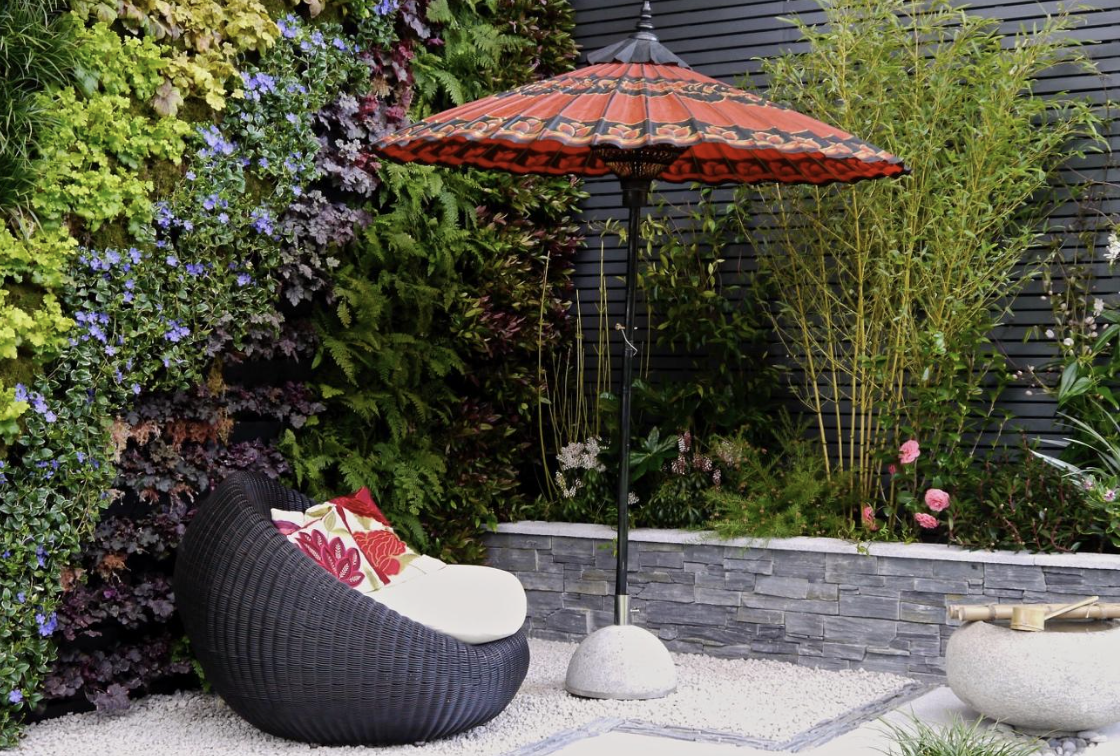
Designer & Photo Credit: Manoj Malde
This small space was turned into a garden. The vertical space has been utilised for planting which allows for the floor space to be kept clear for planting. The tub chair is created from natural wicker whilst the cushions help to tie the seat up with the ornate parasol.
Sustainable Garden Furniture: How to Buy Responsibly
Sustainability is central to modern garden design, and the choices we make furnishing our outdoor spaces genuinely matter. Choose FSC – certified timber garden furniture, and ask suppliers for written proof when buying recycled plastic. For wicker-style pieces, opt for polyethylene wicker – non-toxic and fully recyclable at the end of its life – rather than traditional wicker, which will sit in landfill for generations.
Source outdoor furniture locally where possible to reduce your carbon footprint, and do not overlook the second-hand market. Freecycle sites, salvage yards, and online marketplaces are full of pieces waiting to be reimagined. Old scaffold boards, sanded back and cleaned up, make beautiful bench tops and table surfaces. The base of a vintage Singer sewing machine, paired with a solid timber board, becomes a garden table of real character – and an instant conversation piece.
“The most sustainable piece of garden furniture is one that lasts – and a winter cover will add years to the life of almost anything.”
When it comes to soft furnishings, invest in quality from the start. Outdoor cushions must be genuinely waterproof – not merely water-resistant – and UV-resistant to prevent fading in strong sunlight. This is not an area to cut corners: good outdoor fabric lasts many seasons; cheaper alternatives fade and deteriorate quickly. And whatever material your furniture is made from, always cover it in winter. It is the simplest thing you can do to protect your investment and keep your garden looking its best for years to come.
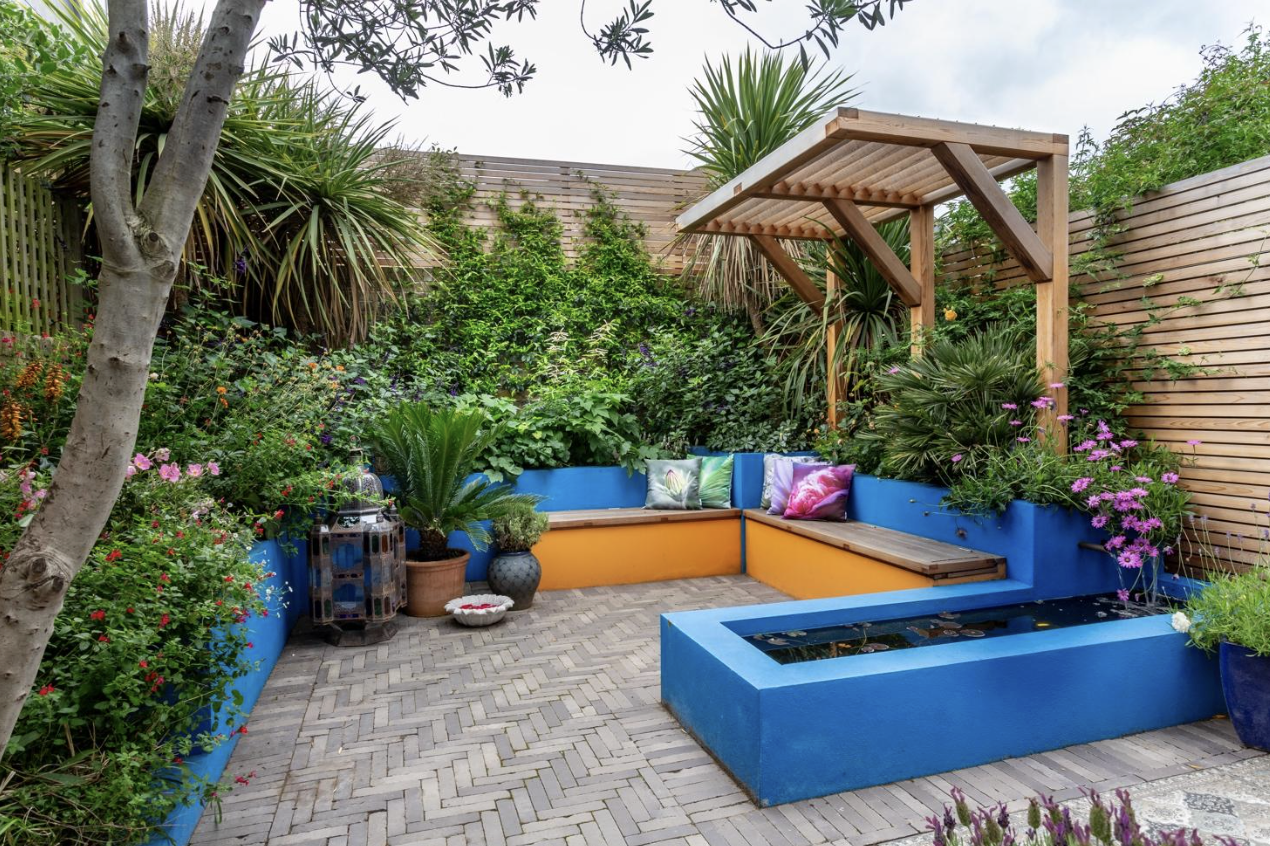
Designer : Manoj Malde Credit: Photographer Paul Debois and Gardener’s World Magazine
This North London courtyard garden has inbuilt seating that serves as storage. The lid lifts up to provide space to store garden items.