
JOY OF COLOUR IN THE GARDEN
Colour and planting are two of the most powerful tools a garden designer has for shaping mood, movement, and atmosphere across different spaces
“Colour is where our brain and the universe meet,” said Paul Cézanne — and I could not agree more.
For me, colour is pure joy. It is emotion, memory, culture, energy and personality all wrapped up together. It has the power to completely transform not only a garden, but also the way we feel when we step into that space. A garden should never just look beautiful — it should make you smile the moment you walk through the door.
When I designed Beneath a Mexican Sky for the Chelsea Flower Show, visitors constantly said to me, “I could stay here all day — the colours just make me happy.” That, for me, is what great garden design is all about. Creating spaces that lift the spirit, spark emotion and connect us to nature and one another.
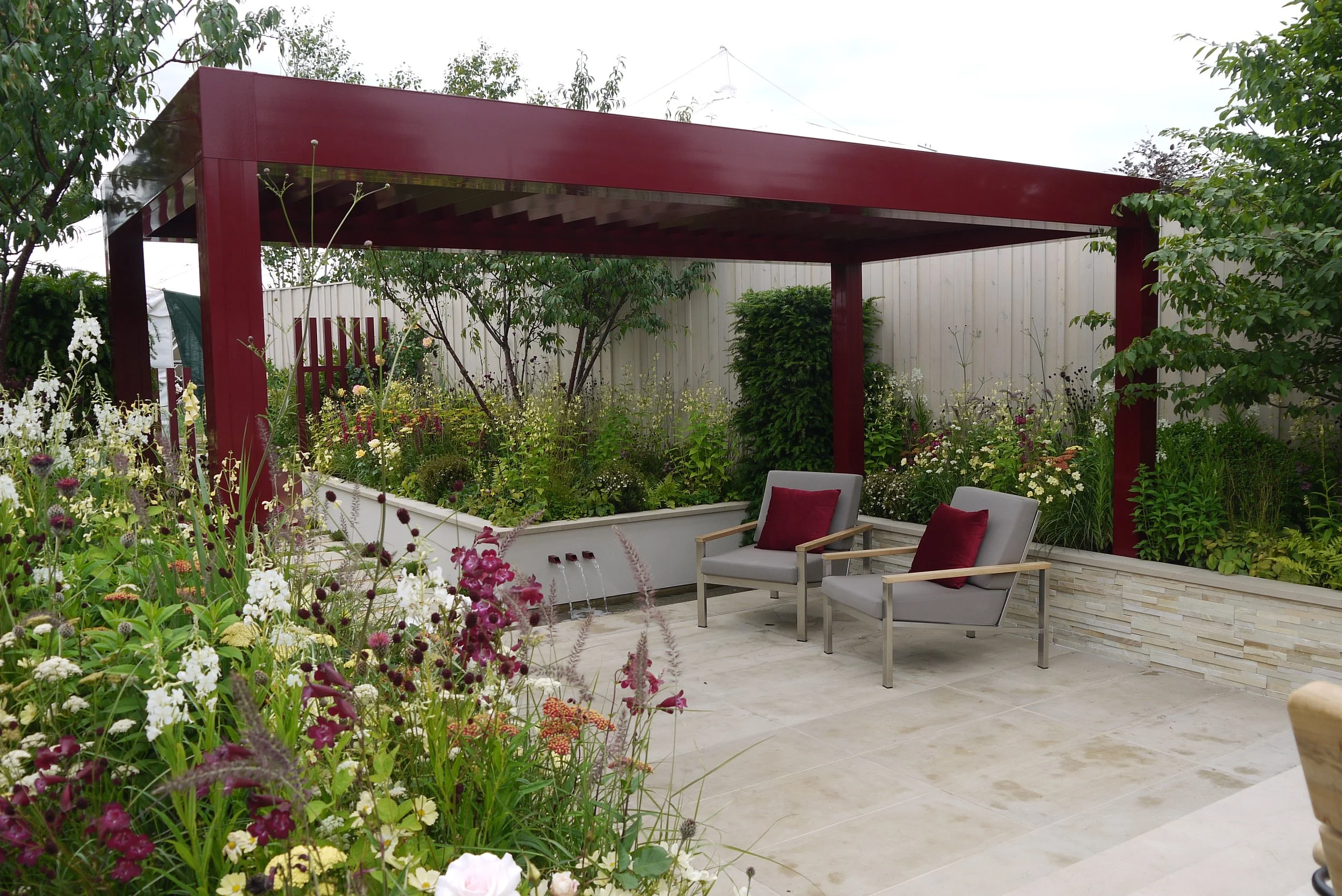
Designer: Catherine MacDonald Photo Credit: Manoj Malde
The designer has used the deep oxblood red as a thread to connect all areas of the garden. This colour weaves it’s way through from the pergola, soft furnishings, the fencing at the rear and into the planting borders. Even the water spouts are painted in oxblood.
Why Are We So Afraid of Colour?
I find it fascinating that most people are perfectly happy choosing colours inside their homes, yet panic when it comes to using colour outdoors. Suddenly, everyone becomes cautious!
But gardens are living, breathing spaces. They change with the light, the seasons and the weather. A terracotta wall can glow at sunset, while a purple flower may look completely different in the morning light compared to dusk. That ever-changing quality is what makes colour in the garden so magical.
And honestly? There is far too much snobbery around colour. Rules about what is “tasteful” and what is “too much.” I say forget the rules. Choose colours that bring you joy.
If a vibrant orange pot or hot pink cushion makes your heart skip a beat, then use it proudly.
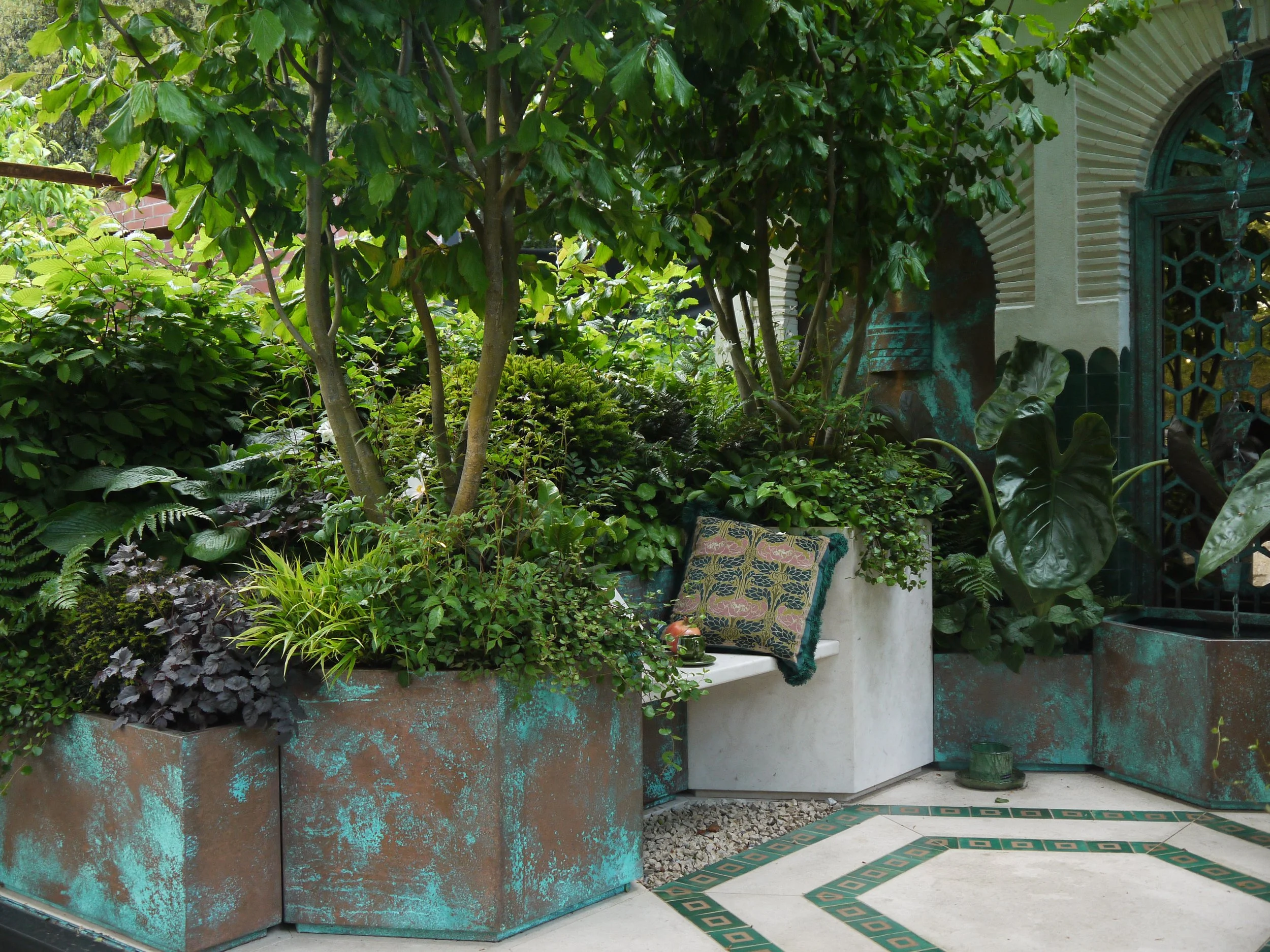
Designer John Howlett Photo Credit: Manoj Malde
This garden had a limited colour palette that oozed luxury. The colour of the patina on the copper containers was extended out into other elements of the garden.
The Emotional Power of Colour
Colour affects us deeply, often without us even realising it. We use colour in our everyday language all the time — we talk about “feeling blue” or being “green with envy.”
In the garden, colour becomes an incredibly powerful design tool.
Warm Colours Bring Energy
Warm colours — reds, oranges, and yellows — are stimulating and energising. They draw the eye and make spaces feel lively and sociable, which makes them well-suited to entertaining areas or focal points.
Cool Colours Calm the Soul
Cool colours — pale blues, lilacs, and silvers — create a sense of calm and tranquillity. They also appear to recede visually, making a space feel larger and more restful, ideal for a quiet seating area or a contemplative corner.
Jewel Tones Add Luxury
Jewel colours - rich magentas, burgundies, purples and deep claret shades – create a sense of drama, glamour and decadence. Perfect for an area where you want to create a feel of luxury.
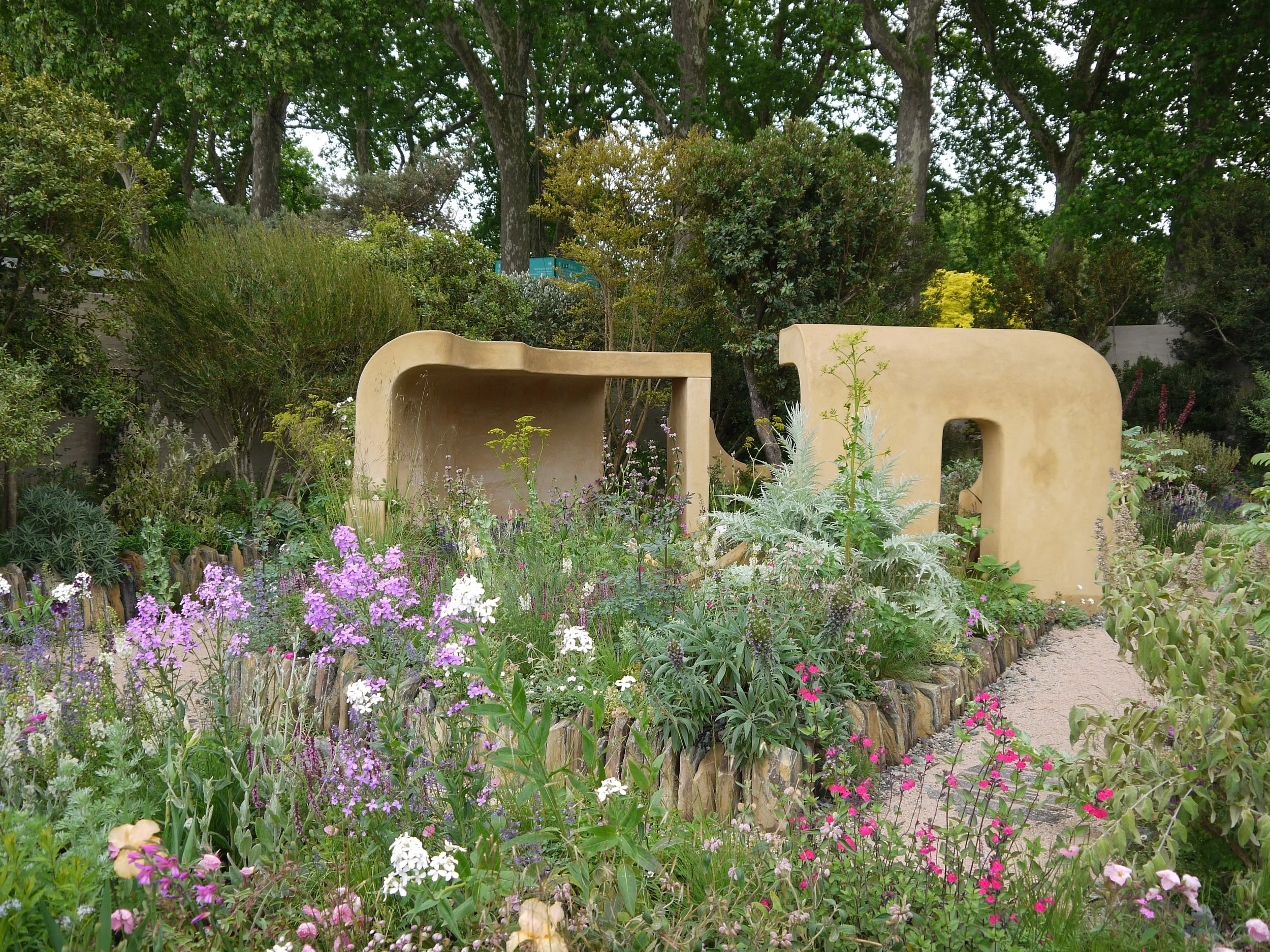
Designer: Darren Hawkes Photo Credit: Manoj Malde
The designer has created a beautiful soft, powdery colour palette within the planting scheme with just a pop of bright pink in the salvia. The colours also sit well with the more more natural sandy tones of the structure and the gravel paths.
Colour Is Personal
One of the things I love most about colour is how deeply connected it is to culture and identity.
As someone with Indian and African heritage, colour has always surrounded me. I grew up inspired by vibrant saris, spice markets, festivals, fabrics and sunsets bursting with fiery oranges and pinks. Even now, some of my biggest inspirations come from Indian women walking proudly through the poorest villages wearing the most extraordinary colour combinations imaginable.
What some people may call “clashing and vulgar,” I see as confidence, joy and individuality.
That fearless use of colour shaped my design style and taught me that gardens should reflect your story — not somebody else’s idea of perfection.
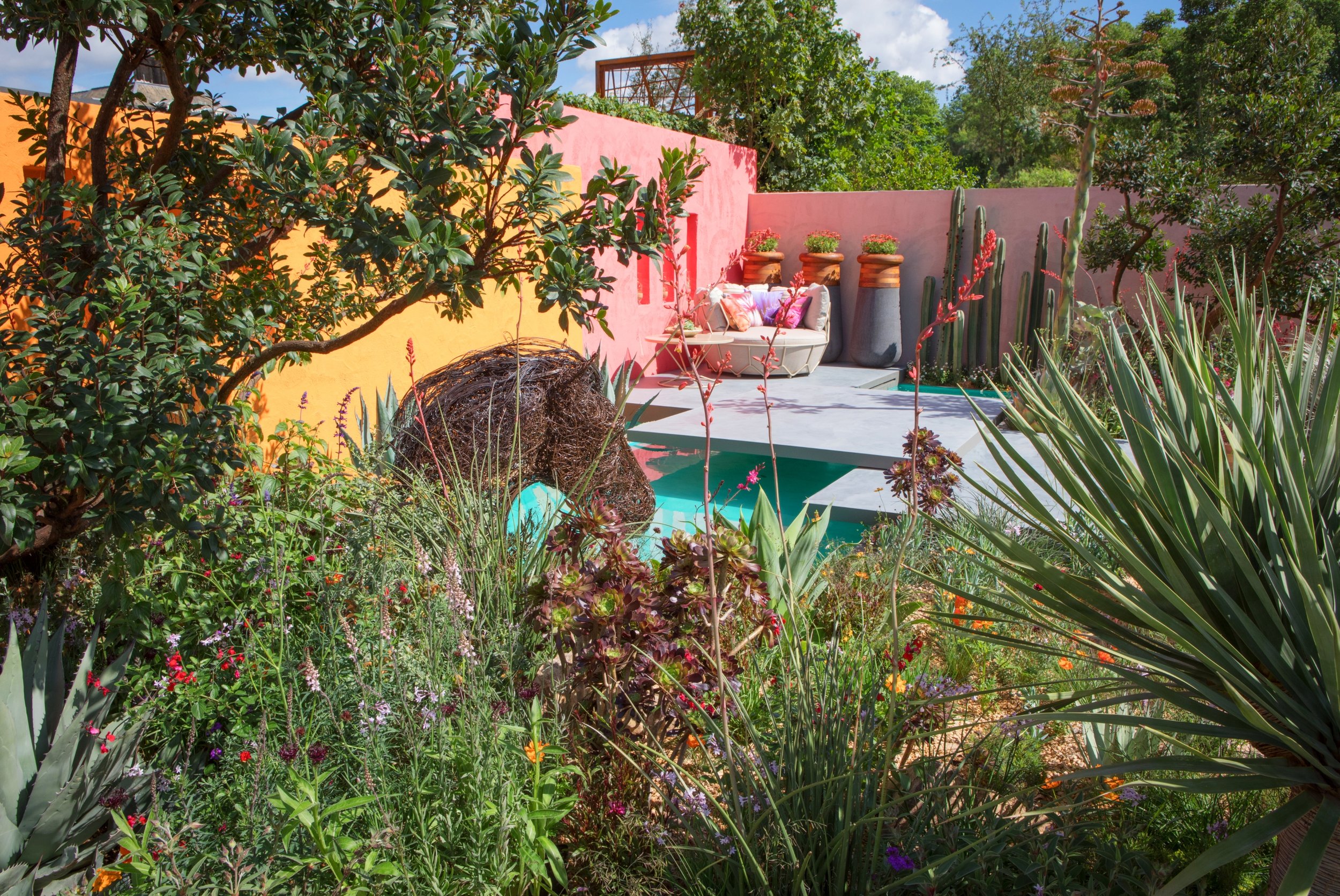
Designer: Manoj Malde Photo Credit: Manoj Malde
This garden was inspired the work of Mexican architect Luis Barragan. The colours make it perfect for a Mediterranean garden or even some where in Miami
Create a Garden Theme That Tells Your Story
One of the easiest ways to create a cohesive garden is to work around a theme. Themes help give your outdoor space personality and soul.
Your inspiration could come from absolutely anywhere:
A favourite holiday
A painting you adore
Fashion and textiles
Architecture
Music
Cultural heritage
Memories from childhood
Some wonderful themes to explore include:
Romantic English cottage gardens with soft pastel shades
Vibrant Moroccan courtyards bursting with colour and pattern
Tropical African safari tones layered with terracotta and ochre
Relaxed bohemian gardens inspired by the 1970s
Moody Impressionist-style planting palettes
The possibilities are endless.
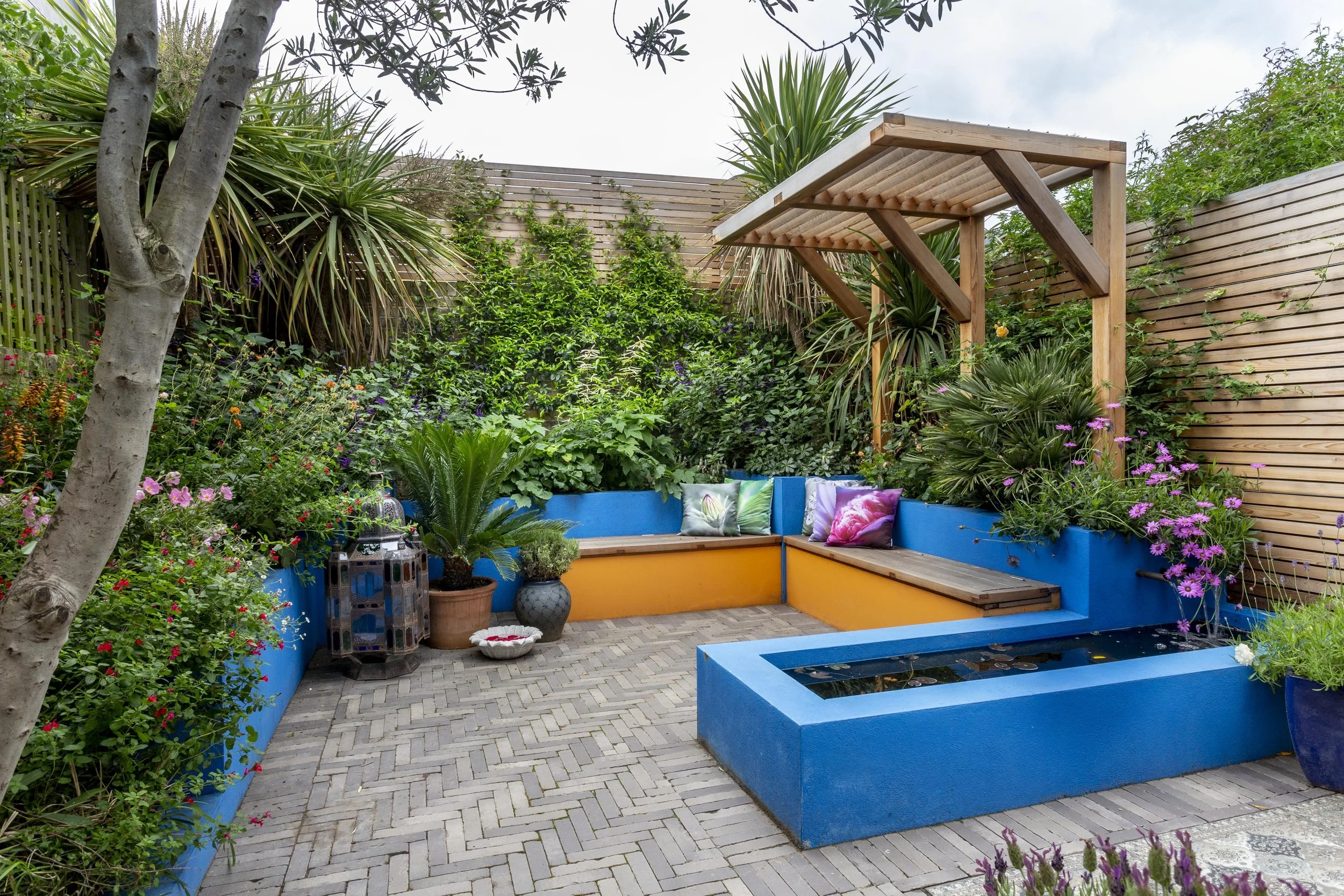
Designer: Manoj Malde Photo Credit: Paul de Bois for Gardener’s World Magazine
This garden has been give a contemporary Moroccan style by painting the raised planting borders in Marjorelle blue. The soft furnishings and planting bring additional colour to the garden.
Repetition Creates Rhythm
Garden designers often talk about repetition because it creates flow and harmony.
Repeating colours throughout a space helps guide the eye through the garden and creates a sense of connection between different areas. You might repeat a deep plum tone in planting, cushions and pots, or echo warm terracotta shades through walls, containers and furniture.
Think of it like music — repeating colours creates rhythm.
Planting style and structure
Beyond colour, the character of planting itself shapes experience dramatically:
Dense, enclosed planting — tall hedges, layered shrubs, overhanging trees — creates intimacy and enclosure, a sense of being held within a space. This suits seating areas meant for conversation or privacy.
Open, meadow-style planting — grasses, wildflowers, low perennials — creates openness, movement, and a naturalistic feeling of freedom. It draws people through rather than encouraging them to linger.
Formal, clipped planting — topiary, box hedging, symmetrical beds — signals order and structure, giving a formal garden its sense of ceremony and grandeur.
Textural contrast — mixing fine-leaved grasses with bold-leaved hostas or architectural plants like cardoons — adds visual interest and slows the eye down, encouraging closer inspection.
Seasonal layering
Planting can shift the character of a space through the seasons. A spring garden dominated by bulbs feels fresh and hopeful; a late-summer border of dahlias and rudbeckias feels abundant and exuberant. Designers use this to ensure different parts of the garden peak at different times, giving each area its own seasonal identity.
Guiding movement
Colour and planting also work directionally. A bold splash of colour at the end of a path pulls the eye — and the visitor — towards it. Narrowing planting on either side of a path creates a sense of journey and anticipation. Conversely, opening planting out into a clearing signals arrival and reward.
Scent as an extension of planting
Fragrant planting — lavender, roses, jasmine, sweet peas — adds a sensory layer that powerfully defines a space. A scented walk or arbour becomes a distinct experience in itself, engaging memory and emotion in ways that purely visual planting cannot.
In essence, skilled planting design layers colour, texture, form, scale, and scent to make each area of a garden feel intentionally different — giving visitors a series of distinct emotional experiences as they move through the space.
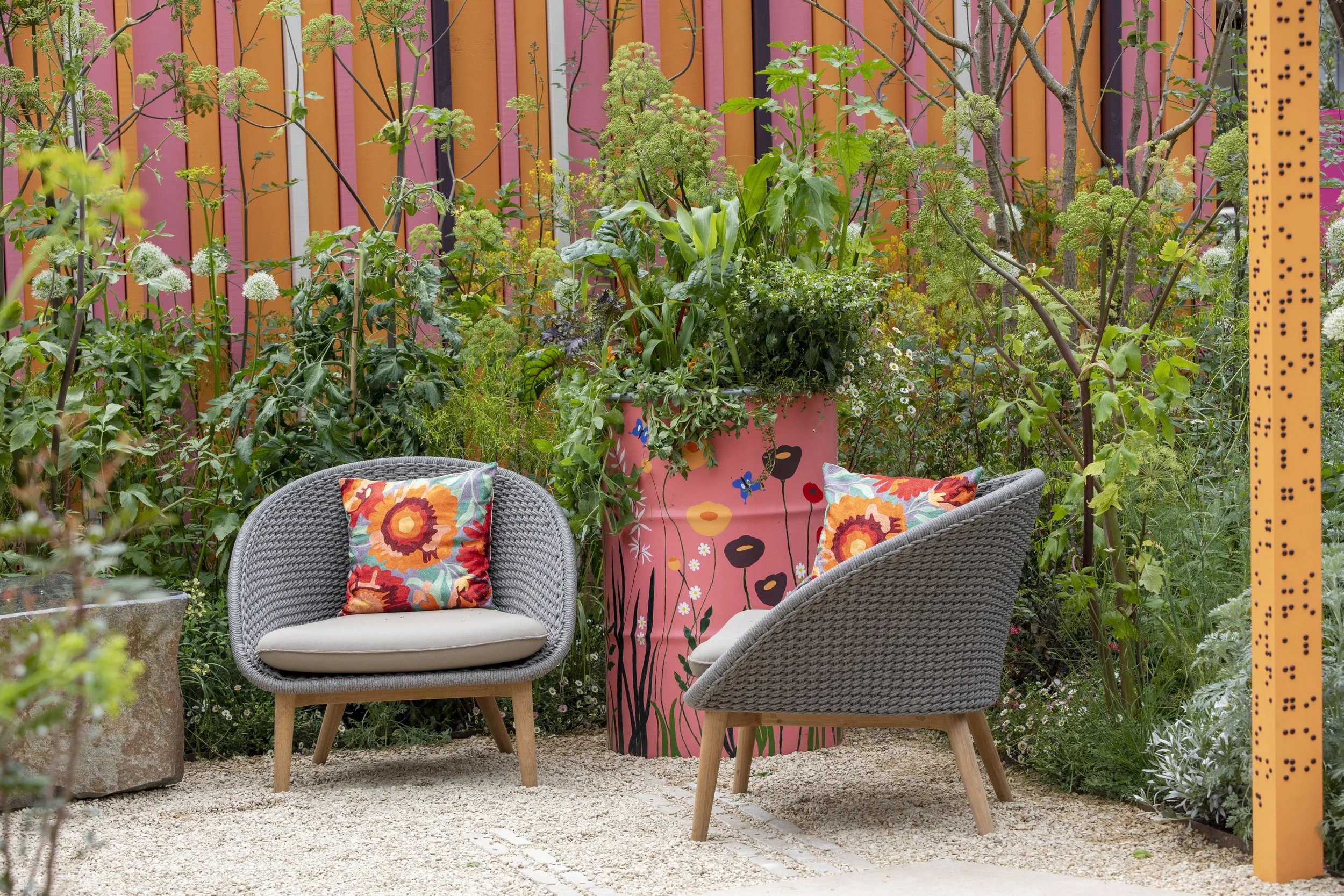
Designer: Manoj Malde Photo Credit: Marianne Majerus
In this garden there is a colourful backdrop. Recycled oil drums have been painted to use as planting containers. Soft furnishings provide additional pops of colour.
Mood Boards Are Your Best Friend
Whenever I begin designing, I create a mood board filled with inspiration images, fabrics, paint swatches and textures.
This is where the creative magic begins.
Pull images from magazines, Pinterest, travel photos or fashion editorials. Don’t overthink it initially — simply collect what excites you emotionally. Then gradually edit things down until a clear palette begins to emerge.
You will start seeing patterns in the colours you are naturally drawn to.
Easy Ways to Add Colour to Your Garden
Plants are just the beginning. Colour can be layered beautifully throughout the entire garden.
Try adding colour with:
Painted fences and walls
Brightly coloured pergolas
Decorative tiled features
Outdoor rugs and cushions
Powder-coated furniture
Glazed pots or powder-coated metal containers
Flowing muslin drapes
Patterned fabrics and accessories
A parasol with a beautiful, printed canopy.
Even the smallest splash of colour can completely transform a space.
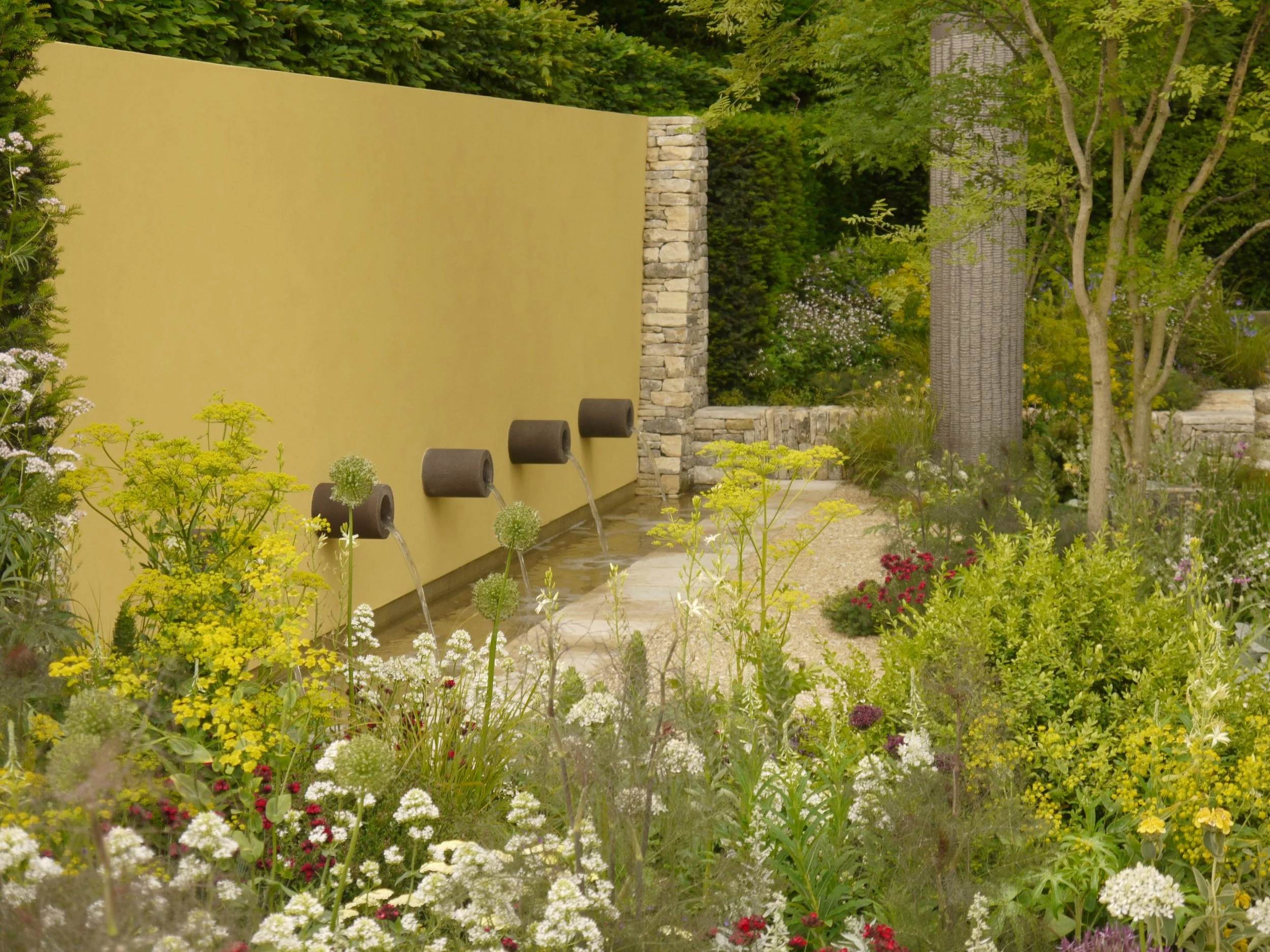
Designer: Cleve West Photo Credit: Manoj Malde
This large wall painted in buttery yellow adds a dramatic backdrop to the garden. It sits beautifully with the natural stone. The yellow has then be expanded into the planting scheme.
The Most Important Thing? Have Fun
Gardens should make us feel alive. They should reflect who we are, where we have come from and the things we love most.
So do not be afraid to experiment. Some of the best ideas happen by accident.
Trust your instincts. Be brave. Play with colour. Clash patterns if you want to. Mix vibrant shades with soft romantic tones. Fill your space with colours that make you feel happy every single time you step outside.
Because colour is joy — and we could all do with a little more joy in our lives.